Crypto Projects to Watch: Real Estate Tokenization – Transforming Property Investment

The real estate industry has long been known for its high barriers to entry, slow transactions, and reliance on intermediaries. Blockchain technology is changing this by enabling real estate tokenization, allowing properties to be divided into digital assets that can be bought, sold, and traded seamlessly.

Several crypto projects are leading the charge in real estate tokenization, leveraging blockchain to create a more transparent and efficient property market. Let’s take a look at the key players, including Hedera (HBAR), XRP Ledger, and others, as well as the risks involved in this emerging space.


How Real Estate Tokenization Works

Real estate tokenization involves converting ownership rights of a property into blockchain-based tokens. These tokens can be:

  • Fractionalized, meaning investors can buy small portions of a property
  • Traded on secondary markets, improving liquidity
  • Stored on a blockchain, ensuring transparency and security
  • Accessible globally, allowing investors from anywhere to participate

With blockchain, real estate investment becomes faster, cheaper, and more efficient compared to traditional methods.


Top Crypto Projects in Real Estate Tokenization

1. Hedera Hashgraph (HBAR) – Enterprise-Grade Tokenization

Hedera Hashgraph is one of the most promising blockchain platforms for real estate tokenization due to its high-speed, low-cost, and secure infrastructure.

Why HBAR for Real Estate?

  • Fast transactions – Hedera can handle 10,000+ TPS with near-instant finality
  • Low fees – A fraction of a cent per transaction, making token transfers cost-effective
  • Enterprise adoption – Major institutions like Avery Dennison, Google, and Standard Bank already use Hedera’s network
  • Sustainability – Energy-efficient consensus mechanism

Example Use Case:
Hedera’s Token Service (HTS) allows real estate firms to tokenize properties, enabling fractional ownership and seamless property transfers on-chain.


2. XRP Ledger (XRP) – Real Estate Payments & Settlements

XRP Ledger (XRPL) is another strong player in the real estate tokenization space, offering fast and efficient cross-border payments that can be used in real estate transactions.

Why XRP for Real Estate?

  • Instant, low-cost payments – Transactions settle in 3-5 seconds with fees under $0.01
  • Interoperability – XRPL supports smart contracts and tokenized assets
  • Regulatory focus – Ripple is working on compliant tokenization solutions

Example Use Case:
Real estate firms can use XRPL for international property transactions, allowing buyers and sellers to transfer funds instantly without needing traditional banks.


3. Propy (PRO) – NFT-Based Real Estate Ownership

Propy is an Ethereum-based real estate platform that enables users to buy and sell properties using NFTs (Non-Fungible Tokens).

Why Propy for Real Estate?

  • NFT-based property ownership – Homes can be bought/sold as digital tokens
  • Smart contract automation – Reduces paperwork and legal costs
  • Real-world adoption – Properties have already been sold as NFTs via Propy

Example Use Case:
A Miami property was sold using Propy’s blockchain platform, showing how NFTs can revolutionize real estate transactions.


Risks of Real Estate Tokenization

While real estate tokenization has significant potential, it also comes with several risks that investors should consider.

1. Regulatory Uncertainty

Tokenized real estate is still a gray area in many jurisdictions. Governments may introduce new regulations that impact how these digital assets are issued, traded, or taxed.

2. Market Liquidity Issues

While tokenization improves liquidity, secondary markets for real estate tokens are still in their early stages. Selling a tokenized property share may not always be as easy as selling traditional crypto assets.

3. Smart Contract Risks

Blockchain relies on smart contracts, which can be vulnerable to hacks, bugs, or exploits. If a contract is poorly written, it could lead to financial losses for investors.

4. Centralization Risks

Some real estate tokenization platforms are still partially centralized, meaning they rely on companies or legal structures that could introduce risks like fraud, mismanagement, or legal disputes.

5. Lack of Consumer Protection

Unlike traditional real estate investments, tokenized real estate may not be covered by standard consumer protections, increasing the risk of fraud or asset disputes.


The Future of Real Estate Tokenization

The tokenization of real estate is still in its early stages, but the potential is massive. With blockchain, real estate investment is becoming:

  • More accessible – Anyone can invest, even with small amounts
  • More liquid – Sell your tokens anytime instead of waiting months for a buyer
  • More transparent – No hidden fees, middlemen, or fraud risks

Projects like Hedera (HBAR), XRP Ledger, Propy, RealT, and Landshare are paving the way for a new era of real estate investing.


Learn More at FutureFinanceLab.com

If you want to stay ahead of the curve and understand how crypto, DeFi, and tokenization are shaping the future of finance, check out FutureFinanceLab.com.

  • Get insights on blockchain, investing, and financial innovation
  • Explore the latest trends in tokenized assets
  • Stay informed about new crypto opportunities

The future of real estate is on the blockchain—are you ready?

Where to Invest Next: Insights from NVIDIA’s AI Roadmap

NVIDIA, a leader in artificial intelligence (AI) hardware and software, has effectively laid out a roadmap for the future of AI investment. From Perception AI to Generative AI, Agentic AI, and Physical AI, NVIDIA’s vision highlights not just technological advancements but also investment opportunities across key sectors poised for explosive growth. Here’s a detailed analysis of each stage and the companies leading the charge.

1. Perception AI: The Foundation of the AI Revolution

Perception AI focuses on applications like speech recognition, medical imaging, and sensor data processing. It has been the bedrock of AI advancements, dating back to AlexNet’s revolutionary deep learning breakthroughs in 2012. Now, its use cases are expanding across industries like healthcare, automotive, and robotics.

Key Players:

NVIDIA (NVDA): Continues to lead with GPUs powering AI for medical imaging and real-time sensor processing.

Intuitive Surgical (ISRG): Pioneering robotic surgery with AI-assisted imaging for precision healthcare.

Butterfly Network (BFLY): Innovating in portable ultrasound with AI-powered diagnostics.

Cerence (CRNC): Driving voice recognition AI for automotive and IoT devices.

Investment Rationale:

The growing reliance on AI for diagnostics and real-time decision-making in critical sectors like healthcare and transportation makes this a foundational investment area. As more industries adopt AI-driven perception systems, these companies stand to benefit immensely.

2. Generative AI: Transforming Creativity and Marketing

Generative AI has taken center stage in 2023, revolutionizing content creation and digital marketing. From creating art and music to automating marketing campaigns, this technology is shaping the next era of creative industries.

Key Players:

Microsoft (MSFT): With its investment in OpenAI, Microsoft is integrating GPT models into platforms like Azure and Office.

Adobe (ADBE): Incorporating generative AI into its suite of creative tools for designers and marketers.

Unity Software (U): Leveraging AI for game development and immersive experiences.

NVIDIA (NVDA): Enabling generative AI with its cutting-edge hardware for training AI models.

Investment Rationale:

As businesses and creators increasingly rely on AI to scale content production, companies providing generative AI tools and infrastructure will become indispensable. Adobe and NVIDIA are especially well-positioned as creative and hardware enablers.

3. Agentic AI: Enhancing Human Productivity

Agentic AI represents the next evolution, focusing on augmenting human tasks such as coding, customer service, and patient care. It combines AI-driven automation with decision-making capabilities to deliver personalized and efficient solutions.

Key Players:

UiPath (PATH): Specializes in robotic process automation (RPA) for automating repetitive tasks.

ServiceNow (NOW): Leading AI-driven platforms for customer service and enterprise workflows.

Intuit (INTU): Utilizing AI for financial advisory and tax preparation.

Teladoc Health (TDOC): Advancing virtual healthcare with AI-powered diagnostics and care.

Investment Rationale:

As enterprises seek cost efficiency and scalability, Agentic AI solutions will be in high demand. Healthcare, financial services, and enterprise software are the key verticals to watch, with these companies leading the way.

4. Physical AI: The Next Frontier

Physical AI, encompassing robotics and self-driving cars, represents the most tangible and impactful use of artificial intelligence. This segment focuses on enabling robots and autonomous vehicles to interact with and navigate the physical world.

Key Players:

Tesla (TSLA): At the forefront of self-driving technology and AI-powered vehicles.

Waymo (via Alphabet – GOOGL): A leader in autonomous vehicle technology.

Boston Dynamics (via Hyundai): Innovating in robotics for industrial and consumer applications.

ABB (ABB): A global leader in industrial robotics and automation.

NVIDIA (NVDA): Providing the hardware backbone for autonomous and robotic AI.

Investment Rationale:

Physical AI is the most capital-intensive but also the most transformative. Autonomous vehicles and general-purpose robotics have applications in logistics, manufacturing, and everyday consumer products. Investing in this space means betting on the long-term integration of robotics into daily life.

Broader Investment Strategies

For investors looking for diversified exposure to these AI trends, consider ETFs like:

ROBO Global Robotics and Automation Index ETF (ROBO): Focused on robotics and AI.

Global X Robotics & Artificial Intelligence ETF (BOTZ): Concentrated on companies driving AI and automation.

NVIDIA: The Common Denominator

It’s impossible to overlook NVIDIA as a central enabler across all these AI layers. From GPUs powering generative AI models to hardware for autonomous vehicles and robotics, NVIDIA is the backbone of AI innovation.

Final Thoughts

NVIDIA’s roadmap provides not just a technological forecast but also a strategic guide for investors. Perception AI, Generative AI, Agentic AI, and Physical AI represent distinct opportunities, each with its own market leaders and growth trajectories. Whether you’re investing in foundational technologies or cutting-edge robotics, these trends outline a clear pathway to the future.

By aligning your portfolio with these trends, you can capitalize on the ongoing AI revolution. But as always, do thorough research and consider your risk tolerance before investing.

Nvidia Earnings and Market Outlook: AI, Bitcoin, and the Broader Financial Landscape

As the financial world closely watches Nvidia’s latest earnings report, its impact extends beyond just tech stocks—spilling into broader market sentiment, AI investments, and even the cryptocurrency space. With Nvidia’s continued dominance in artificial intelligence and Bitcoin’s ongoing volatility, both markets are at a crucial juncture that could define trends for the remainder of 2025.

Nvidia’s Strong Earnings Performance

Nvidia has once again surpassed expectations, reporting record-breaking revenue of $39.3 billion, marking a 78% year-over-year increase. The company’s adjusted earnings per share (EPS) of $0.89 exceeded Wall Street estimates, reinforcing Nvidia’s critical role in AI infrastructure and computing.

Key Highlights from Nvidia’s Q4 Earnings:

  • Data Center Revenue: Surged to $35.6 billion, fueled by demand for AI-driven cloud computing solutions.
  • Gaming Division: Despite AI taking center stage, Nvidia’s gaming segment showed resilience, generating $3.1 billion in revenue.
  • Future Guidance: Nvidia projects $43 billion in Q1 revenue, signaling continued demand for AI chips despite increasing competition.

The AI boom remains the primary growth driver for Nvidia, as its GPUs power the next generation of machine learning models, cloud computing, and autonomous systems. Despite minor concerns about rising competition from Chinese firms and supply chain constraints, investors remain overwhelmingly bullish on Nvidia’s long-term trajectory.

Stock Market Reaction and Broader Implications

Nvidia’s stock initially saw a 3.7% gain in regular trading hours but experienced some after-hours volatility. However, long-term investors view Nvidia as a cornerstone of the AI revolution, making it a key player in institutional portfolios.

The tech sector as a whole is looking to Nvidia as a bellwether, with its earnings report influencing sentiment across major indices, including the S&P 500 and Nasdaq. With AI adoption accelerating, Nvidia’s success could reignite momentum in a tech sector that has faced headwinds in early 2025.

Bitcoin’s Volatile Ride: What’s Next for Crypto?

While Nvidia is showcasing strength, Bitcoin is facing a period of heightened volatility. The leading cryptocurrency recently dropped below $85,000, marking a significant decline from its early-year highs near $95,000.

Factors Driving Bitcoin’s Price Movements:

  • ETF Outflows: Institutional investors have been shifting funds away from crypto ETFs, causing temporary downward pressure.
  • Regulatory Uncertainty: Governments worldwide continue to debate crypto regulations, influencing investor sentiment.
  • Market Cycles: Bitcoin historically experiences sharp corrections before major bull runs, making its current dip a potential buying opportunity.

Despite recent declines, Bitcoin remains in a long-term uptrend. Many analysts predict a recovery that could push the price toward $100,000+ by late 2025, driven by increasing institutional adoption and the upcoming Bitcoin halving event.

The Intersection of AI and Crypto

While Nvidia and Bitcoin operate in different sectors, their trajectories often overlap in investor sentiment. AI advancements are playing an increasing role in blockchain efficiency, decentralized finance (DeFi), and crypto trading algorithms, linking the two industries more closely than ever.

As AI-driven finance continues to evolve, Nvidia’s dominance in computing power could also fuel next-generation crypto applications, from AI-powered trading bots to blockchain scalability solutions. This convergence presents exciting opportunities for investors who see the synergy between these two fast-growing sectors.

Final Thoughts: Navigating Market Uncertainty

Both Nvidia and Bitcoin represent high-growth opportunities in 2025, albeit with different risk profiles. Nvidia’s earnings reaffirm its leadership in AI, while Bitcoin’s volatility presents both risks and potential rewards for crypto investors.

For those looking to diversify their portfolios, keeping an eye on Nvidia’s AI expansion and Bitcoin’s price action could provide valuable insights into the evolving digital economy. Whether investing in the AI revolution or betting on the future of decentralized finance, market participants should stay informed and strategically positioned for what lies ahead.


Stay updated with the latest financial trends at FutureFinanceLab.com, where we bring expert insights into the evolving digital economy.

Beginner’s Guide to Common Investment Strategies

If you’re new to investing, you might feel overwhelmed by all the different strategies out there. Don’t worry—I’ve got you covered! Here’s a bite-sized breakdown of six key investment approaches, so you can find the one that fits your goals and risk level.


1️⃣ Contrarian Investing – Buy When Others Are Fearful

🔑 Key Idea: Go against the crowd and invest in assets that others are avoiding.
📈 Best For: Risk-takers who believe in long-term market cycles.
📊 Example: Buying stocks when the market is crashing, expecting them to rebound later.
🔥 Works Best In: Extreme market conditions (when fear is high).


2️⃣ Growth Investing – Bet on the Future

🔑 Key Idea: Invest in companies expected to grow fast, like tech startups.
📈 Best For: Those willing to take on more risk for higher potential rewards.
📊 Example: Investing in companies like Tesla or Nvidia before they became giants.
🔥 Works Best In: Bull markets (when the economy is growing).


3️⃣ Income Investing – Get Paid While You Wait

🔑 Key Idea: Focus on investments that pay you regularly, like dividend stocks.
📈 Best For: Investors looking for steady, passive income.
📊 Example: Buying shares in companies like Coca-Cola that pay dividends.
🔥 Works Best In: Stable markets.


4️⃣ Index Investing – Set It and Forget It

🔑 Key Idea: Invest in the entire market instead of picking individual stocks.
📈 Best For: Beginners and long-term investors who want simple, low-cost investing.
📊 Example: Buying an S&P 500 ETF to own a small piece of the top 500 U.S. companies.
🔥 Works Best In: Any market condition.


5️⃣ Momentum Investing – Ride the Wave

🔑 Key Idea: Buy stocks that are already trending up and sell before the trend fades.
📈 Best For: Short-term traders who follow market trends.
📊 Example: Buying stocks that have been rising fast, like AI companies.
🔥 Works Best In: Trending markets.


6️⃣ Value Investing – Buy Low, Sell High

🔑 Key Idea: Find great companies that are undervalued and wait for their price to rise.
📈 Best For: Patient investors who believe in long-term wealth building.
📊 Example: Warren Buffett’s approach—buying solid businesses at a discount.
🔥 Works Best In: Bear markets or when stocks are undervalued.


Which Strategy is Right for You?

There’s no one-size-fits-all answer. Your best strategy depends on:
✅ Your risk tolerance (Are you comfortable with market ups and downs?)
✅ Your time horizon (Do you want short-term gains or long-term wealth?)
✅ Your financial goals (Are you looking for income, growth, or stability?)

👉 Want to learn more and start your journey? Join FutureFinanceLab.com for expert insights, tools, and a community of smart investors like you! 🚀

Option Trading Strategies: A Simplified Guide

Options trading can seem complex, but understanding a few key strategies can help traders manage risk and maximize potential returns. Whether you’re new to options or looking to refine your approach, this guide will break down essential strategies in a simplified way.

What Are Options?

Options are financial contracts that give traders the right—but not the obligation—to buy or sell an asset at a predetermined price before a specific expiration date. There are two main types:

  • Call options: Give the right to buy an asset at a set price.
  • Put options: Give the right to sell an asset at a set price.

Traders use options for speculation, hedging risk, or generating income. Now, let’s explore the key strategies.


1. Covered Call (Income Strategy)

Best for: Generating income while holding a stock.
covered call involves owning a stock and selling a call option against it. If the stock price stays below the option’s strike price, the trader keeps the premium (income). If the stock rises above the strike price, they must sell at that price.

✅ Pros: Generates passive income, reduces downside risk.
❌ Cons: Limits upside potential if the stock rises significantly.

Example:

  • You buy 100 shares of XYZ at $50.
  • You sell a call option with a $55 strike price for $2 per share.
  • If XYZ stays below $55, you keep the $200 premium. If it rises above $55, you sell at that price, missing any gains beyond it.

2. Protective Put (Insurance Strategy)

Best for: Protecting against downside risk.
protective put involves buying a put option on a stock you own. If the stock price falls, the put option increases in value, limiting losses.

✅ Pros: Protects against major losses.
❌ Cons: Costs money (premium), reducing overall profits.

Example:

  • You own 100 shares of ABC at $100.
  • You buy a put option with a $95 strike price for $3 per share.
  • If ABC drops to $80, the put lets you sell at $95, limiting losses.

3. Long Straddle (Volatility Play)

Best for: Betting on big price moves (up or down).
long straddle involves buying both a call and a put option at the same strike price and expiration. It profits if the asset moves significantly in either direction.

✅ Pros: Profits from volatility regardless of direction.
❌ Cons: Expensive (requires buying both options).

Example:

  • You buy a call and put on XYZ at $50 for $5 each.
  • If XYZ moves to $65 or $35, you profit. If it stays near $50, you lose the premiums.

4. Iron Condor (Range-Bound Strategy)

Best for: Profiting from low volatility.
An iron condor is a combination of four options that profits if the stock remains within a certain range.

✅ Pros: Profits from stability (not big movements).
❌ Cons: Limited profit potential.

Example:

  • XYZ is trading at $50.
  • You sell a $55 call and a $45 put, while buying a $60 call and a $40 put.
  • If XYZ stays between $45 and $55, you collect the premiums.

Which Strategy Should You Use?

  • If you own stocks and want extra income → Covered Call
  • If you fear a market drop → Protective Put
  • If you expect big moves (but unsure of direction) → Long Straddle
  • If you think the stock will stay stable → Iron Condor

Understanding these strategies can help traders manage risks and make informed decisions in options trading.

Want more insights? Join FutureFinanceLab.com for in-depth analysis and trading education.

Difference Between ROIC, ROA, and ROE

While all three measure profitability, they focus on different aspects of a company’s performance and use different financial inputs. Here’s a breakdown:


📊 1. ROA (Return on Assets)

  • Focus: Measures how efficiently a company uses all its assets to generate profit.
  • Formula: Net Income ÷ Total Assets
  • Key Insight: Shows how well the company converts its assets (like equipment, buildings, and cash) into profits.
  • Best For: Comparing companies in asset-heavy industries like manufacturing or real estate.

📊 2. ROE (Return on Equity)

  • Focus: Measures how effectively a company uses shareholders’ equity to generate profit.
  • Formula: Net Income ÷ Shareholders’ Equity
  • Key Insight: Shows the return for equity investors (shareholders) and reflects how effectively the company is using their money.
  • Best For: Evaluating shareholder value and comparing companies with similar capital structures.

📊 3. ROIC (Return on Invested Capital)

  • Focus: Measures how efficiently a company uses all invested capital (both debt and equity) to generate profit.
  • Formula: NOPAT (Net Operating Profit After Taxes) ÷ Invested Capital (Debt + Equity – Cash)
  • Key Insight: A broader metric that evaluates how well a company generates returns from both debt and equity financing.
  • Best For: Assessing capital efficiency and comparing companies with different capital structures.

📝 Quick Takeaway:

  • Use ROA to see how efficiently assets are used.
  • Use ROE to check how well shareholders’ money is performing.
  • Use ROIC for a more comprehensive view of how both debt and equity capital are utilized.

For companies with significant debtROIC is often considered the most reliable measure of performance.

Wall Streets Crypto Embrace: Big Banks Quietly Moving In

In a surprising but increasingly evident shift, major financial institutions are making bold moves into the cryptocurrency space. The recent news that BNY Mellon, Citi, State Street, Bank of Montreal, and Goldman Sachs are engaging in various crypto-related activities signals a growing institutional appetite for digital assets. While regulatory uncertainty has kept traditional banks at bay for years, the tide appears to be turning.

A New Era for Crypto Custody and Investment

State Street & Citi Bank Enter Crypto Custody

According to reports, State Street and Citi Banks two of the worlds largest custodian banks are launching crypto custody services. This is a significant move, as custodian banks play a crucial role in safeguarding institutional assets. With State Street managing over $44 trillion in assets and Citi Bank overseeing around $2.14 trillion, their involvement in digital asset custody could bridge the gap between traditional finance and crypto.

Crypto custody services allow institutional investors to hold Bitcoin and other digital assets securely, which has been a key barrier preventing mainstream adoption. This development suggests that demand for crypto exposure among institutional clients is reaching new highs.

Bank of Montreal Quietly Accumulating Bitcoin ETFs

While some banks are focused on infrastructure, others are making direct investments. The Bank of Montreal (BMO) has reportedly been quietly accumulating Bitcoin ETFs. This indicates growing confidence in Bitcoin as a long-term asset and suggests that institutional players are looking to gain exposure to crypto in regulated and familiar ways.

Bitcoin ETFs have gained significant traction recently, providing a more accessible investment vehicle for both retail and institutional investors. BMOs actions reflect a broader trend of financial institutions positioning themselves ahead of potential future price surges.

Goldman Sachs Betting Big on Bitcoin and Ethereum

Perhaps the most striking development comes from Goldman Sachs, which has been betting billions on Bitcoin and Ethereum amid price volatility. While Goldman Sachs has had a love-hate relationship with crypto in the past, the firm is now actively trading and profiting from digital asset volatility.

This move suggests that major financial institutions are no longer just experimenting with crypto—they are actively engaging in it as a core part of their trading strategies. As more firms follow Goldmans lead, the crypto market could see increased liquidity and stability.

Why Are Banks Moving Into Crypto Now?

Several factors are driving this institutional shift toward crypto:

1. Regulatory Clarity is Improving : Governments and financial watchdogs are starting to provide clearer frameworks for institutional crypto adoption.

2. Institutional Demand is Surging : Hedge funds, pension funds, and high-net-worth individuals are demanding exposure to digital assets.

3. Crypto is Becoming a Mainstream Asset Class:The rise of Bitcoin ETFs and blockchain integration into finance has made digital assets more appealing.

4. Competitive Pressure :As more banks embrace crypto, others risk falling behind if they don’t adapt.

What This Means for the Future of Crypto

The involvement of these major banks legitimizes cryptocurrency in a way that was previously unthinkable. While retail investors have been active in crypto for over a decade, institutional adoption has been the missing piece. With trillions in assets under management, these financial giants could dramatically reshape the crypto landscape.

As more banks roll out custody services, investment products, and trading desks, cryptocurrency could become as integral to financial markets as traditional assets like stocks and bonds. For crypto investors, this institutional embrace is bullish, as it increases adoption, liquidity, and long-term stability.

One thing is certain: Wall Street is no longer ignoring crypto it’s moving in.

By joining FutureFinanceLab.com, you’ll not only learn how to get started but also discover advanced strategies to grow your portfolio and manage risks effectively.

Start your crypto journey today!

Dark Pools: The Hidden Side of Financial Markets and How Tokenized Assets Can Bring Transparency

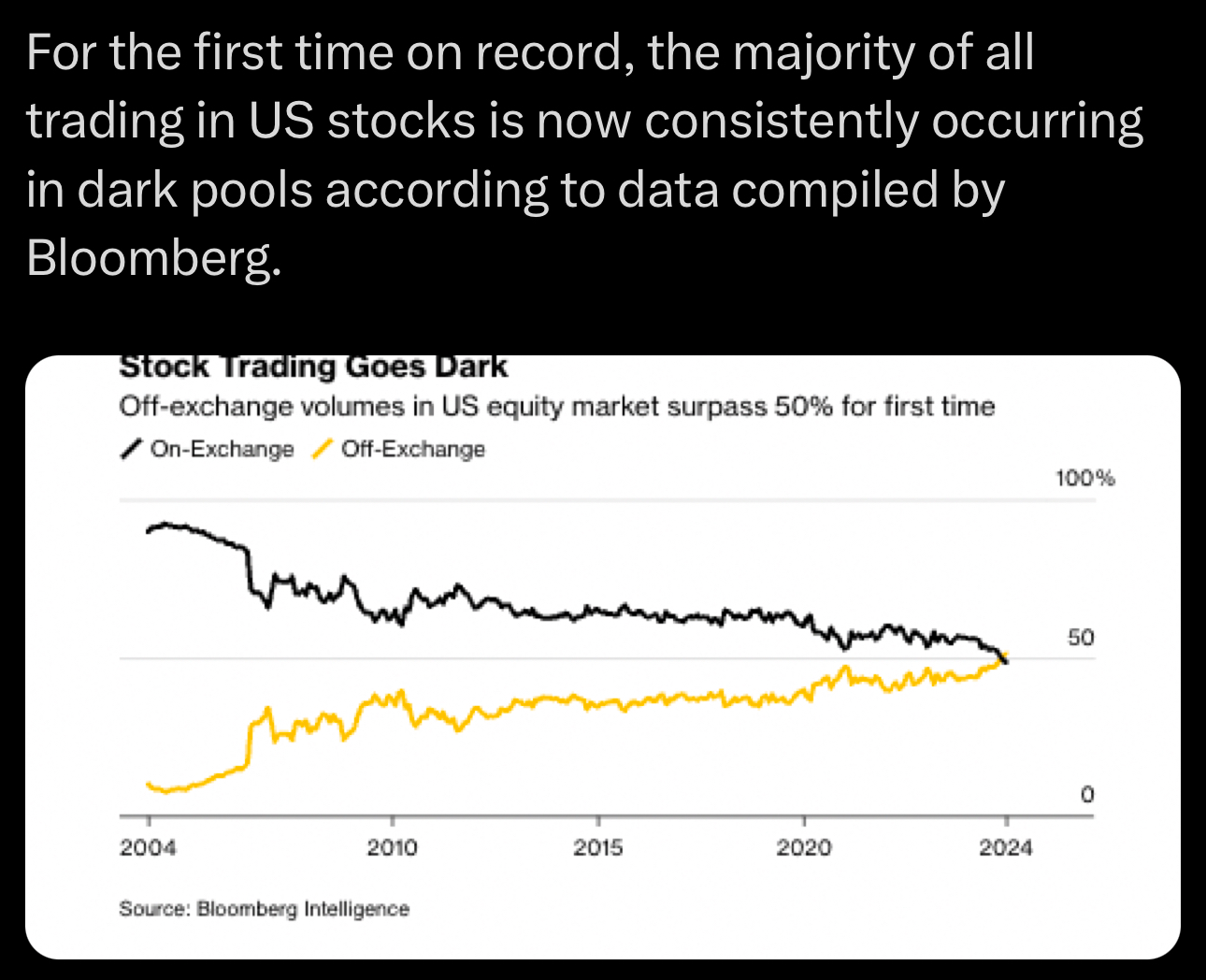
In the world of finance, transparency is often hailed as the cornerstone of fair and efficient markets. Yet, a significant portion of trading happens away from the public eye in dark pools. These private trading venues, designed to facilitate large transactions without affecting market prices, have become increasingly dominant. For the first time in history, over 50% of U.S. stock trading now occurs off-exchange, according to Bloomberg. This trend raises critical questions about market fairness, transparency, and the future of trading.

At Future Finance Lab, we believe in exploring the intersection of finance and technology to uncover solutions that foster trust and efficiency. In this article, we will dive into the risks posed by dark pools and examine how tokenized assets and blockchain technology can address these challenges.

What Are Dark Pools?

Dark pools, also known as private trading forums, are a type of alternative trading system (ATS) where institutional investors execute large trades away from public exchanges like the NYSE or NASDAQ. These platforms offer advantages such as:

Anonymity: Preventing market moves caused by public knowledge of large trades.

Reduced Market Impact: Allowing trades to be executed without immediately affecting the stocks price.

While these features serve a purpose, they come at a cost. The lack of public scrutiny creates a fragmented and opaque market, leaving retail investors at a disadvantage and reducing overall market transparency.

The Dangers of Dark Pools

1. Market Opacity:

Dark pools obscure large portions of trading activity, which can distort price discovery the process by which market prices reflect supply and demand.

2. Unfair Advantage:

Institutional players gain access to privileged information and favorable trading conditions that retail investors lack.

3. Risk of Manipulation:

The absence of public oversight increases the likelihood of market manipulation or collusion among participants.

4. Liquidity Challenges:

When too much volume is diverted to dark pools, public markets can suffer from reduced liquidity, leading to higher volatility and wider spreads.

5. Eroding Trust:

For markets to function effectively, participants need confidence in their fairness. The secrecy of dark pools undermines this trust.

Can Tokenized Assets Fix the Problem?

Tokenized assets represent real-world assets (such as stocks, bonds, or real estate) on a blockchain. By leveraging blockchain technology, tokenization introduces unprecedented transparency and efficiency into financial markets. Here is how:

1. Real-Time Transparency:

Every transaction involving a tokenized asset is recorded on a blockchain, creating an immutable and publicly accessible ledger. This ensures all market participants have equal access to trading data, addressing the opacity of dark pools.

2. Decentralized Trading Platforms:

Blockchain-powered decentralized exchanges (DEXs) allow large trades to occur with reduced market impact while maintaining transparency. Unlike dark pools, these platforms provide a record of trade volumes and prices.

3. Fair Market Access:

Tokenized assets democratize finance by lowering entry barriers. Retail investors can access fractional ownership of assets and participate in markets traditionally dominated by institutions.

4. Programmable Rules:

Smart contracts embedded in tokenized assets can enforce fair trading practices, such as mandatory disclosures or price limits, reducing the potential for manipulation.

5. Enhanced Liquidity:

Fractionalization of tokenized assets increases market liquidity by enabling smaller trades, reducing the reliance on private venues for large transactions.

Challenges to Overcome

While tokenized assets present a compelling solution, there are hurdles to widespread adoption:

Regulatory Uncertainty:

Governments and regulators must define clear frameworks for blockchain-based trading to ensure compliance and protect investors.

Infrastructure and Scalability:

Blockchain networks need to handle high transaction volumes efficiently to compete with existing financial systems.

Institutional Buy-In:

For tokenized markets to thrive, institutional players must adopt and trust the technology.

The Future of Financial Markets

The rise of dark pools highlights the need for innovation in financial markets. Tokenized assets offer a pathway to greater transparency, efficiency, and inclusivity. By merging the power of blockchain technology with financial systems, we can create markets where everyone from retail investors to institutions has equal access to information and opportunities.

At Future Finance Lab, we are committed to exploring these cutting-edge solutions. Our goal is to empower investors with the tools and knowledge to thrive in a rapidly evolving financial landscape. Together, we can pave the way for a fairer, more transparent future.

Stay tuned as we continue to explore innovations in finance and technology. Have thoughts on dark pools or tokenized assets? Join the conversation on FutureFinanceLab.com!

America’s Wealth Gap: Why It Matters and What We Can Do

The Growing Divide

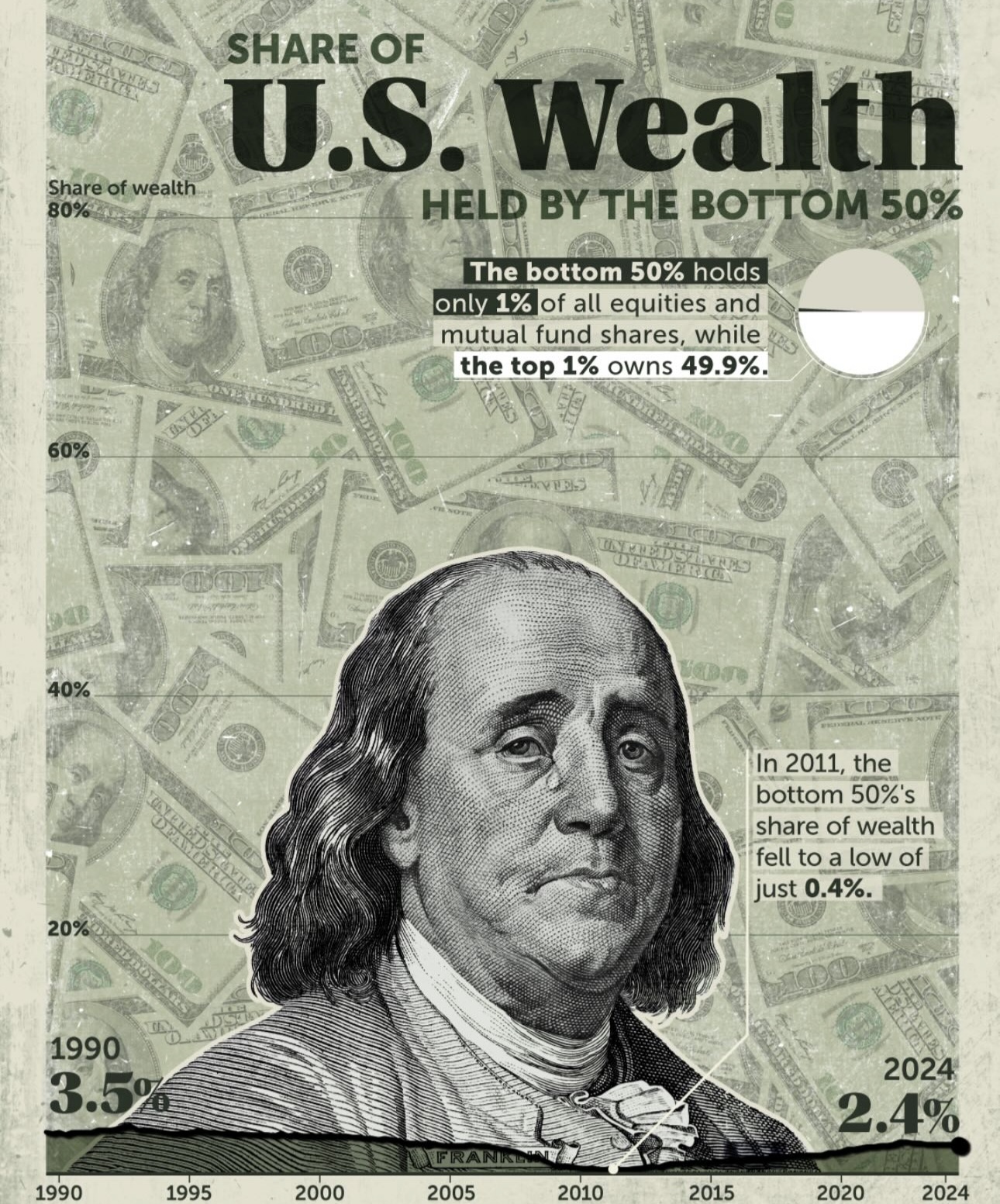
The U.S. economy is growing, but not everyone is benefiting equally. Today, the bottom 50% of Americans own just 2.4% of the country’s wealth, while the top 1% controls nearly 50%. This gap has been widening for decades, making it harder for everyday people to build financial security.

Why Is This Happening?

Several key factors are driving wealth inequality:

Stock Market Gains Favor the Wealthy: The rich own most stocks, while the bottom 50% hold just 1% of all equities and mutual funds. Since stocks grow in value over time, the wealthy keep getting richer.

Wages Aren’t Keeping Up: While living costs like housing and healthcare keep rising, wages for most workers have stayed the same or grown very slowly.

Lack of Investment Opportunities: Many lower-income individuals don’t have enough savings or knowledge to invest, missing out on long-term wealth-building.

What Can We Do?

To close the wealth gap, we need to:

1. Improve Financial Education :Teaching people how to invest and save wisely.

2. Make Investing More Accessible :Encouraging apps and programs that help everyday people invest in stocks and assets.

3. Support Fairer Economic Policies :Tax reforms and wage policies that help lower-income workers build wealth.

The Future of Wealth

If we don’t address this gap, financial inequality will continue to grow, making it harder for future generations to succeed. By promoting smart financial habits, accessible investing, and fair policies, we can work toward a more balanced and inclusive economy.

At FutureFinanceLab, we believe financial knowledge is power. Stay informed, start investing, and take control of your financial future!

The Future of Digital Assets: What You Need to Know

What Are Digital Assets?

Digital assets are more than just cryptocurrencies. They include everything from Bitcoin and Ethereum to tokenized real estate, NFTs, and AI-powered financial instruments. As the world shifts toward a digital-first economy, understanding these assets is essential for staying ahead.

Why Digital Assets Matter

The financial landscape is evolving, and digital assets are at the forefront. They offer transparency, security, and efficiency that traditional financial systems struggle to match. With blockchain technology enabling decentralized finance (DeFi), investors now have more opportunities to diversify and grow wealth outside of traditional banking.

Investment Opportunities in Digital Assets

  • Bitcoin & Cryptocurrencies – The foundation of digital assets, Bitcoin remains a strong long-term store of value.
  • Tokenized Real Estate – Invest in fractional ownership of real estate through blockchain-based tokens.
  • NFTs & Digital Collectibles – Beyond art, NFTs represent ownership of virtual assets, music rights, and even intellectual property.
  • AI & Web3 – The rise of AI-driven financial platforms and Web3 technology is reshaping the way we interact with digital assets.

The Risks & How to Navigate Them

While digital assets present massive opportunities, they also come with risks like volatility, regulatory uncertainty, and security threats. Investors must stay informed and adopt strategies to mitigate these risks.

🚀 Want to stay ahead of the digital finance revolution? Get exclusive insights and strategies—become a member of FutureFinanceLab.com today!