Is “Sell in May” Still Relevant? Breaking the Myth for the Modern Investor

For decades, investors have repeated the old saying: “Sell in May and go away.” The idea is simple—markets supposedly underperform between May and October, so selling in spring and returning in the fall was once considered smart. But is that still true in today’s hyper-connected, data-driven economy?

And more importantly—does this idea even make sense for Bitcoin and other digital assets?

Let’s unpack it.


The Origin of the “Sell in May” Strategy

Back in the day, business activity often slowed down in the summer. Vacations, lighter consumer demand, and reduced corporate momentum sometimes meant lower earnings and weaker market performance. Investors got used to seeing sluggish summer markets—and many adopted this seasonal strategy.


The Modern Market Doesn’t Sleep

Fast forward to today, and things look very different:

  • Global business doesn’t pause for summer
  • Automation and cloud-based operations keep companies running at full speed
  • E-commerce and digital services drive consistent revenue streams year-round

Companies now operate in a world that’s 24/7, borderless, and tech-powered—which means the old “Sell in May” logic no longer applies like it used to.


S&P 500 Performance: The Data Tells a New Story

Market research reveals that this seasonal theory has mostly failed in recent decades. Take the S&P 500, for example:

  • From 2005 to 2024, the index lost money between May and October only three times:
    • 2008 (Global Financial Crisis)
    • 2011 (Debt ceiling crisis)
    • 2022 (Inflation + Fed rate hikes)

That’s 17 out of 20 years where the “slow season” actually delivered positive returns.


Bitcoin: A Different Beast Entirely

If “Sell in May” doesn’t hold up for the S&P 500 anymore, it definitely doesn’t apply to Bitcoin.

Why?

  • Bitcoin trades 24/7, with no breaks, no holidays, and no centralized downtime.
  • It’s driven by macro narratives, adoption cycles, halving events, and global liquidity trends, not seasonal business slowdowns.
  • Historically, some of Bitcoin’s strongest months have been during the summer—including major runs in 2017and 2021.

In crypto, trying to apply traditional Wall Street seasonality is like using a compass on a GPS-driven rocket—you’re likely to miss the big picture.


The Takeaway: Myths Don’t Make Money

The “Sell in May” idea might sound clever, but it’s outdated and unreliable in today’s markets—both traditional and digital.

Modern investing is about data, discipline, and long-term vision—not calendar-based guesses.

If you’re investing in stocks, Bitcoin, or building a diversified portfolio, timing the market based on old sayings is more likely to hurt than help.


📌 Ready to think smarter about your money?
Visit FutureFinanceLab.com for real-world insights, beginner-friendly tools, and bite-sized learning built for the modern investor.
What Do Fed Meetings Really Mean for You?

Behind the Headlines of Rate Hikes and Cuts

Every few months, the news lights up with headlines like:
“Fed Hikes Interest Rates by 0.25%” or “Fed Signals Pause in Rate Cuts.”
But what does that actually mean—for your wallet, your investments, or your plans to buy a house or car?

Let’s break it all down in simple language, with real-life examples.

What Is the Fed?


🔍 First Things First: What Is the Fed?

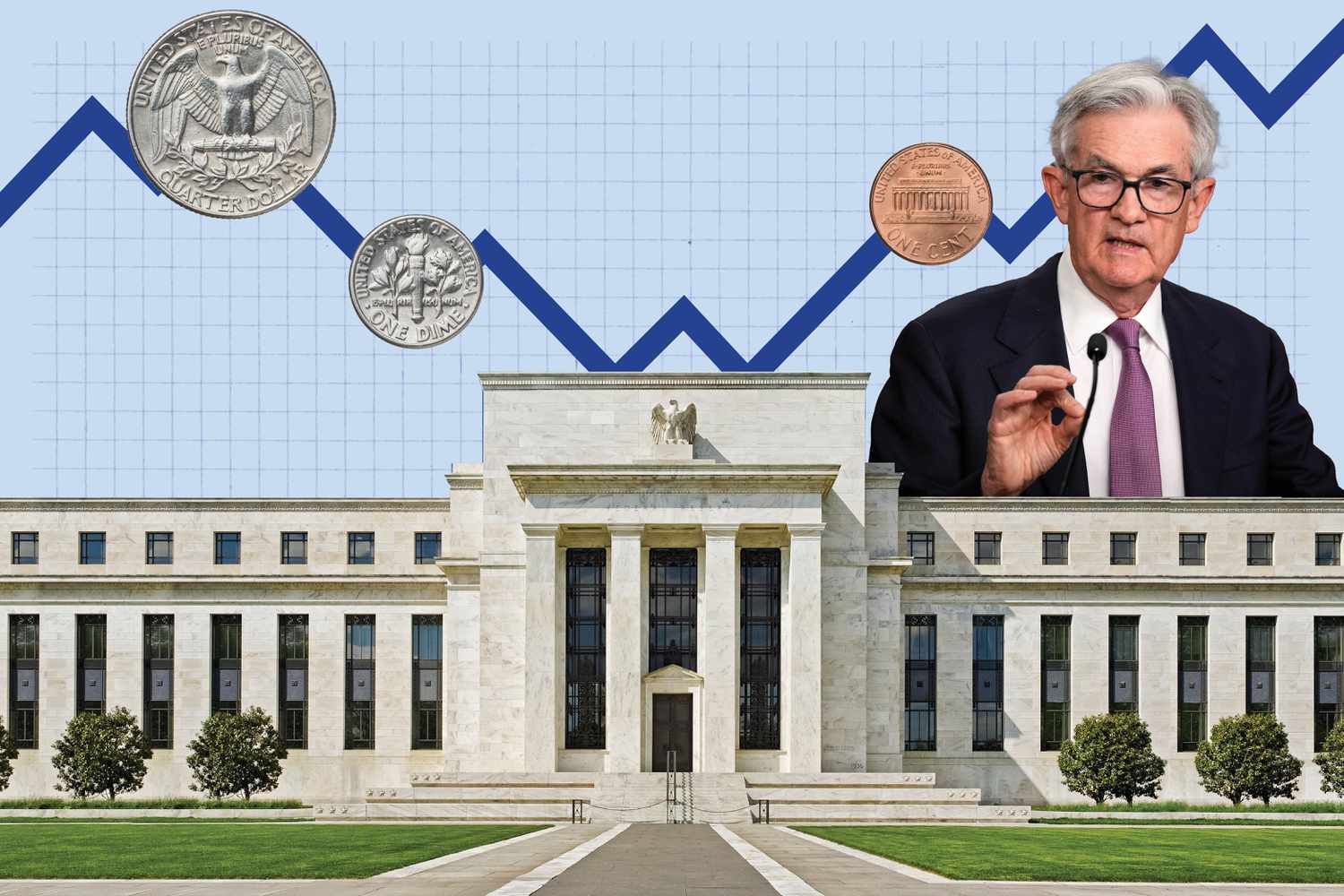
The Federal Reserve (aka “the Fed”) is the central bank of the United States. Its job is to keep inflation under control, support employment, and maintain a stable financial system. One of its most powerful tools? Interest rates.

The Fed sets something called the federal funds rate—which is the interest rate banks charge each other to borrow money overnight. This rate trickles down and affects everything from your credit card interest to mortgage rates to stock prices.


📈 When the Fed Raises Rates (Rate Hike)

When the Fed raises rates, borrowing becomes more expensive.

  • Credit cards cost more.
  • Car loans and mortgages get pricier.
  • Business loans are harder to get.

Why do they do this? Usually to cool down inflation. If prices are rising too fast (like gas, groceries, rent), higher rates slow things down. Less borrowing = less spending = lower inflation.

💡 What It Means for You:

  • Stock Market: Stocks often go down short-term. Higher rates mean companies borrow less, spend less, and might grow more slowly.
  • Planning to Buy a House or Car? Loans get more expensive. Your monthly payment goes up.
  • Have Credit Card Debt? You’ll likely pay more in interest.
  • Savings Account? Good news—banks might offer higher returns on your savings.

📉 When the Fed Lowers Rates (Rate Cut)

When the Fed cuts rates, it’s trying to stimulate the economy.

  • Borrowing becomes cheaper.
  • People and businesses are encouraged to spend more.
  • The goal? To boost growth—especially during slowdowns or recessions.

💡 What It Means for You:

  • Stock Market: Stocks usually go up. Cheap money often leads to higher profits and more investment.
  • Planning to Buy a House or Car? Lower interest rates mean smaller monthly payments.
  • Have Credit Card Debt? You might pay less in interest—but not by much. Credit card rates don’t fall as fast.
  • Savings Account? Your bank might lower your interest rate.

🏦 Real-Life Example:

Imagine You’re Buying a House

  • With high interest rates (7% mortgage): A $400,000 loan = ~$2,660/month
  • With low interest rates (4% mortgage): That same loan = ~$1,910/month

That’s $750 more every month, just because of interest rates!


📊 What About Investors?

If you’re investing in the stock market—or thinking about it—Fed decisions are like ripples in a pond.

  • Tech and growth stocks get hit harder when rates rise, because future profits are worth less today.
  • Banks and value stocks often benefit when rates rise, due to better loan margins.
  • Real estate stocks (REITs) may suffer when borrowing is more expensive.

Long-term investors don’t need to panic every time the Fed moves. But it helps to understand how policy shapes the financial climate.


🧠 The Takeaway: Think Like a Financial Weather Forecaster

  • Rate Hikes = Cooling Down (slow the economy)
  • Rate Cuts = Heating Up (stimulate growth)

These are not just Wall Street terms—they affect your mortgage, your credit card, your investments, and even your job prospects.


✅ Actionable Tips for You

  1. Buying a home soon? Shop for the best rate—but know it could rise after a Fed meeting.
  2. Investing? Don’t chase short-term moves. Think long-term, but stay informed.
  3. Carrying debt? Consider paying off high-interest credit cards before rates rise again.
  4. Savings? Compare interest rates on high-yield accounts when rates are rising.

Final Thoughts: Why It Matters

Fed decisions may sound like boring economic news, but they’re actually power moves that shape your financial life. The more you understand what’s going on behind the headlines, the more confidently you can make smart money moves.

Next time you hear, “The Fed just raised rates,” don’t just scroll past it—know exactly what it means for you.


📚 Want to Learn More?

Check out our beginner-friendly articles and video explainers at FutureFinanceLab.com. We’re breaking down finance, one simple concept at a time.

You Will Own Nothing and Be… Controlled? The Truth About Ownership, Wealth, and the Future of Finance

“You will own nothing and be happy.”
This phrase, popularized by futurists and institutions like the World Economic Forum, reflects a growing trend in today’s digital economy: convenience over ownership. On the surface, it seems harmless. After all, subscription services, shared economies, and platform-based access models are efficient, flexible, and easy to use.

But behind the convenience lies a more serious concern. If you do not own anything, you are not building wealth. You are helping someone else build theirs.

The Subscription Economy: Access Without Value

Modern life is increasingly defined by subscriptions. We rent homes, lease cars, stream content, and pay monthly for software, groceries, even clothing. At first, it feels like freedom. You are not tied down, you are always up-to-date, and you can cancel anytime.

But the more you rely on temporary access, the less you build long-term value. You are paying for use, not ownership. And the money you spend is funding the assets and wealth of those who own the systems you rely on.

Access is not ownership. It is consumption.

Why Ownership Still Matters

Real wealth is not built by spending money. It is built by owning things that either grow in value or generate income. This is not a new idea. It is the foundation of financial independence.

Consider the alternatives:

  • Owning a home means building equity, not just paying rent
  • Owning a stock means benefiting from company profits
  • Owning a business means creating recurring revenue
  • Owning intellectual property means earning from your ideas
  • Owning digital assets like Bitcoin means controlling your financial future

When you own, your money works for you. When you rent, you are working for someone else’s asset base.

Bitcoin and Digital Property Rights

Bitcoin offers a unique kind of ownership in the digital age. It is not a subscription, and it does not rely on intermediaries or platform permissions. When you hold Bitcoin in a self-custodied wallet, it is fully yours. It cannot be inflated, frozen, or devalued by third parties.

Bitcoin represents a form of digital property that is scarce, portable, and global. Unlike a song on a streaming service or a social media post that can be removed, Bitcoin is not permissioned access. It is ownership.

And ownership is power.

The Cost of Owning Nothing

Renting everything might feel modern, but it creates long-term dependence. You are always one price increase, one policy change, or one service outage away from disruption. You are not in control of the tools, the platforms, or even your money.

When you own nothing, you are always paying. And when you are always paying, you are always serving someone else’s goals, not your own.

Build, Don’t Just Subscribe

If you want financial security, you need to start owning. That does not mean rejecting all subscriptions or conveniences, but it does mean thinking critically about where your money goes.

Start by investing in:

  • Assets that appreciate
  • Businesses you can control
  • Digital property with long-term value
  • Skills and knowledge that compound
  • Platforms and tools that you own, not just use

Conclusion

Ownership is not outdated. It is more important than ever. In a world that encourages endless renting and constant consumption, those who choose to own will be the ones who create freedom, flexibility, and wealth.

You do not need to own everything. But you must own something.

Because without ownership, there is no leverage. And without leverage, there is no financial freedom.

Does “Buy the Dip” Actually Work? A Look at Historical Market Crashes

“Buy the dip” is one of the most repeated mantras in investing—but does it really work? Should you be buying when markets are falling and headlines are screaming panic?

Let’s cut through the noise and look at how buying the dip has performed during some of the most significant market crashes in history.

What Does “Buying the Dip” Mean?

Buying the dip refers to purchasing stocks or assets after a significant decline in price, with the expectation that they’ll rebound. The idea is simple: buy low, hold, and wait for the market to recover.

But while the concept sounds easy, in practice, it’s psychologically tough. You’re buying when everyone else is running for the exits. So, does it pay off?

Major Market Crashes and the Dip-Buying Payoff

1. The Great Depression (1929–1932)

  • Crash: Market fell ~86% from peak to trough.
  • Recovery Time: 25 years (S&P didn’t return to 1929 levels until 1954).
  • Buy the Dip Outcome: Those who bought in 1932 saw several hundred percent gains over the following decades—but it was a long and bumpy road.

2. Black Monday (1987)

  • Crash: -34% in one day.
  • Recovery Time: Less than 2 years.
  • Buy the Dip Outcome: Investors who bought after the crash nearly doubled their money within a few years.

3. Dot-Com Crash (2000–2002)

  • Crash: S&P fell ~49%.
  • Recovery Time: 7 years (recovered by 2007).
  • Buy the Dip Outcome: Buying in 2002–2003 gave you a ~100% return by 2007. Tech-heavy Nasdaq took longer to fully recover, but gains were significant for patient investors.

4. Global Financial Crisis (2008)

  • Crash: -57% decline in the S&P 500.
  • Recovery Time: About 6 years.
  • Buy the Dip Outcome: If you bought in early 2009, you saw returns of over 400% by 2020.

5. COVID-19 Crash (2020)

  • Crash: -34% in about a month.
  • Recovery Time: Just 6 months.
  • Buy the Dip Outcome: Those who bought in March 2020 saw their portfolios double within 18 months.

The Takeaway: Buying the Dip Works—If You’re Prepared

Historically, buying the dip has delivered strong long-term returns, but it requires:

  • Liquidity: You need cash on hand when the market drops.
  • Conviction: It’s hard to buy when fear is at its peak.
  • Time Horizon: The biggest gains come from holding for years, not weeks.

Important note: Not all dips are created equal. Some recoveries take years. Timing the exact bottom is nearly impossible, which is why averaging in over time (dollar-cost averaging) is often more effective than trying to “call the bottom.”

Final Thoughts

Buying the dip isn’t a get-rich-quick scheme—it’s a mindset rooted in long-term belief in markets. While the past doesn’t guarantee future results, history consistently rewards investors who stay calm during chaos and stick to their strategy.

In times of panic, opportunity often hides in plain sight.

Emerging Market Opportunities in 2025 & Beyond 🚀

The global economic landscape is shifting fast, and emerging markets (EMs) are at the center of high-growth investment opportunities. Driven by technology, deglobalization, and shifting supply chains, these markets are redefining global wealth creation. Here’s where the smart money is flowing in 2025:


1️⃣ Digital Payment & Fintech Boom

🌍 Opportunity: Many emerging markets skipped traditional banking and went straight to mobile-first digital finance. Fintech startups are transforming payments, lending, and remittances.
📌 Hot Markets:

  • India 🇮🇳 (UPI dominance, rapid digital lending expansion)
  • Africa 🌍 (M-Pesa, crypto adoption, neobanks on the rise)
  • Latin America 🇧🇷 (Nubank, MercadoPago growing fast)
    🚀 Why? The unbanked population is shrinking, and digital finance adoption is accelerating.

2️⃣ AI & Automation in Manufacturing

🌍 Opportunity: With the West reducing dependence on China, Vietnam, India, and Mexico are emerging as key manufacturing powerhouses.
📌 Hot Markets:

  • Vietnam 🇻🇳 (Electronics & textiles boom)
  • Mexico 🇲🇽 (Nearshoring benefits from US-China trade shifts)
  • India 🇮🇳 (Semiconductors, Apple supply chain moves)
    🚀 Why? Global firms reshoring and diversifying their supply chains are creating massive industrial growth.

3️⃣ Renewable Energy & Critical Metals

🌍 Opportunity: The energy transition is driving huge demand for lithium, nickel, and rare earth metals for EV batteries and renewables.
📌 Hot Markets:

  • Chile & Argentina 🇨🇱🇦🇷 (Lithium Triangle dominance)
  • Indonesia 🇮🇩 (Nickel refining leader)
  • Africa 🌍 (Cobalt, rare earth elements crucial for tech)
    🚀 Why? EVs & solar demand are skyrocketing, fueling commodity supercycles.

4️⃣ Emerging Market Stock & Crypto Opportunities

🌍 Opportunity: Digital assets and equity markets in emerging economies are outperforming developed nations.
📌 Hot Markets:

  • Brazil & India 🇧🇷🇮🇳 (Strong GDP growth, booming stock markets)
  • Middle East & Africa 🌍 (Crypto-friendly policies, financial hubs emerging)
  • Southeast Asia 🌏 (Web3 adoption, tokenized assets on the rise)
    🚀 Why? Institutional investors piling into EM assets for growth + diversification.

Conclusion: Where to Look in 2025?

🔥 Tech & fintech will lead financial inclusion.
⚙️ Automation & AI are reshaping supply chains.
⚡ Energy & commodities will drive global inflation trends.
💰 Stock & crypto markets in EMs are set for long-term growth.

Want deeper insights into emerging markets & investment trends? 🚀
📢 Join FutureFinanceLab.com for expert analysis & exclusive opportunities!

AI-Powered Market Manipulation – Is Wall Street Outsmarting Retail Investors?

Artificial intelligence (AI) is reshaping financial markets, giving institutional traders a powerful edge. With AI-driven algorithms analyzing data in milliseconds, retail investors often find themselves at a disadvantage. But is Wall Street using AI to manipulate the market?

How AI Gives an Edge to Big Players

  • High-Frequency Trading (HFT): AI algorithms execute trades at lightning speed, potentially front-running retail orders.
  • Market Sentiment Exploitation: AI scans news and social media to predict trends before the public reacts.
  • Artificial Volatility: Some firms use rapid trades to create price swings that retail investors unknowingly follow.

Should Retail Traders Be Concerned?

With institutional AI systems dominating the market, retail traders struggle to compete. Regulators are trying to catch up, but transparency remains a challenge. However, AI-powered tools for retail investors are emerging, aiming to level the playing field.

The future of trading will depend on who controls AI—and whether retail investors can access the same technology. Stay ahead of the game with the latest insights at FutureFinanceLab.com.

Crypto Projects to Watch: Real Estate Tokenization – Transforming Property Investment

The real estate industry has long been known for its high barriers to entry, slow transactions, and reliance on intermediaries. Blockchain technology is changing this by enabling real estate tokenization, allowing properties to be divided into digital assets that can be bought, sold, and traded seamlessly.

Several crypto projects are leading the charge in real estate tokenization, leveraging blockchain to create a more transparent and efficient property market. Let’s take a look at the key players, including Hedera (HBAR), XRP Ledger, and others, as well as the risks involved in this emerging space.


How Real Estate Tokenization Works

Real estate tokenization involves converting ownership rights of a property into blockchain-based tokens. These tokens can be:

  • Fractionalized, meaning investors can buy small portions of a property
  • Traded on secondary markets, improving liquidity
  • Stored on a blockchain, ensuring transparency and security
  • Accessible globally, allowing investors from anywhere to participate

With blockchain, real estate investment becomes faster, cheaper, and more efficient compared to traditional methods.


Top Crypto Projects in Real Estate Tokenization

1. Hedera Hashgraph (HBAR) – Enterprise-Grade Tokenization

Hedera Hashgraph is one of the most promising blockchain platforms for real estate tokenization due to its high-speed, low-cost, and secure infrastructure.

Why HBAR for Real Estate?

  • Fast transactions – Hedera can handle 10,000+ TPS with near-instant finality
  • Low fees – A fraction of a cent per transaction, making token transfers cost-effective
  • Enterprise adoption – Major institutions like Avery Dennison, Google, and Standard Bank already use Hedera’s network
  • Sustainability – Energy-efficient consensus mechanism

Example Use Case:
Hedera’s Token Service (HTS) allows real estate firms to tokenize properties, enabling fractional ownership and seamless property transfers on-chain.


2. XRP Ledger (XRP) – Real Estate Payments & Settlements

XRP Ledger (XRPL) is another strong player in the real estate tokenization space, offering fast and efficient cross-border payments that can be used in real estate transactions.

Why XRP for Real Estate?

  • Instant, low-cost payments – Transactions settle in 3-5 seconds with fees under $0.01
  • Interoperability – XRPL supports smart contracts and tokenized assets
  • Regulatory focus – Ripple is working on compliant tokenization solutions

Example Use Case:
Real estate firms can use XRPL for international property transactions, allowing buyers and sellers to transfer funds instantly without needing traditional banks.


3. Propy (PRO) – NFT-Based Real Estate Ownership

Propy is an Ethereum-based real estate platform that enables users to buy and sell properties using NFTs (Non-Fungible Tokens).

Why Propy for Real Estate?

  • NFT-based property ownership – Homes can be bought/sold as digital tokens
  • Smart contract automation – Reduces paperwork and legal costs
  • Real-world adoption – Properties have already been sold as NFTs via Propy

Example Use Case:
A Miami property was sold using Propy’s blockchain platform, showing how NFTs can revolutionize real estate transactions.


Risks of Real Estate Tokenization

While real estate tokenization has significant potential, it also comes with several risks that investors should consider.

1. Regulatory Uncertainty

Tokenized real estate is still a gray area in many jurisdictions. Governments may introduce new regulations that impact how these digital assets are issued, traded, or taxed.

2. Market Liquidity Issues

While tokenization improves liquidity, secondary markets for real estate tokens are still in their early stages. Selling a tokenized property share may not always be as easy as selling traditional crypto assets.

3. Smart Contract Risks

Blockchain relies on smart contracts, which can be vulnerable to hacks, bugs, or exploits. If a contract is poorly written, it could lead to financial losses for investors.

4. Centralization Risks

Some real estate tokenization platforms are still partially centralized, meaning they rely on companies or legal structures that could introduce risks like fraud, mismanagement, or legal disputes.

5. Lack of Consumer Protection

Unlike traditional real estate investments, tokenized real estate may not be covered by standard consumer protections, increasing the risk of fraud or asset disputes.


The Future of Real Estate Tokenization

The tokenization of real estate is still in its early stages, but the potential is massive. With blockchain, real estate investment is becoming:

  • More accessible – Anyone can invest, even with small amounts
  • More liquid – Sell your tokens anytime instead of waiting months for a buyer
  • More transparent – No hidden fees, middlemen, or fraud risks

Projects like Hedera (HBAR), XRP Ledger, Propy, RealT, and Landshare are paving the way for a new era of real estate investing.


Learn More at FutureFinanceLab.com

If you want to stay ahead of the curve and understand how crypto, DeFi, and tokenization are shaping the future of finance, check out FutureFinanceLab.com.

  • Get insights on blockchain, investing, and financial innovation
  • Explore the latest trends in tokenized assets
  • Stay informed about new crypto opportunities

The future of real estate is on the blockchain—are you ready?

Where to Invest Next: Insights from NVIDIA’s AI Roadmap

NVIDIA, a leader in artificial intelligence (AI) hardware and software, has effectively laid out a roadmap for the future of AI investment. From Perception AI to Generative AI, Agentic AI, and Physical AI, NVIDIA’s vision highlights not just technological advancements but also investment opportunities across key sectors poised for explosive growth. Here’s a detailed analysis of each stage and the companies leading the charge.

1. Perception AI: The Foundation of the AI Revolution

Perception AI focuses on applications like speech recognition, medical imaging, and sensor data processing. It has been the bedrock of AI advancements, dating back to AlexNet’s revolutionary deep learning breakthroughs in 2012. Now, its use cases are expanding across industries like healthcare, automotive, and robotics.

Key Players:

NVIDIA (NVDA): Continues to lead with GPUs powering AI for medical imaging and real-time sensor processing.

Intuitive Surgical (ISRG): Pioneering robotic surgery with AI-assisted imaging for precision healthcare.

Butterfly Network (BFLY): Innovating in portable ultrasound with AI-powered diagnostics.

Cerence (CRNC): Driving voice recognition AI for automotive and IoT devices.

Investment Rationale:

The growing reliance on AI for diagnostics and real-time decision-making in critical sectors like healthcare and transportation makes this a foundational investment area. As more industries adopt AI-driven perception systems, these companies stand to benefit immensely.

2. Generative AI: Transforming Creativity and Marketing

Generative AI has taken center stage in 2023, revolutionizing content creation and digital marketing. From creating art and music to automating marketing campaigns, this technology is shaping the next era of creative industries.

Key Players:

Microsoft (MSFT): With its investment in OpenAI, Microsoft is integrating GPT models into platforms like Azure and Office.

Adobe (ADBE): Incorporating generative AI into its suite of creative tools for designers and marketers.

Unity Software (U): Leveraging AI for game development and immersive experiences.

NVIDIA (NVDA): Enabling generative AI with its cutting-edge hardware for training AI models.

Investment Rationale:

As businesses and creators increasingly rely on AI to scale content production, companies providing generative AI tools and infrastructure will become indispensable. Adobe and NVIDIA are especially well-positioned as creative and hardware enablers.

3. Agentic AI: Enhancing Human Productivity

Agentic AI represents the next evolution, focusing on augmenting human tasks such as coding, customer service, and patient care. It combines AI-driven automation with decision-making capabilities to deliver personalized and efficient solutions.

Key Players:

UiPath (PATH): Specializes in robotic process automation (RPA) for automating repetitive tasks.

ServiceNow (NOW): Leading AI-driven platforms for customer service and enterprise workflows.

Intuit (INTU): Utilizing AI for financial advisory and tax preparation.

Teladoc Health (TDOC): Advancing virtual healthcare with AI-powered diagnostics and care.

Investment Rationale:

As enterprises seek cost efficiency and scalability, Agentic AI solutions will be in high demand. Healthcare, financial services, and enterprise software are the key verticals to watch, with these companies leading the way.

4. Physical AI: The Next Frontier

Physical AI, encompassing robotics and self-driving cars, represents the most tangible and impactful use of artificial intelligence. This segment focuses on enabling robots and autonomous vehicles to interact with and navigate the physical world.

Key Players:

Tesla (TSLA): At the forefront of self-driving technology and AI-powered vehicles.

Waymo (via Alphabet – GOOGL): A leader in autonomous vehicle technology.

Boston Dynamics (via Hyundai): Innovating in robotics for industrial and consumer applications.

ABB (ABB): A global leader in industrial robotics and automation.

NVIDIA (NVDA): Providing the hardware backbone for autonomous and robotic AI.

Investment Rationale:

Physical AI is the most capital-intensive but also the most transformative. Autonomous vehicles and general-purpose robotics have applications in logistics, manufacturing, and everyday consumer products. Investing in this space means betting on the long-term integration of robotics into daily life.

Broader Investment Strategies

For investors looking for diversified exposure to these AI trends, consider ETFs like:

ROBO Global Robotics and Automation Index ETF (ROBO): Focused on robotics and AI.

Global X Robotics & Artificial Intelligence ETF (BOTZ): Concentrated on companies driving AI and automation.

NVIDIA: The Common Denominator

It’s impossible to overlook NVIDIA as a central enabler across all these AI layers. From GPUs powering generative AI models to hardware for autonomous vehicles and robotics, NVIDIA is the backbone of AI innovation.

Final Thoughts

NVIDIA’s roadmap provides not just a technological forecast but also a strategic guide for investors. Perception AI, Generative AI, Agentic AI, and Physical AI represent distinct opportunities, each with its own market leaders and growth trajectories. Whether you’re investing in foundational technologies or cutting-edge robotics, these trends outline a clear pathway to the future.

By aligning your portfolio with these trends, you can capitalize on the ongoing AI revolution. But as always, do thorough research and consider your risk tolerance before investing.

Beginner’s Guide to Common Investment Strategies

If you’re new to investing, you might feel overwhelmed by all the different strategies out there. Don’t worry—I’ve got you covered! Here’s a bite-sized breakdown of six key investment approaches, so you can find the one that fits your goals and risk level.


1️⃣ Contrarian Investing – Buy When Others Are Fearful

🔑 Key Idea: Go against the crowd and invest in assets that others are avoiding.
📈 Best For: Risk-takers who believe in long-term market cycles.
📊 Example: Buying stocks when the market is crashing, expecting them to rebound later.
🔥 Works Best In: Extreme market conditions (when fear is high).


2️⃣ Growth Investing – Bet on the Future

🔑 Key Idea: Invest in companies expected to grow fast, like tech startups.
📈 Best For: Those willing to take on more risk for higher potential rewards.
📊 Example: Investing in companies like Tesla or Nvidia before they became giants.
🔥 Works Best In: Bull markets (when the economy is growing).


3️⃣ Income Investing – Get Paid While You Wait

🔑 Key Idea: Focus on investments that pay you regularly, like dividend stocks.
📈 Best For: Investors looking for steady, passive income.
📊 Example: Buying shares in companies like Coca-Cola that pay dividends.
🔥 Works Best In: Stable markets.


4️⃣ Index Investing – Set It and Forget It

🔑 Key Idea: Invest in the entire market instead of picking individual stocks.
📈 Best For: Beginners and long-term investors who want simple, low-cost investing.
📊 Example: Buying an S&P 500 ETF to own a small piece of the top 500 U.S. companies.
🔥 Works Best In: Any market condition.


5️⃣ Momentum Investing – Ride the Wave

🔑 Key Idea: Buy stocks that are already trending up and sell before the trend fades.
📈 Best For: Short-term traders who follow market trends.
📊 Example: Buying stocks that have been rising fast, like AI companies.
🔥 Works Best In: Trending markets.


6️⃣ Value Investing – Buy Low, Sell High

🔑 Key Idea: Find great companies that are undervalued and wait for their price to rise.
📈 Best For: Patient investors who believe in long-term wealth building.
📊 Example: Warren Buffett’s approach—buying solid businesses at a discount.
🔥 Works Best In: Bear markets or when stocks are undervalued.


Which Strategy is Right for You?

There’s no one-size-fits-all answer. Your best strategy depends on:
✅ Your risk tolerance (Are you comfortable with market ups and downs?)
✅ Your time horizon (Do you want short-term gains or long-term wealth?)
✅ Your financial goals (Are you looking for income, growth, or stability?)

👉 Want to learn more and start your journey? Join FutureFinanceLab.com for expert insights, tools, and a community of smart investors like you! 🚀

Option Trading Strategies: A Simplified Guide

Options trading can seem complex, but understanding a few key strategies can help traders manage risk and maximize potential returns. Whether you’re new to options or looking to refine your approach, this guide will break down essential strategies in a simplified way.

What Are Options?

Options are financial contracts that give traders the right—but not the obligation—to buy or sell an asset at a predetermined price before a specific expiration date. There are two main types:

  • Call options: Give the right to buy an asset at a set price.
  • Put options: Give the right to sell an asset at a set price.

Traders use options for speculation, hedging risk, or generating income. Now, let’s explore the key strategies.


1. Covered Call (Income Strategy)

Best for: Generating income while holding a stock.
covered call involves owning a stock and selling a call option against it. If the stock price stays below the option’s strike price, the trader keeps the premium (income). If the stock rises above the strike price, they must sell at that price.

✅ Pros: Generates passive income, reduces downside risk.
❌ Cons: Limits upside potential if the stock rises significantly.

Example:

  • You buy 100 shares of XYZ at $50.
  • You sell a call option with a $55 strike price for $2 per share.
  • If XYZ stays below $55, you keep the $200 premium. If it rises above $55, you sell at that price, missing any gains beyond it.

2. Protective Put (Insurance Strategy)

Best for: Protecting against downside risk.
protective put involves buying a put option on a stock you own. If the stock price falls, the put option increases in value, limiting losses.

✅ Pros: Protects against major losses.
❌ Cons: Costs money (premium), reducing overall profits.

Example:

  • You own 100 shares of ABC at $100.
  • You buy a put option with a $95 strike price for $3 per share.
  • If ABC drops to $80, the put lets you sell at $95, limiting losses.

3. Long Straddle (Volatility Play)

Best for: Betting on big price moves (up or down).
long straddle involves buying both a call and a put option at the same strike price and expiration. It profits if the asset moves significantly in either direction.

✅ Pros: Profits from volatility regardless of direction.
❌ Cons: Expensive (requires buying both options).

Example:

  • You buy a call and put on XYZ at $50 for $5 each.
  • If XYZ moves to $65 or $35, you profit. If it stays near $50, you lose the premiums.

4. Iron Condor (Range-Bound Strategy)

Best for: Profiting from low volatility.
An iron condor is a combination of four options that profits if the stock remains within a certain range.

✅ Pros: Profits from stability (not big movements).
❌ Cons: Limited profit potential.

Example:

  • XYZ is trading at $50.
  • You sell a $55 call and a $45 put, while buying a $60 call and a $40 put.
  • If XYZ stays between $45 and $55, you collect the premiums.

Which Strategy Should You Use?

  • If you own stocks and want extra income → Covered Call
  • If you fear a market drop → Protective Put
  • If you expect big moves (but unsure of direction) → Long Straddle
  • If you think the stock will stay stable → Iron Condor

Understanding these strategies can help traders manage risks and make informed decisions in options trading.

Want more insights? Join FutureFinanceLab.com for in-depth analysis and trading education.