AI-Powered Market Manipulation – Is Wall Street Outsmarting Retail Investors?

Artificial intelligence (AI) is reshaping financial markets, giving institutional traders a powerful edge. With AI-driven algorithms analyzing data in milliseconds, retail investors often find themselves at a disadvantage. But is Wall Street using AI to manipulate the market?

How AI Gives an Edge to Big Players

  • High-Frequency Trading (HFT): AI algorithms execute trades at lightning speed, potentially front-running retail orders.
  • Market Sentiment Exploitation: AI scans news and social media to predict trends before the public reacts.
  • Artificial Volatility: Some firms use rapid trades to create price swings that retail investors unknowingly follow.

Should Retail Traders Be Concerned?

With institutional AI systems dominating the market, retail traders struggle to compete. Regulators are trying to catch up, but transparency remains a challenge. However, AI-powered tools for retail investors are emerging, aiming to level the playing field.

The future of trading will depend on who controls AI—and whether retail investors can access the same technology. Stay ahead of the game with the latest insights at FutureFinanceLab.com.

TSMC Stock Analysis: The Future of Semiconductors & Investment Potential

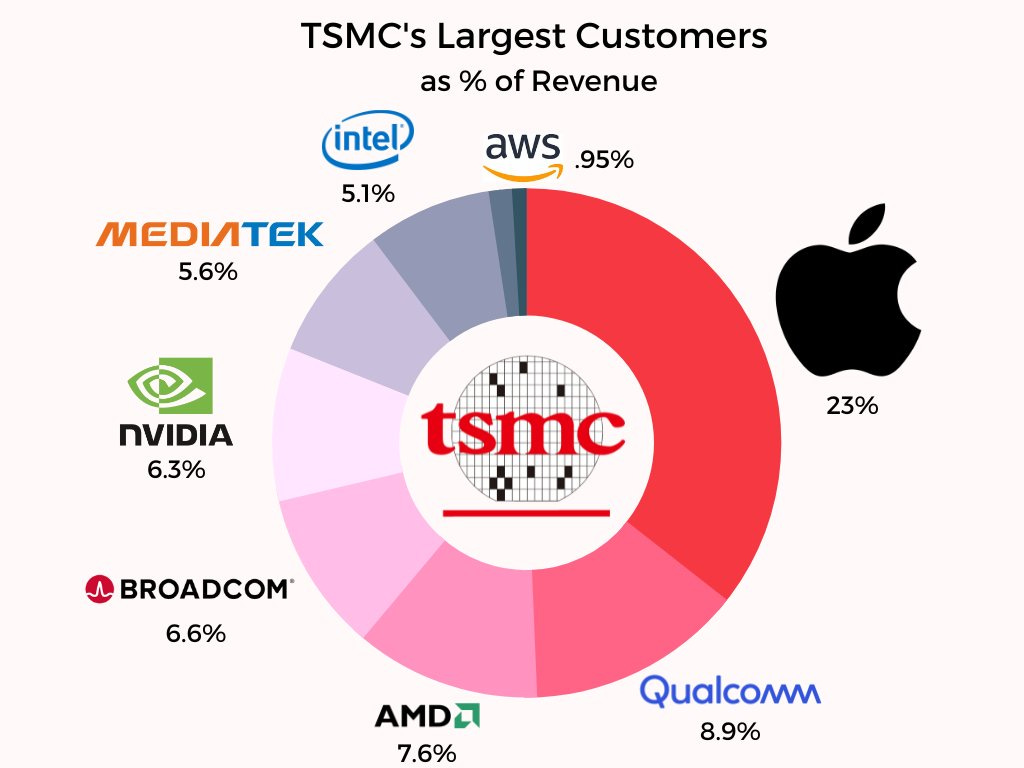
Taiwan Semiconductor Manufacturing Company (TSMC) is the backbone of the global semiconductor industry, producing chips for tech giants like Apple, Nvidia, and AMD. As the world’s largest and most advanced chipmaker, TSMC plays a critical role in powering AI, 5G, and next-generation computing. But is TSMC stock a buy today? Let’s break it down with both bullish and bearish perspectives.

The Bull Case: Why TSMC Could Keep Climbing

1. Dominance in Cutting-Edge Chip Manufacturing

TSMC’s technological leadership is unmatched. Its 3nm and upcoming 2nm nodes place it ahead of competitors like Intel and Samsung, ensuring demand from high-profile clients.

2. Rising AI and High-Performance Computing Demand

The explosion of AI, autonomous vehicles, and high-performance computing means TSMC’s chips are more critical than ever. As companies race to integrate AI, TSMC benefits from strong long-term growth trends.

3. Global Expansion & U.S. Investments

With new facilities in the U.S. and Japan, TSMC is diversifying production beyond Taiwan, reducing geopolitical risks while securing subsidies and incentives from governments looking to strengthen domestic chip production.

4. Financial Strength & Profitability

TSMC boasts robust profit margins and a strong balance sheet, allowing it to invest heavily in future technology while still delivering consistent earnings growth.

The Bear Case: Risks Investors Should Consider

1. Geopolitical Tensions

The ongoing tensions between China and Taiwan pose a major risk. Any disruption to TSMC’s operations could send shockwaves through the tech industry and financial markets.

2. Cyclicality of the Semiconductor Industry

The semiconductor industry is known for boom-and-bust cycles. A slowdown in tech spending or excess chip supply could hurt TSMC’s revenue in the short term.

3. Increased Competition

Intel and Samsung are aggressively investing in advanced manufacturing, aiming to catch up with TSMC. While TSMC holds a strong lead, any missteps could allow competitors to gain ground.

4. Rising Costs & Supply Chain Challenges

Building new fabs is expensive, and supply chain disruptions could impact profitability. As the company expands, managing costs while maintaining efficiency is a crucial challenge.

The Bottom Line: Is TSMC Stock a Buy?

TSMC remains a dominant force in the semiconductor industry, positioned at the heart of major technological advancements. While risks exist, its innovation and market leadership make it a compelling long-term investment.

Want deeper insights and real-time analysis? Become a member of Future Finance Lab and gain exclusive access to expert research, market trends, and investment opportunities. Join us today and stay ahead in the financial markets!

Where to Invest Next: Insights from NVIDIA’s AI Roadmap

NVIDIA, a leader in artificial intelligence (AI) hardware and software, has effectively laid out a roadmap for the future of AI investment. From Perception AI to Generative AI, Agentic AI, and Physical AI, NVIDIA’s vision highlights not just technological advancements but also investment opportunities across key sectors poised for explosive growth. Here’s a detailed analysis of each stage and the companies leading the charge.

1. Perception AI: The Foundation of the AI Revolution

Perception AI focuses on applications like speech recognition, medical imaging, and sensor data processing. It has been the bedrock of AI advancements, dating back to AlexNet’s revolutionary deep learning breakthroughs in 2012. Now, its use cases are expanding across industries like healthcare, automotive, and robotics.

Key Players:

NVIDIA (NVDA): Continues to lead with GPUs powering AI for medical imaging and real-time sensor processing.

Intuitive Surgical (ISRG): Pioneering robotic surgery with AI-assisted imaging for precision healthcare.

Butterfly Network (BFLY): Innovating in portable ultrasound with AI-powered diagnostics.

Cerence (CRNC): Driving voice recognition AI for automotive and IoT devices.

Investment Rationale:

The growing reliance on AI for diagnostics and real-time decision-making in critical sectors like healthcare and transportation makes this a foundational investment area. As more industries adopt AI-driven perception systems, these companies stand to benefit immensely.

2. Generative AI: Transforming Creativity and Marketing

Generative AI has taken center stage in 2023, revolutionizing content creation and digital marketing. From creating art and music to automating marketing campaigns, this technology is shaping the next era of creative industries.

Key Players:

Microsoft (MSFT): With its investment in OpenAI, Microsoft is integrating GPT models into platforms like Azure and Office.

Adobe (ADBE): Incorporating generative AI into its suite of creative tools for designers and marketers.

Unity Software (U): Leveraging AI for game development and immersive experiences.

NVIDIA (NVDA): Enabling generative AI with its cutting-edge hardware for training AI models.

Investment Rationale:

As businesses and creators increasingly rely on AI to scale content production, companies providing generative AI tools and infrastructure will become indispensable. Adobe and NVIDIA are especially well-positioned as creative and hardware enablers.

3. Agentic AI: Enhancing Human Productivity

Agentic AI represents the next evolution, focusing on augmenting human tasks such as coding, customer service, and patient care. It combines AI-driven automation with decision-making capabilities to deliver personalized and efficient solutions.

Key Players:

UiPath (PATH): Specializes in robotic process automation (RPA) for automating repetitive tasks.

ServiceNow (NOW): Leading AI-driven platforms for customer service and enterprise workflows.

Intuit (INTU): Utilizing AI for financial advisory and tax preparation.

Teladoc Health (TDOC): Advancing virtual healthcare with AI-powered diagnostics and care.

Investment Rationale:

As enterprises seek cost efficiency and scalability, Agentic AI solutions will be in high demand. Healthcare, financial services, and enterprise software are the key verticals to watch, with these companies leading the way.

4. Physical AI: The Next Frontier

Physical AI, encompassing robotics and self-driving cars, represents the most tangible and impactful use of artificial intelligence. This segment focuses on enabling robots and autonomous vehicles to interact with and navigate the physical world.

Key Players:

Tesla (TSLA): At the forefront of self-driving technology and AI-powered vehicles.

Waymo (via Alphabet – GOOGL): A leader in autonomous vehicle technology.

Boston Dynamics (via Hyundai): Innovating in robotics for industrial and consumer applications.

ABB (ABB): A global leader in industrial robotics and automation.

NVIDIA (NVDA): Providing the hardware backbone for autonomous and robotic AI.

Investment Rationale:

Physical AI is the most capital-intensive but also the most transformative. Autonomous vehicles and general-purpose robotics have applications in logistics, manufacturing, and everyday consumer products. Investing in this space means betting on the long-term integration of robotics into daily life.

Broader Investment Strategies

For investors looking for diversified exposure to these AI trends, consider ETFs like:

ROBO Global Robotics and Automation Index ETF (ROBO): Focused on robotics and AI.

Global X Robotics & Artificial Intelligence ETF (BOTZ): Concentrated on companies driving AI and automation.

NVIDIA: The Common Denominator

It’s impossible to overlook NVIDIA as a central enabler across all these AI layers. From GPUs powering generative AI models to hardware for autonomous vehicles and robotics, NVIDIA is the backbone of AI innovation.

Final Thoughts

NVIDIA’s roadmap provides not just a technological forecast but also a strategic guide for investors. Perception AI, Generative AI, Agentic AI, and Physical AI represent distinct opportunities, each with its own market leaders and growth trajectories. Whether you’re investing in foundational technologies or cutting-edge robotics, these trends outline a clear pathway to the future.

By aligning your portfolio with these trends, you can capitalize on the ongoing AI revolution. But as always, do thorough research and consider your risk tolerance before investing.

Nvidia Earnings and Market Outlook: AI, Bitcoin, and the Broader Financial Landscape

As the financial world closely watches Nvidia’s latest earnings report, its impact extends beyond just tech stocks—spilling into broader market sentiment, AI investments, and even the cryptocurrency space. With Nvidia’s continued dominance in artificial intelligence and Bitcoin’s ongoing volatility, both markets are at a crucial juncture that could define trends for the remainder of 2025.

Nvidia’s Strong Earnings Performance

Nvidia has once again surpassed expectations, reporting record-breaking revenue of $39.3 billion, marking a 78% year-over-year increase. The company’s adjusted earnings per share (EPS) of $0.89 exceeded Wall Street estimates, reinforcing Nvidia’s critical role in AI infrastructure and computing.

Key Highlights from Nvidia’s Q4 Earnings:

  • Data Center Revenue: Surged to $35.6 billion, fueled by demand for AI-driven cloud computing solutions.
  • Gaming Division: Despite AI taking center stage, Nvidia’s gaming segment showed resilience, generating $3.1 billion in revenue.
  • Future Guidance: Nvidia projects $43 billion in Q1 revenue, signaling continued demand for AI chips despite increasing competition.

The AI boom remains the primary growth driver for Nvidia, as its GPUs power the next generation of machine learning models, cloud computing, and autonomous systems. Despite minor concerns about rising competition from Chinese firms and supply chain constraints, investors remain overwhelmingly bullish on Nvidia’s long-term trajectory.

Stock Market Reaction and Broader Implications

Nvidia’s stock initially saw a 3.7% gain in regular trading hours but experienced some after-hours volatility. However, long-term investors view Nvidia as a cornerstone of the AI revolution, making it a key player in institutional portfolios.

The tech sector as a whole is looking to Nvidia as a bellwether, with its earnings report influencing sentiment across major indices, including the S&P 500 and Nasdaq. With AI adoption accelerating, Nvidia’s success could reignite momentum in a tech sector that has faced headwinds in early 2025.

Bitcoin’s Volatile Ride: What’s Next for Crypto?

While Nvidia is showcasing strength, Bitcoin is facing a period of heightened volatility. The leading cryptocurrency recently dropped below $85,000, marking a significant decline from its early-year highs near $95,000.

Factors Driving Bitcoin’s Price Movements:

  • ETF Outflows: Institutional investors have been shifting funds away from crypto ETFs, causing temporary downward pressure.
  • Regulatory Uncertainty: Governments worldwide continue to debate crypto regulations, influencing investor sentiment.
  • Market Cycles: Bitcoin historically experiences sharp corrections before major bull runs, making its current dip a potential buying opportunity.

Despite recent declines, Bitcoin remains in a long-term uptrend. Many analysts predict a recovery that could push the price toward $100,000+ by late 2025, driven by increasing institutional adoption and the upcoming Bitcoin halving event.

The Intersection of AI and Crypto

While Nvidia and Bitcoin operate in different sectors, their trajectories often overlap in investor sentiment. AI advancements are playing an increasing role in blockchain efficiency, decentralized finance (DeFi), and crypto trading algorithms, linking the two industries more closely than ever.

As AI-driven finance continues to evolve, Nvidia’s dominance in computing power could also fuel next-generation crypto applications, from AI-powered trading bots to blockchain scalability solutions. This convergence presents exciting opportunities for investors who see the synergy between these two fast-growing sectors.

Final Thoughts: Navigating Market Uncertainty

Both Nvidia and Bitcoin represent high-growth opportunities in 2025, albeit with different risk profiles. Nvidia’s earnings reaffirm its leadership in AI, while Bitcoin’s volatility presents both risks and potential rewards for crypto investors.

For those looking to diversify their portfolios, keeping an eye on Nvidia’s AI expansion and Bitcoin’s price action could provide valuable insights into the evolving digital economy. Whether investing in the AI revolution or betting on the future of decentralized finance, market participants should stay informed and strategically positioned for what lies ahead.


Stay updated with the latest financial trends at FutureFinanceLab.com, where we bring expert insights into the evolving digital economy.