Escaping the Concorde Fallacy: How to Stop Throwing Good Money After Bad

Have you ever kept investing in something—time, money, or effort—even when deep down you knew it wasn’t working? You’re not alone. This common decision-making trap is called the Concorde fallacy, also known as the sunk cost fallacy, and it silently undermines smart thinking in both life and investing.

In this post, we’ll break it down in plain language, explore why it happens, and show how to outsmart it using both mental clarity and modern tools—with a little help from Stoic wisdom and financial logic.


What Is the Concorde Fallacy?

The Concorde fallacy happens when people continue pouring resources into a failing project just because they’ve already invested a lot into it. The name comes from the famous Concorde jet project—despite clear signs it would be a financial disaster, both the British and French governments kept funding it, unwilling to “waste” their previous investments.

But here’s the truth:

💡 Sunk costs are gone. What matters is what happens next.


A Real-World Example

Imagine a company launches a new product that flops. Sales are weak. Market feedback is poor. But the executives—having invested millions in R&D and branding—decide to double down with more advertising.

Why?
Because they feel emotionally attached. They don’t want to “waste” what they already spent. But ironically, they end up wasting even more.


Why We Fall Into This Trap

The Concorde fallacy is deeply rooted in human psychology. Here’s why we do it:

1. Loss Aversion

We hate losing more than we love winning. That discomfort pushes us to justify past decisions—even bad ones.

2. Commitment Bias

The more we commit to something, the harder it is to walk away. We’ve built a story around it. We’ve tied it to our identity.

3. Cognitive Dissonance

Admitting a mistake hurts. To reduce that mental tension, we tell ourselves, “Maybe it’ll still work out.”


The Emotional Cost of Not Letting Go

It’s not just money we waste. It’s time, energy, mental clarity, and opportunities that could have delivered real value elsewhere.

🧠 As we say at Future Finance Lab: Smart investing is about clarity, not attachment.


How to Avoid the Sunk Cost Trap

You can’t always eliminate bias—but you can outsmart it. Here’s how:

✅ Focus on the Future

Ask yourself: “If I hadn’t already spent anything on this, would I invest now?”
If the answer is no, that’s your signal to walk away.

✅ Detach Emotionally

It’s okay to feel disappointed, but don’t let emotions drive your wallet. Practice Stoic detachment: control what you can, accept what you can’t, and move forward with logic.

✅ Use Decision Frameworks

Systems like checklists or decision trees reduce emotional noise. That’s why many top investors use strict criteria for sell decisions.

✅ Use Technology

Digital tools and AI aren’t swayed by sunk costs. When emotions run high, let algorithms offer you a clean, rational perspective.


Bonus: Try “Debiasing” in Real Time

Picture this:
A cartoon stick figure, eyes closed, sitting cross-legged with a gentle smile. Above it, the word “Debiasing.”
In a speech bubble, it calmly says: “YAS.”

It may sound silly, but taking a step back, breathing, and recognizing your bias is often the first and most powerful move.


Final Thoughts: Sunk Costs Are the Price of Growth

Every investor has made a decision they regret. That’s part of learning. But doubling down on a mistake just to avoid the feeling of failure is like adding bricks to a sinking ship.

At FutureFinanceLab.com, we teach not just how to invest—but how to think. Avoiding traps like the Concorde fallacy isn’t just smart. It’s essential for long-term success.


📘 Want to Master Smart Decision-Making?

Become a member at FutureFinanceLab.com and access our library of behavioral finance lessons, investment psychology breakdowns, and practical tools to build clarity into every decision. Make investing a mindset, not a gamble.

Why Everyone Buys at the Top (and How Not To)

Ever feel like you’re always buying right before the crash?

You’re not alone. It’s one of the most common (and painful) mistakes investors make—buying at the top of a market cycle, when prices are inflated and excitement is everywhere.

But why does this keep happening? And more importantly, how can you avoid it?

Let’s break it down using simple psychologyreal data, and practical tools to help you stay smart when the market gets loud.


🔁 The Herd Mentality Trap

Humans are social creatures. When we see crowds rushing into something—whether it’s a concert, a new iPhone, or a cryptocurrency—we instinctively believe “they must know something I don’t.”

That’s herd mentality, and in markets, it creates a dangerous feedback loop:

  1. Prices start rising.
  2. Early investors share success stories.
  3. Media amplifies the trend.
  4. Fear of missing out (FOMO) kicks in.
  5. Late buyers rush in at inflated prices.
  6. Smart money exits quietly.
  7. The bubble pops.

“When everyone is greedy, be fearful.” — Warren Buffett


📈 Real-World Examples of Buying at the Top

Let’s look at some painful market tops:

  • Bitcoin 2017: Retail frenzy pushed BTC to $19,000 in December… then it crashed 80%.
  • Dot-Com Bubble (2000): Stocks like Pets.com soared before collapsing. The Nasdaq lost over 75%.
  • GameStop 2021: Social media pumped it to $483… only to crash back to earth weeks later.

Each case followed the same emotional cycle—optimism → excitement → euphoria → panic → despair.


🧠 The Psychology Behind It

Here’s the simplified psychology of a typical investor:

StageEmotionAction Taken
Prices rising slowlySkepticismWait and watch
Prices climbing fastFOMOBuy late
Prices peakEuphoriaBuy more
Prices drop fastFearPanic sell
Prices bottom outRegretAvoid market

People often buy when they feel most confident—which ironically is when risk is highest.


✅ How to Avoid Buying at the Top

You don’t need to predict the top—you just need a system that protects you from emotional mistakes. Here’s how:

  1. Have a Plan
    → Set buy/sell levels in advance based on your goals, not emotions.
  2. Use Dollar-Cost Averaging (DCA)
    → Invest small amounts regularly, regardless of price. It smooths out the ups and downs.
  3. Check the Crowd
    → If everyone is talking about it—even your barista—it might be time to pause.
  4. Zoom Out
    → Look at the 5-year chart, not the 5-minute one. Trends matter more than spikes.
  5. Avoid FOMO News
    → Be skeptical of headlines like “You Can’t Lose with This Stock!”

📉 Simple Visual to Remember

          Euphoria

│ 📈⬆️
│ /
Optimism │ /
│ / ← You buy here 😬
│ /
│ / 📉⬇️
│/
└──────────────▶
Fear Panic

Final Thought: Buy When It’s Boring

The best time to buy is usually when no one is talking about it—not when it’s trending on X or TikTok.

At FutureFinanceLab.com, we help you think long-term, zoom out, and invest with clarity—not emotion.


📌 Want practical tools to avoid FOMO and start investing smarter?
Explore our latest bite-sized market lessons at FutureFinanceLab.com.

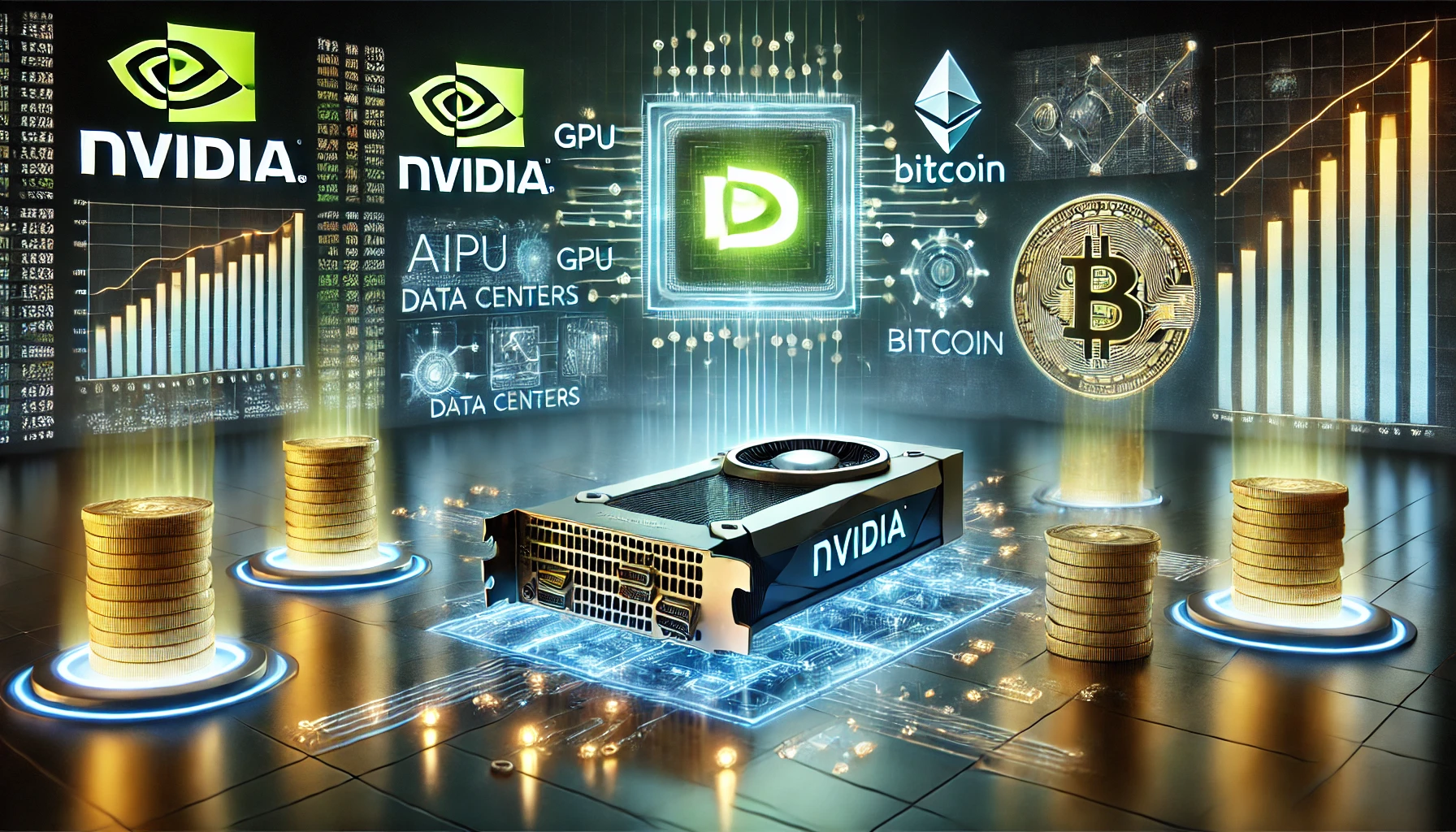
Nvidia Earnings and Market Outlook: AI, Bitcoin, and the Broader Financial Landscape

As the financial world closely watches Nvidia’s latest earnings report, its impact extends beyond just tech stocks—spilling into broader market sentiment, AI investments, and even the cryptocurrency space. With Nvidia’s continued dominance in artificial intelligence and Bitcoin’s ongoing volatility, both markets are at a crucial juncture that could define trends for the remainder of 2025.

Nvidia’s Strong Earnings Performance

Nvidia has once again surpassed expectations, reporting record-breaking revenue of $39.3 billion, marking a 78% year-over-year increase. The company’s adjusted earnings per share (EPS) of $0.89 exceeded Wall Street estimates, reinforcing Nvidia’s critical role in AI infrastructure and computing.

Key Highlights from Nvidia’s Q4 Earnings:

  • Data Center Revenue: Surged to $35.6 billion, fueled by demand for AI-driven cloud computing solutions.
  • Gaming Division: Despite AI taking center stage, Nvidia’s gaming segment showed resilience, generating $3.1 billion in revenue.
  • Future Guidance: Nvidia projects $43 billion in Q1 revenue, signaling continued demand for AI chips despite increasing competition.

The AI boom remains the primary growth driver for Nvidia, as its GPUs power the next generation of machine learning models, cloud computing, and autonomous systems. Despite minor concerns about rising competition from Chinese firms and supply chain constraints, investors remain overwhelmingly bullish on Nvidia’s long-term trajectory.

Stock Market Reaction and Broader Implications

Nvidia’s stock initially saw a 3.7% gain in regular trading hours but experienced some after-hours volatility. However, long-term investors view Nvidia as a cornerstone of the AI revolution, making it a key player in institutional portfolios.

The tech sector as a whole is looking to Nvidia as a bellwether, with its earnings report influencing sentiment across major indices, including the S&P 500 and Nasdaq. With AI adoption accelerating, Nvidia’s success could reignite momentum in a tech sector that has faced headwinds in early 2025.

Bitcoin’s Volatile Ride: What’s Next for Crypto?

While Nvidia is showcasing strength, Bitcoin is facing a period of heightened volatility. The leading cryptocurrency recently dropped below $85,000, marking a significant decline from its early-year highs near $95,000.

Factors Driving Bitcoin’s Price Movements:

  • ETF Outflows: Institutional investors have been shifting funds away from crypto ETFs, causing temporary downward pressure.
  • Regulatory Uncertainty: Governments worldwide continue to debate crypto regulations, influencing investor sentiment.
  • Market Cycles: Bitcoin historically experiences sharp corrections before major bull runs, making its current dip a potential buying opportunity.

Despite recent declines, Bitcoin remains in a long-term uptrend. Many analysts predict a recovery that could push the price toward $100,000+ by late 2025, driven by increasing institutional adoption and the upcoming Bitcoin halving event.

The Intersection of AI and Crypto

While Nvidia and Bitcoin operate in different sectors, their trajectories often overlap in investor sentiment. AI advancements are playing an increasing role in blockchain efficiency, decentralized finance (DeFi), and crypto trading algorithms, linking the two industries more closely than ever.

As AI-driven finance continues to evolve, Nvidia’s dominance in computing power could also fuel next-generation crypto applications, from AI-powered trading bots to blockchain scalability solutions. This convergence presents exciting opportunities for investors who see the synergy between these two fast-growing sectors.

Final Thoughts: Navigating Market Uncertainty

Both Nvidia and Bitcoin represent high-growth opportunities in 2025, albeit with different risk profiles. Nvidia’s earnings reaffirm its leadership in AI, while Bitcoin’s volatility presents both risks and potential rewards for crypto investors.

For those looking to diversify their portfolios, keeping an eye on Nvidia’s AI expansion and Bitcoin’s price action could provide valuable insights into the evolving digital economy. Whether investing in the AI revolution or betting on the future of decentralized finance, market participants should stay informed and strategically positioned for what lies ahead.


Stay updated with the latest financial trends at FutureFinanceLab.com, where we bring expert insights into the evolving digital economy.

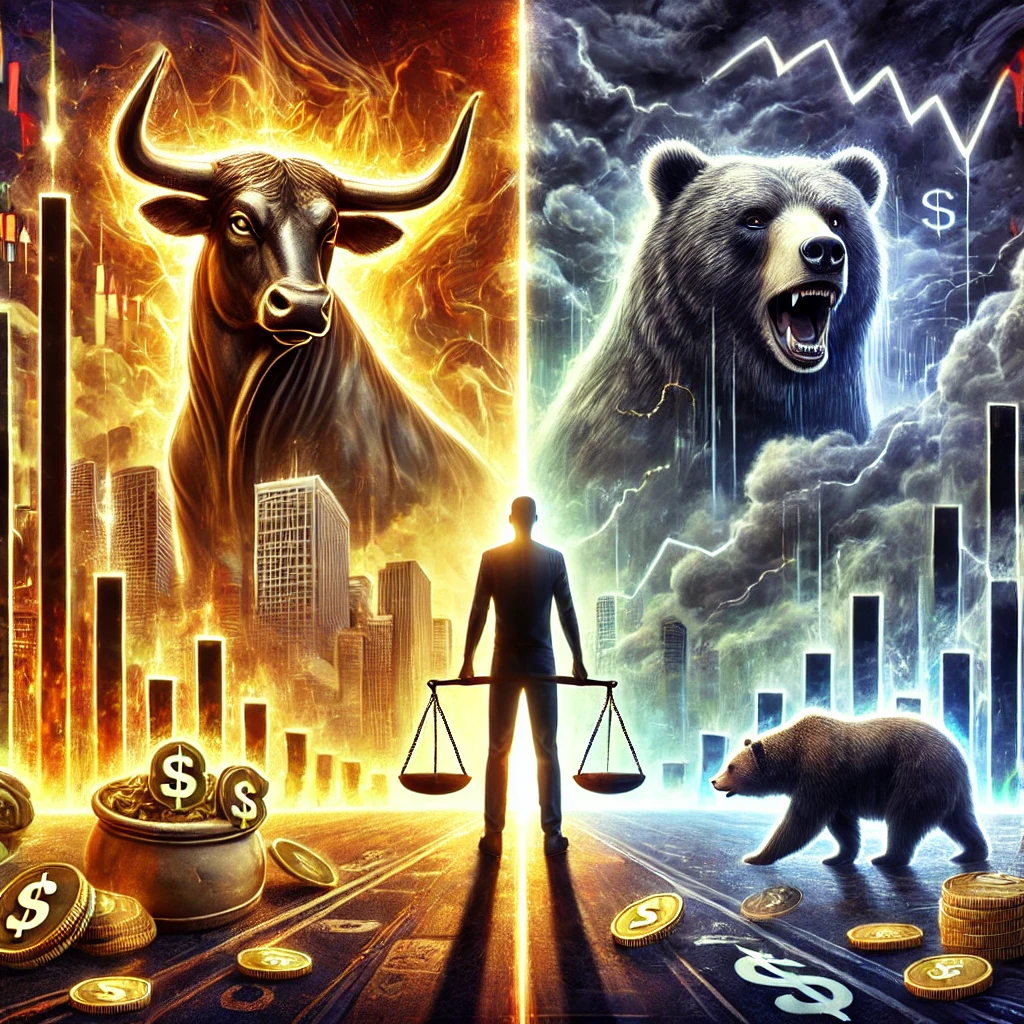
Greed and Fear: The Twin Forces Driving Financial Markets

Financial markets are a reflection of human emotion, where greed and fear play leading roles. These two forces influence investors’ decisions, often driving them to irrational behaviors. To navigate the complexities of investing, understanding how greed and fear operate is essential—especially when examining historical events like the 2008 financial crisis.

Warren Buffett’s Timeless Advice

Warren Buffett, renowned for his wisdom and long-term investing approach, provided a valuable perspective on these emotions in his 2008 letter to shareholders following the market crash. His advice remains as relevant today as it was then:

“Be fearful when others are greedy, and greedy when others are fearful.”

This philosophy underscores the importance of contrarian thinking in investing. When fear dominates and prices plummet, opportunities for value investing emerge. Conversely, when markets are euphoric, inflated prices often signal increased risk.

Behavioral Finance: The Psychology of Markets

Behavioral finance explores how psychological factors influence financial decisions. By analyzing these biases, investors can better understand market trends and their own tendencies.

  1. Herd Mentality
    Investors often follow the crowd, leading to booms and busts. During the 2008 crisis, fear drove mass sell-offs, causing markets to spiral downward. Similarly, unchecked optimism during the housing bubble fueled overvaluation.
  2. Loss Aversion
    This bias, where losses hurt more than gains feel rewarding, often leads investors to avoid risks or hold onto losing investments, hoping for a rebound.
  3. Overconfidence
    In bull markets, many investors believe they can outsmart the market, feeding speculative bubbles. This overconfidence often results in poor timing and costly mistakes.

Lessons from the 2008 Financial Crisis

The 2008 financial crisis serves as a textbook example of greed and fear at work. Excess greed in the form of subprime mortgages and complex financial instruments pushed markets to unsustainable levels. When the bubble burst, fear caused a massive sell-off, leading to a global recession.

In his letter, Buffett emphasized sticking to investment fundamentals, maintaining a long-term outlook, and avoiding speculative behavior. His advice highlights the importance of emotional discipline during turbulent times.

Practical Tips for Managing Greed and Fear

  • Focus on Value: Invest in quality assets at reasonable prices, avoiding the temptation of chasing speculative trends.
  • Stay Rational: Develop a disciplined investment strategy and stick to it, even during market highs or lows.
  • Learn from History: Understanding past market cycles can help anticipate future trends and avoid common pitfalls.
  • Diversify: Spread investments across asset classes to minimize risks associated with extreme market swings.

Join Our Community of Learners

Markets will always be influenced by greed and fear, but successful investors learn to recognize and manage these emotions. At Future Finance Lab, we’re dedicated to helping you master the tools and knowledge needed to thrive in today’s financial landscape.

By becoming a member, you’ll gain access to personalized learning experiences, expert insights, and a community of like-minded individuals passionate about financial growth. From market analysis to cryptocurrency and personal finance strategies, our platform empowers you to take control of your financial journey.

Join us today to be part of a growing community that prioritizes learning, rational decision-making, and long-term success. Together, we can turn fear into opportunity and greed into thoughtful action.

👉 Become a Member Now and start building a smarter financial future!