Future opportunities for XRP RIPPLE in WEB3
How to Grow Your Wealth by Investing $50 Weekly: A Diversified Approach
Investing $50 every week might seem small, but with a well-structured, diversified portfolio that includes Bitcoin, S&P 500 ETFs, and other key assets, it can become a powerful wealth-building strategy over time. In this guide, we’ll explore how consistent weekly investments can grow over 1, 5, and 10 years—and how you can get started with insights from FutureFinanceLab.com.
📊 Why a Diversified Portfolio Matters
A diversified portfolio spreads your $50 across different asset classes, reducing risk while increasing potential returns. Here’s an example breakdown:
- 40% in S&P 500 ETFs: Steady, long-term growth through exposure to leading U.S. companies.
- 30% in Bitcoin: High-risk, high-reward potential from cryptocurrency.
- 20% in Global/Tech ETFs: Broader exposure to international and tech-focused stocks.
- 10% in Bonds or Stable Assets: Stability during market downturns.
This blend offers growth, protection against volatility, and long-term sustainability.
🚀 Investment Growth Projections Over Time
1-Year Outlook
- Total Invested: $2,600 ($50 × 52 weeks)
- Expected Growth:
- S&P 500 ETFs (7% return): $1,040 → ~$1,110
- Bitcoin (10-20% variable return): $780 → ~$860–$930
- Global/Tech ETFs (6-8% return): $520 → ~$550–$560
- Bonds/Stable Assets (3% return): $260 → ~$267
💼 Total Estimated Portfolio Value: ~$2,780–$2,867
🔑 Key Takeaway: In the first year, growth may seem modest, but consistency is building a strong foundation.
5-Year Outlook
- Total Invested: $13,000 ($50 × 52 weeks × 5 years)
- Expected Growth:
- S&P 500 ETFs: $5,200 → ~$7,300
- Bitcoin: $3,900 → ~$6,000–$8,000
- Global/Tech ETFs: $2,600 → ~$3,500
- Bonds/Stable Assets: $1,300 → ~$1,500
💼 Total Estimated Portfolio Value: ~$18,300–$20,300
🔑 Key Takeaway: Compound growth starts showing significant results by year five, with Bitcoin contributing to higher upside potential.
10-Year Outlook
- Total Invested: $26,000 ($50 × 52 weeks × 10 years)
- Expected Growth:
- S&P 500 ETFs: $10,400 → ~$21,000
- Bitcoin: $7,800 → ~$15,000–$25,000
- Global/Tech ETFs: $5,200 → ~$10,000
- Bonds/Stable Assets: $2,600 → ~$3,500
💼 Total Estimated Portfolio Value: ~$49,500–$59,500
🔑 Key Takeaway: The power of consistency and compounding creates impressive long-term results. Bitcoin’s volatility may cause larger swings, but overall diversification balances risk and reward.

📚 Why FutureFinanceLab.com is Your Go-To Resource
At FutureFinanceLab.com, we focus on making financial education accessible and practical. Whether you’re a beginner or an experienced investor, you’ll find:
✅ Step-by-step investment guides
✅ Real-time market analysis
✅ Updates on Bitcoin, ETFs, and diversified portfolios
✅ Personalized AI-driven financial insights
Stay informed, make smarter investment choices, and grow your financial future with confidence.
🛠️ Steps to Start Investing $50 Weekly
- Open an Investment Account: Choose a broker or investment app with access to ETFs, Bitcoin, and diversified funds.
- Automate Weekly Investments: Set up recurring deposits every week.
- Diversify Smartly: Allocate your $50 across different assets as shown above.
- Track Performance: Regularly review and rebalance your portfolio.
- Educate Yourself: Stay updated with resources from FutureFinanceLab.com.
🌟 Final Thoughts
Investing $50 weekly isn’t just about the amount—it’s about consistency, discipline, and diversification. By spreading your investment across Bitcoin, ETFs, and other assets, you reduce risk and maximize growth potential over time.
Start today, stick to your plan, and let FutureFinanceLab.com guide you on your journey to financial freedom. 🚀
Bitcoin Breaks $100,000: A Historic Milestone in Digital Finance
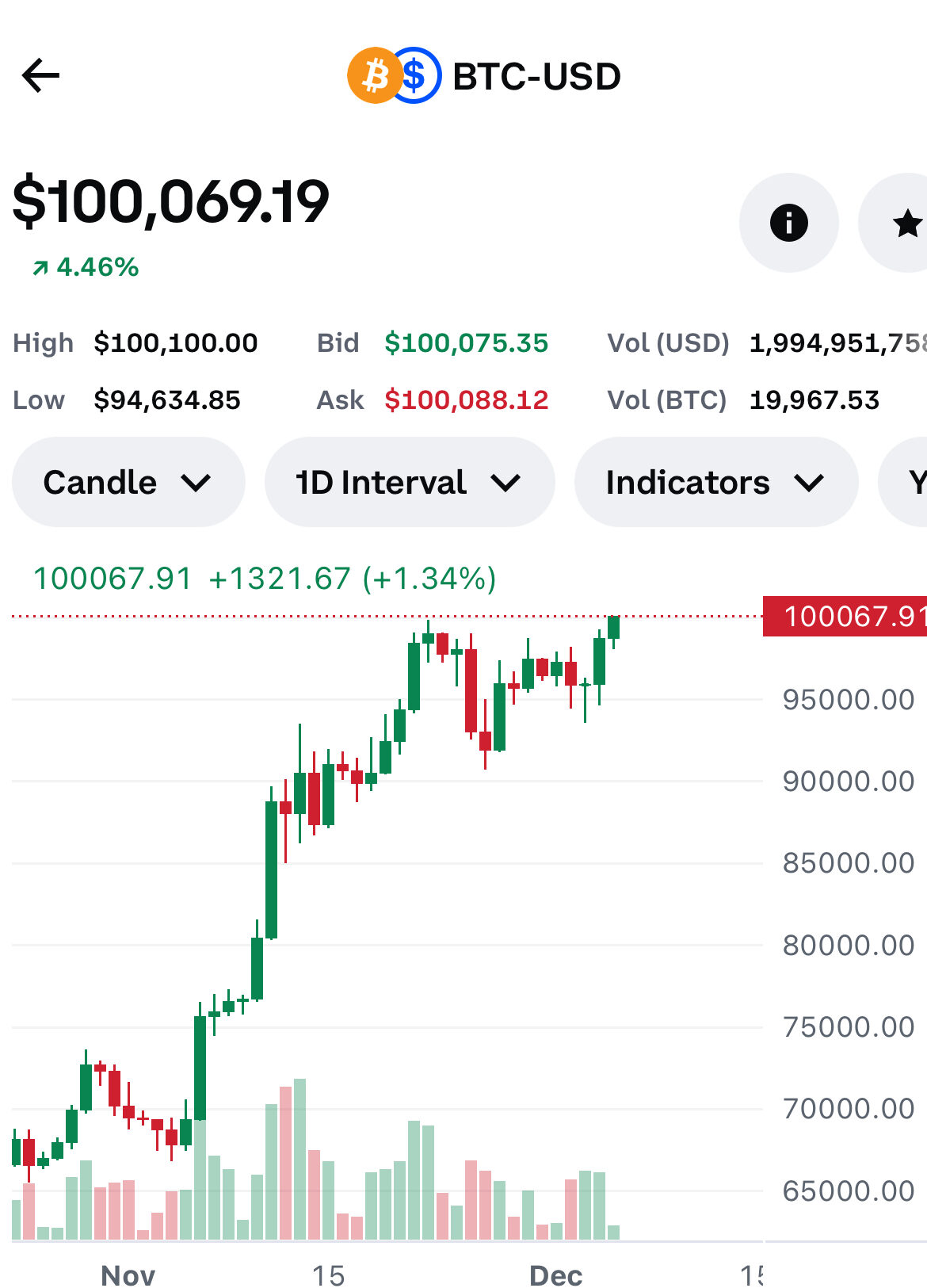
Bitcoin has reached a momentous milestone, soaring past $100,000 for the first time in its history. What began as a radical experiment in decentralized finance over a decade ago has now become a cornerstone of the global financial ecosystem, reshaping the way we think about money and value.
This milestone represents more than just a price—it symbolizes the mainstream acceptance of cryptocurrency as a legitimate asset class. Bitcoin, often referred to as “digital gold,” has grown to rival traditional investments, offering a hedge against inflation, a store of value, and a beacon of financial innovation.
The Drivers Behind the Surge
Bitcoin’s ascent to $100,000 has been fueled by a confluence of factors. Institutional adoption has played a pivotal role, with major corporations, asset managers, and even governments integrating Bitcoin into their strategies. Regulatory clarity in key markets has also reduced uncertainty, inviting more investors to join the market.
Furthermore, macroeconomic factors, such as inflationary pressures and a weakening dollar, have accelerated Bitcoin’s adoption as a hedge against traditional financial instability. With growing trust in its security and utility, Bitcoin is no longer just an alternative—it’s becoming essential.
Altcoins Ride the Wave
As Bitcoin dominates headlines, altcoins like Stacks (STX), Hedera (HBAR), and XRP are also seeing increased attention. STX, with its innovative approach to enabling smart contracts on the Bitcoin blockchain, has attracted significant interest. Meanwhile, XRP continues to make strides in global payments, and HBAR is gaining traction as a leader in enterprise-grade blockchain technology.
These altcoins are benefiting from the broader market momentum, with many investors seeking opportunities beyond Bitcoin to diversify their portfolios.
What’s Next for Bitcoin?
The $100,000 milestone is a pivotal moment, but it also raises questions about the future. Will Bitcoin continue its upward trajectory, or will the market see a period of consolidation? Analysts remain optimistic, pointing to increasing adoption, the growing DeFi ecosystem, and the potential for further regulatory breakthroughs.
One thing is clear: Bitcoin’s journey is far from over. Its rise to $100,000 is not just a financial event—it’s a cultural and technological revolution. As Bitcoin continues to redefine the boundaries of what’s possible in finance, the world watches, ready for the next chapter in this extraordinary story.
For more insights and the latest cryptocurrency updates, visit www.futurefinancelab.com . Stay informed and ahead of the curve as we navigate this exciting new era in digital finance!
Altcoin Season is Officially Here: Spotlight on XRP and HBAR
As the latest CMC Altcoin Season Index hits a solid 75/100, it’s official: the crypto market is firmly in altcoin territory. This index score indicates that a majority of the top 50 cryptocurrencies have outperformed Bitcoin over the last 90 days, signaling a significant shift in investor sentiment and capital flow toward altcoins.
Leading the charge are some standout performers, including XRP and HBAR, with impressive 90-day gains of 321% and 373%, respectively. These gains underscore the growing confidence in utility-driven tokens as investors look beyond Bitcoin for opportunities.
XRP: Momentum from Legal and Utility Gains
XRP’s resurgence is tied to favorable developments in its ongoing legal saga and increasing adoption for cross-border payments. Ripple’s expanding partnerships and use cases in the financial sector have propelled XRP into the spotlight, with its price reflecting renewed optimism about its potential.
HBAR: Pioneering Efficiency and Scalability
HBAR has also seen a meteoric rise, driven by its unique position in the market. Hedera’s enterprise-grade blockchain solution, offering unmatched efficiency and scalability, continues to attract institutional and developer interest. Its focus on real-world applications, from tokenized assets to supply chain solutions, has resonated with investors.
Broader Market Implications
The current altcoin season marks a clear divergence in the crypto landscape. While Bitcoin remains a dominant force, this trend highlights the market’s appetite for innovation and diversification. With other coins like DOGE, ADA, and ALGO also posting significant gains, this rally reflects a broader altcoin narrative centered on utility, community, and speculative excitement.
For traders and investors, the season is ripe with opportunities, but as always, market conditions demand careful analysis and risk management. Altcoin season may just be getting started, and coins like XRP and HBAR are positioned to remain pivotal players in this evolving narrative.
For more insights into the evolving world of cryptocurrency and finance, and to stay ahead in this fast-moving space, visit FutureFinanceLab.com. Become a member today to access exclusive content, market trends, and expert analyses!
Market Snapshot(Bitcoin,Xrp,HBAR etc )
1/9
🌐 Market Snapshot:
Crypto markets are trending downward. Volatility is high, but downturns often set the stage for future opportunities. Here’s a breakdown of what’s happening ⬇️
2/9
📉 #Bitcoin (BTC): $93,211.67 (-3.13%)
BTC’s pullback reflects broader market caution. With strong support at key levels, this dip may consolidate before the next big move. Eyes on macro trends like liquidity and rate expectations.
3/9
📉 #Ethereum (ETH): $3,314.21 (-4.71%)
ETH’s sharper decline highlights risk aversion in altcoin markets. However, its network upgrades and staking momentum keep the long-term outlook intact. Short-term patience could pay off.
4/9
📉 #XRP: $1.36 (-4.08%)
XRP follows the market downturn but remains resilient given its regulatory clarity in the U.S. Long-term accumulation could be a theme here as adoption grows.
5/9
📉 Mid-Cap Moves:
• $ARB: $0.86 (-7.29%)
• $STX: $2.08 (-5.17%)
Scaling solutions and blockchain-specific projects are taking a hit. These dips often present opportunities for accumulating solid projects with utility and adoption.
6/9
🚨 Alts Leading Declines:
• $SAND: $0.62 (-19.82%)
• $AR: $19.40 (-11.90%)
Speculative tokens like SAND and storage protocols like AR face steep corrections. Risk management is key in sectors reliant on future growth.
7/9
✅ Stablecoins Hold Strong:
• $USDC: $1.0001 (+0.01%)
Capital is flowing into stablecoins amid the sell-off. This signals caution, but it also shows dry powder waiting to re-enter when confidence returns.
8/9
🌊 Macro Takeaway:
Risk-off sentiment is pressuring speculative assets. This is likely tied to global rate hikes and liquidity concerns. Smart money watches these dips for strategic entries.
9/9
📌 What’s Next:
• Bitcoin: Watch for key support at $90,000 to $92,000.
• ETH: $3,000 is a critical level to hold.
• Alts: Focus on utility-driven projects, not hype.
This market phase is challenging, but every cycle rewards the patient. Stay sharp.
Beginner’s Guide to Crypto Investment

Beginner’s Guide to Crypto Investment
Learn How to Invest in Crypto Responsibly
Investing in cryptocurrencies can be exciting and rewarding, but it’s essential to approach it with caution and strategy. This guide will help you understand the basics and make informed decisions while minimizing risks.
1. Understand the Basics
Before diving in, familiarize yourself with key terms and concepts:
- Cryptocurrency: Digital or virtual currencies secured by cryptography (e.g., Bitcoin, Ethereum).
- Blockchain: The technology that powers cryptocurrencies by maintaining a decentralized ledger.
- Wallet: A digital tool for storing, sending, and receiving cryptocurrencies.
Tip: Start by researching popular cryptocurrencies like Bitcoin (BTC) and Ethereum (ETH) before exploring smaller projects.
2. Assess Your Financial Situation
Only invest money you can afford to lose. Cryptocurrencies are highly volatile, and prices can fluctuate dramatically.
- Create an investment budget.
- Build an emergency fund before allocating money to crypto.
- Diversify your investments to balance risk.
3. Choose a Reliable Exchange
Select a trusted platform to buy and trade cryptocurrencies. Look for:
- Security Features: Two-factor authentication (2FA), encryption, and cold storage.
- Ease of Use: User-friendly interfaces for beginners.
- Reputation: Platforms like Coinbase, Binance, and Crypto.com are widely recognized.
4. Secure Your Investments
Protect your cryptocurrencies by using secure storage solutions:
- Hot Wallets: Convenient for frequent trading but vulnerable to online threats.
- Cold Wallets: Offline storage, such as hardware wallets, offering maximum security.
- Avoid sharing your private keys or passwords.
5. Start Small and Stay Informed
- Begin with a small amount to get familiar with the process.
- Regularly follow crypto news and trends from reliable sources.
- Learn about emerging technologies and updates in the crypto space.
6. Beware of Scams
- Avoid “get rich quick” schemes or unsolicited investment offers.
- Verify the authenticity of any platform or project before investing.
- Use official websites and links to avoid phishing attacks.
7. Long-Term Perspective
Cryptocurrencies can be a long-term investment. Avoid panic selling during market dips and focus on projects with solid fundamentals.
Remember: Patience is key.
8. Learn About Taxes and Regulations
Understand your country’s tax policies on crypto gains and abide by local regulations. Responsible investing includes reporting earnings correctly.
9. Tools and Resources
- Portfolio Trackers: Apps like CoinGecko or Blockfolio to monitor your investments.
- Educational Platforms: Future Finance Lab offers in-depth tutorials to guide you.
Ready to Start Your Crypto Journey?
Investing in cryptocurrencies responsibly requires knowledge, discipline, and a long-term approach. By following these tips, you can confidently take your first steps in the world of digital assets.
Explore More Resources
Check out our latest articles and tools to help you succeed in crypto investing at Future Finance Lab!
Bitcoin, XRP, HBAR, and STX: Big Moves Ahead for Crypto’s Rising Stars 🚀
As crypto markets heat up with Bitcoin nearing all-time highs around $91,000, predictions suggest that major assets like XRP, Hedera (HBAR), and Stacks (STX) could see transformative growth. Here’s a look at what’s next for these key players as they capitalize on institutional interest, regulatory clarity, and market expansion.
1. Bitcoin: $100,000 and Beyond?
Many analysts believe that Bitcoin’s current trajectory could lead it to surpass the $100,000 mark in the near term. With strong institutional backing and the recent success of Bitcoin ETFs, the door is now open for billions in new capital. As Larry Fink of BlackRock describes Bitcoin as “digital gold,” Bitcoin’s role as a store of value could solidify further, making it a key asset in diversified portfolios.
Predictions for 2025 range from $150,000 to $250,000 if institutional demand holds steady and broader adoption continues. Bitcoin’s limited supply and increasing acceptance as a hedge against inflation could further fuel its rise, positioning it as a stable choice in the world of digital finance.
2. XRP: Poised for Global Payment Dominance?
XRP’s role in cross-border payments could see a major boost as Ripple’s legal battles with the SEC come to an end. Some analysts predict that if Ripple fully resolves its regulatory issues, XRP could hit $1 to $2 in the next year, particularly as it gains adoption among banks and payment networks.
Ripple’s partnerships with major exchanges and the development of an XRP-backed stablecoin could position XRP as a critical tool in global finance. If XRP can establish itself as a bridge currency in international payments, it could eventually compete with traditional systems like SWIFT, especially in emerging markets.
3. HBAR: The Future of Enterprise Blockchain?
Hedera’s HBAR, currently around $0.06, is projected to grow as more corporations adopt blockchain for supply chains, data management, and financial services. With its high speed and energy efficiency, HBAR could reach $0.15 to $0.25 by 2025 if adoption by enterprises continues to rise.
HBAR’s partnerships with major firms like IBM and Google hint at its potential as the blockchain of choice for big businesses. Hedera’s governance model, which includes industry leaders, could make it particularly appealing to enterprises looking for a secure and scalable solution that meets regulatory standards.
4. Stacks (STX): Expanding Bitcoin’s Ecosystem
Stacks, which enables smart contracts on Bitcoin, has gained momentum as Bitcoin itself reaches new heights. Predictions for STX range from $3 to $5 by 2025, especially if Bitcoin’s popularity continues to attract developers to Stacks’ ecosystem.
By enabling DeFi and NFTs on Bitcoin’s secure network, Stacks brings new functionality to the original cryptocurrency, which could attract both developers and users interested in decentralized applications. As Bitcoin ETFs increase accessibility, the relevance of Stacks in the Bitcoin ecosystem could grow, making it a promising platform for future development.
Looking Ahead
These assets each bring unique strengths to the crypto market. Bitcoin’s role as “digital gold,” XRP’s potential in global finance, HBAR’s appeal to enterprises, and Stacks’ expansion of Bitcoin’s utility all point to a bright future. As 2024 unfolds, regulatory clarity and institutional interest may continue to drive momentum, potentially setting the stage for transformative growth across these digital assets.
At Future Finance Lab, we’re dedicated to bringing you timely insights on the market’s biggest players and emerging assets alike. Stay tuned for more updates and analysis to keep a pulse on the market’s ever-shifting mood and sentiment.
Crypto Market Mood: Key Insights on Bitcoin, HBAR, STX, and XRP
Introduction
The cryptocurrency landscape remains as dynamic as ever, shaped by global economic factors, regulatory shifts, and technological advancements. While major players like Bitcoin continue to hold a significant share of the market’s attention, other assets like HBAR (Hedera), STX (Stacks), and XRP (Ripple) are emerging with unique value propositions that appeal to both retail and institutional investors.
At Future Finance Lab, we’re committed to keeping you informed about the latest in market sentiment and trends across these key assets. Here’s an overview of where each of these cryptocurrencies stands in today’s market and what the sentiment suggests about potential future performance.
Bitcoin (BTC): The Market’s Leading Indicator
Bitcoin has recently surged, reaching around $88,980 according to the latest data. Its resilience at this price level has reinforced confidence among investors, even as global economic conditions remain uncertain. The sharp increase in trading volume suggests a strong influx of new investments, potentially from institutional players and retail traders re-entering the market.
Sentiment Analysis:
Sentiment around Bitcoin remains overwhelmingly positive, with many market participants closely watching the $90,000 threshold as a psychological level. Breaking above this mark could set the stage for further upside, although some investors are cautious about short-term volatility.
Key Takeaway: Bitcoin’s recent surge strengthens its position as the market leader, setting a positive tone across the crypto space. The sentiment is optimistic but tempered by volatility concerns as BTC approaches $90,000.
Ethereum (ETH): Facing Resistance
Ethereum (ETH) is currently priced around $3,271 and has seen some consolidation as it struggles to break through recent resistance levels. While the broader market is bullish, Ethereum has faced minor pullbacks, likely due to profit-taking and a rotation of capital into Bitcoin.
Sentiment Analysis:
Ethereum’s sentiment is mixed, with long-term believers confident in ETH’s role in DeFi and NFTs, while short-term traders are eyeing potential retracements. As ETH remains below $3,300, its near-term price action might be somewhat constrained by market rotation into Bitcoin.
Key Takeaway: While sentiment around Ethereum is still positive, it’s somewhat overshadowed by Bitcoin’s strong performance. ETH may continue to consolidate around its current price levels before a potential upward movement.
HBAR (Hedera): Gaining Traction Through Partnerships
Hedera Hashgraph (HBAR) has climbed to $0.0666, reflecting a strong 24-hour increase of approximately 17.89%. The project’s partnerships, particularly in the finance and supply chain sectors, are boosting HBAR’s market sentiment. Hedera’s unique Hashgraph consensus is drawing attention for its speed and efficiency, especially in enterprise solutions.
Sentiment Analysis:
The market mood around HBAR is increasingly positive, with many investors looking at it as a potential long-term hold given its growing adoption in enterprise applications. The recent spike in price activity suggests rising confidence in Hedera’s roadmap.
Key Takeaway: HBAR is positioned well as a scalable solution for businesses, and its sentiment is largely driven by recent partnerships and enterprise adoption. With strong recent gains, it remains a key asset to watch.
STX (Stacks): Building DeFi on Bitcoin
Stacks (STX) is priced at $2.023, showing resilience in a competitive market. As one of the primary platforms enabling DeFi on Bitcoin, Stacks has gained attention for bringing smart contract functionality to the Bitcoin ecosystem, which could significantly broaden BTC’s use cases.
Sentiment Analysis:
Investor sentiment toward STX is growing, especially as Bitcoin’s recent rally highlights the potential of DeFi solutions that build on BTC’s security and reputation. Stacks is likely to see increased activity as the DeFi sector matures, with more developers exploring its capabilities.
Key Takeaway: STX benefits from the current Bitcoin momentum and offers investors a unique value proposition within Bitcoin-centric DeFi. Market sentiment remains positive, with expectations of further innovation.
XRP (Ripple): Momentum from Legal Wins and Regulatory Clarity
XRP is priced at $0.7125 and has risen by approximately 15.27% over the past 24 hours. Positive sentiment continues to build around Ripple’s XRP, fueled by favorable developments in Ripple’s legal case with the SEC. Investors are optimistic that a regulatory victory could propel XRP to new heights, particularly within the financial services industry.
Sentiment Analysis:
XRP’s sentiment is bullish as legal clarity appears within reach. The positive trend suggests that investors are betting on XRP’s potential to reshape cross-border payments if regulatory barriers are lifted.
Key Takeaway: XRP’s sentiment is strongly tied to its regulatory journey, with rising optimism about its future adoption in financial services. The asset has shown strong recent gains as investors weigh in on possible legal outcomes.
Overall Market Sentiment: Cautious Optimism Amid Economic Uncertainty
Across the board, the mood within the cryptocurrency market is cautiously optimistic. Bitcoin’s impressive rally is setting a bullish tone, while altcoins like HBAR, STX, and XRP are gaining attention for their unique value propositions. That said, the market remains sensitive to broader economic indicators and regulatory shifts, so investors should proceed with a balanced view of opportunities and risks.
Conclusion: Staying Informed and Strategic
As the market evolves, so does sentiment around key assets like Bitcoin, HBAR, STX, and XRP. Each of these cryptocurrencies is positioned to address different needs within the digital finance landscape, from a store of value and enterprise applications to DeFi and cross-border payments. Understanding the sentiment and trends around these assets can help investors make informed decisions in a rapidly changing environment.
At Future Finance Lab, we’re committed to providing you with timely insights on the market’s biggest players and emerging assets alike. Stay tuned for more updates and analysis to keep a pulse on the market’s ever-shifting mood and sentiment.
Stay Connected with Us
Follow Future Finance Lab for more insights on digital assets, market trends, and crypto sentiment analysis.
What Is Fair Value?

• Fair value is the estimated true worth of an asset based on an objective assessment of its financial fundamentals, market conditions, and other relevant factors.
• It represents a price at which a willing buyer and seller would agree to exchange the asset, assuming no undue pressure on either side.
Key Factors in Fair Value
Fair value isn’t just about the current market price; it takes into account a broader view:
• Intrinsic Factors: These are factors directly related to the asset, like revenue, profitability, growth potential, and risk.
• External Factors: These include the economic environment, industry trends, competitive landscape, interest rates, and broader market conditions.
Why Fair Value Matters
• Fair value helps investors determine if an asset is undervalued, overvalued, or fairly priced relative to its “true” worth.
• It’s useful for making investment decisions, as buying assets below fair value can potentially provide higher returns if the market price rises to align with fair value.
Fair Value Calculation Methods
There are several methods to determine fair value, each depending on the type of asset (stocks, bonds, real estate, etc.). Here are some common approaches:
• Discounted Cash Flow (DCF) Analysis:
• Often used for stocks, this method calculates the present value of an asset’s future cash flows, discounted by a rate that reflects the risk.
• Example: If a company is expected to generate $1 million in cash each year and you expect a 10% return, the DCF model helps calculate today’s worth of those future cash flows.
• Comparable Company Analysis (CCA):
• Compares an asset to similar assets that are publicly traded to estimate its value.
• For instance, if a similar company has a price-to-earnings (P/E) ratio of 15, you might apply the same multiple to estimate fair value for another company in the same industry.
• Market Sentiment and Demand:
• In cases like real estate or commodities, supply-demand dynamics can play a role in establishing fair value.
• Fair value for an asset like Bitcoin might be influenced by demand factors, network effects, or scarcity, considering its limited supply.
Example: Fair Value of a Stock
• Let’s say you’re evaluating the fair value of a tech stock. You believe it can generate $50 million annually in free cash flow and has a 5% annual growth rate.
• Using DCF, you discount these future cash flows by your required return rate (say 10%). You’d calculate the present value of each year’s cash flow and sum them to arrive at a fair value for the stock.
• If the market price is below this fair value, it might indicate a buying opportunity; if above, it might suggest the stock is overvalued.
Fair Value in Cryptocurrency
• Cryptocurrencies are unique, as they don’t have traditional cash flows or earnings. Here, fair value is more speculative and often based on:
• Network value (how many people use it),
• Utility (use cases, like cross-border payments for XRP),
• Scarcity (like Bitcoin’s fixed supply of 21 million),
• Market adoption and sentiment (demand dynamics).
7. Interpreting Fair Value and Market Price
• Market Price: The price at which an asset is currently trading. This can be above, below, or equal to fair value.
• Fair Value Discrepancy: Often, the market price diverges from fair value due to market sentiment, hype, fear, or temporary events.
• Undervalued: Market price is below fair value—potential buying opportunity.
• Overvalued: Market price is above fair value—possible caution for sellers.
Real-World Application
To apply fair value analysis:
• Research the asset’s fundamentals and calculate fair value using models that suit its characteristics.
• Compare fair value to the current market price.
• Factor in your own risk tolerance, financial goals, and investment timeframe to make informed decisions.
Summary
In essence, fair value represents a rational price based on an asset’s intrinsic and market factors. It’s a powerful concept, helping you look beyond market noise to focus on the underlying worth of an investment.