Driving Through a Foggy Night: Powell’s Metaphor for the Fed’s Cautious Path

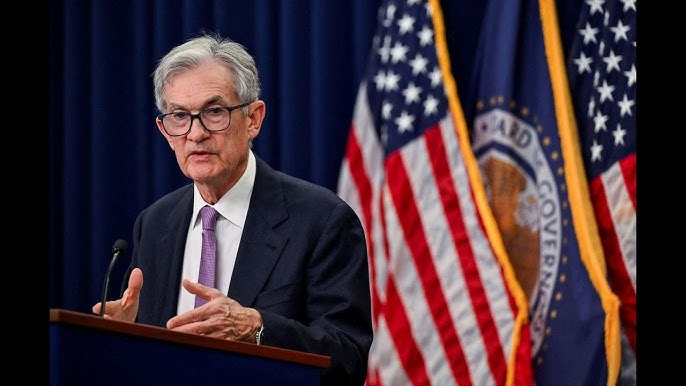
In a pivotal moment during today’s Federal Reserve meeting, Chair Jerome Powell used a striking metaphor to describe the challenges of navigating monetary policy in the current economic climate. He likened the Fed’s approach to driving on a foggy night, where the road ahead is unclear and careful adjustments are essential to avoid going off course.

This simple yet evocative image perfectly captures the complexities the Fed is grappling with: balancing inflation control, economic growth, and financial stability, all while peering through the haze of unpredictable global and domestic factors.

What Powell Meant by the “Foggy Night”

Powell’s metaphor reflects three key uncertainties facing the Fed:

  1. Inflation’s Path:
    While inflation has moderated from its pandemic-era peaks, it remains stubbornly above the Fed’s 2% target. Powell emphasized the challenge of predicting how quickly it will decline, given persistent wage pressures and supply chain disruptions that still linger in pockets of the economy.
  2. Economic Momentum:
    The U.S. economy has shown surprising resilience, with strong labor markets and steady consumer spending. But questions linger about whether this strength can endure as higher interest rates weigh on borrowing and investment.
  3. Global and Domestic Risks:
    Powell acknowledged that geopolitical tensions, volatile energy markets, and shifts in fiscal policy add layers of complexity, making the economic outlook even murkier.

When you’re driving through fog, you rely on limited visibility, adjusting your speed and course as you encounter each obstacle. Similarly, Powell’s Fed is moving cautiously, reacting to new data and avoiding bold moves that could lead to unintended consequences.


Why the “Fog” Matters to You

The metaphor of a foggy night resonates not just for economists and investors but for everyday people, too. Here’s how:

  1. Borrowers:
    For those with mortgages, car loans, or credit cards, the Fed’s cautious approach means interest rates might remain elevated for a bit longer. Refinancing decisions or new loans will need careful consideration.
  2. Savers and Retirees:
    Higher rates might seem like a boon for savings accounts, but uncertainty about inflation and future rate cuts can complicate long-term financial planning.
  3. Investors:
    Whether you’re in stocks, bonds, or crypto, Powell’s “foggy night” highlights the need for patience. Volatility is likely to persist, and markets will continue to react sharply to incoming data.
  4. Business Owners:
    For companies, especially small businesses, unclear economic conditions mean making tough calls on hiring, expansion, and inventory.

How the Markets Interpreted the Fog

The markets weren’t thrilled by Powell’s metaphor. A cautious Fed means no quick return to the era of ultra-low interest rates, and investors responded with a risk-off attitude:

  • Stocks plunged, with major indices dropping 2-3%.
  • Bitcoin tumbled, reflecting broader market jitters.
  • Treasury yields rose, signaling a shift in expectations for higher long-term rates.

Powell’s careful tone reminded investors that the path ahead isn’t straightforward, and the Fed is prepared to slow its pace to avoid missteps.


Lessons From the Foggy Road

Navigating uncertainty is something we all face, whether in monetary policy or daily life. Powell’s metaphor offers a timeless lesson: when the road ahead is unclear, the best course of action is to slow down, proceed with caution, and adjust as visibility improves.

For the Fed, this means being data-driven and adaptable. For everyone else—borrowers, savers, investors—it’s a reminder to take stock of your financial situation, stay informed, and prepare for potential twists and turns.

Like any journey through fog, the conditions won’t last forever. Clarity will return, and the Fed will eventually have a clearer road map. But until then, Powell’s words remind us to stay alert, stay cautious, and trust that every cautious step forward brings us closer to the destination.

Bitcoin, the Fed, and the Market Dance: A Day in Crypto’s World

As I scrolled through the headlines this morning, the air was charged with anticipation: the Federal Reserve was gearing up for its final monetary policy decision of the year. Would they cut rates? Hold steady? Hike unexpectedly? For market-watchers like me, it’s the kind of day where even a sip of coffee feels like a luxury—everything is moving fast, especially in the volatile world of Bitcoin.

The Fed, true to the whispers of analysts, trimmed interest rates by 0.25%. The new target range: 4.25% to 4.5%. While this was expected, it wasn’t without drama. The Fed Chair, Jerome Powell, delivered his trademark cautious optimism, hinting at only two further cuts in 2025, fewer than the market had hoped. And just like that, the ripple effects began.

Bitcoin: The Risk Asset with a Mind of Its Own

Bitcoin has been described as “digital gold,” a hedge against inflation, a decentralized store of value. But on days like today, Bitcoin behaves less like gold and more like a thrill-seeking daredevil. As Powell’s words sank in, Bitcoin took a sharp tumble, falling below the $101,000 mark after flirting with $107,000 earlier in the day.

Why? It’s all about sentiment. In recent years, Bitcoin has grown up. It’s no longer a niche playground for tech geeks—it’s a macroeconomic participant, reacting to central bank decisions and global liquidity just like equities.

When the Fed signaled a slower pace of rate cuts, the message was clear: easy money isn’t coming back as quickly as some investors hoped. And Bitcoin, often seen as a high-risk, high-reward asset, reflected that sentiment instantly.

The Market Mood

Traditional markets weren’t immune to the Fed’s cautious tone either. The S&P 500 sank 2.6%, the Nasdaq dropped over 3%, and Treasury yields ticked higher. The stock market was throwing its own tantrum, and Bitcoin was caught in the crossfire.

It was a reminder of just how interconnected everything is. In 2023, Bitcoin’s correlation to tech stocks began to fade, but the connection hasn’t disappeared completely. A risk-off mood in equities often spills over into crypto.

But here’s the twist: Bitcoin’s dip wasn’t met with despair.

A Silver Lining?

Scrolling through Twitter, Telegram groups, and crypto forums, there was a surprising undercurrent of optimism. Long-term holders saw this dip not as a warning but as an opportunity. “Bitcoin under $101K is a gift,” one post declared confidently. Others pointed out that BTC has weathered far worse storms and emerged stronger.

And that’s what fascinates me about Bitcoin. It’s not just an asset; it’s a movement. Every pullback, every surge carries with it a narrative that transcends numbers. Today’s drop? For some, it’s the Fed tightening the leash on risk assets. For others, it’s just another moment in Bitcoin’s endless dance of volatility—a feature, not a bug.

Lessons From the Day

Here’s the thing about days like today: they remind you why you’re in the game. Bitcoin, for all its volatility, is a mirror to the broader financial ecosystem. The Fed’s decisions, inflation numbers, geopolitical events—they all manifest in Bitcoin’s price chart with stunning immediacy.

But there’s another lesson, too: patience. Markets overreact in the short term, but long-term trends tell the real story. As I watched Bitcoin bounce slightly off its lows, I thought about how many times I’d seen this play out. Back in 2020, a dip to $10K felt catastrophic. Today, $101K feels like a minor blip.

That’s the journey Bitcoin takes you on—a rollercoaster of emotions, sure, but also a journey of perspective.

Where Do We Go From Here?

Nobody knows. And that’s the beauty of it. The Fed may have a roadmap for rates in 2025, but markets—and especially Bitcoin—have a way of surprising everyone.

If today’s action taught me anything, it’s this: Bitcoin thrives on chaos. And for those of us along for the ride, days like today are why we’re here. It’s not just about the price—it’s about witnessing the evolution of a financial revolution, one Fed meeting at a time.

Tomorrow’s another day. The market will open, Bitcoin will move, and the dance will continue. The question isn’t whether Bitcoin will recover—it’s whether you’re ready to keep up with the music.

Bitcoin: From Decentralized Dream to Treasury Reserve Asset

Bitcoin is experiencing a seismic shift. Initially envisioned as a decentralized, peer-to-peer currency free from government control, it’s now being embraced by governments and corporations alike for its stability, scarcity, and potential as a global hedge against economic risks. The U.S. recently introduced the BITCOIN Act of 2024, exploring Bitcoin as a strategic reserve asset, and companies like Thumzup Media are adopting it as part of their treasury strategies. These developments, combined with ETFs like BlackRock’s Bitcoin fund gaining traction, show that Bitcoin is becoming mainstream.

But here’s the big question: Does this compromise Bitcoin’s original vision?

A Shift Away from Decentralization?

Bitcoin was built to separate money from government influence. Its decentralized nature means no single entity can control it, offering financial independence to individuals, especially in countries with economic instability or authoritarian regimes. However, as nations and corporations adopt Bitcoin, it risks becoming entangled with the very institutions it was designed to bypass. Governments holding Bitcoin reserves or regulating its use may dilute its revolutionary ethos.

Why This Shift?

1. Legitimacy and Stability: Governments and institutions see Bitcoin’s fixed supply as a hedge against inflation and currency volatility.

2. Global Competition: Countries may adopt Bitcoin to remain competitive, especially as others—like El Salvador—benefit from its integration.

3. Game Theory in Play: Corporations and nations are joining the Bitcoin bandwagon to avoid being left behind, further reinforcing its adoption.

A Necessary Compromise?

For Bitcoin purists, this shift feels like a betrayal. However, some argue that this “Trojan Horse” moment could bring decentralized ideals into traditional systems. Even with government adoption, Bitcoin remains a powerful tool for individual financial sovereignty, and its growing mainstream role may help educate the world about its potential.

Ultimately, Bitcoin’s evolution is both a triumph and a challenge. Its rise as a reserve asset signals its importance, but it also forces us to ask whether Bitcoin can balance its decentralized roots with its growing acceptance by the establishment. One thing is certain: the world is watching as Bitcoin reshapes the financial landscape.

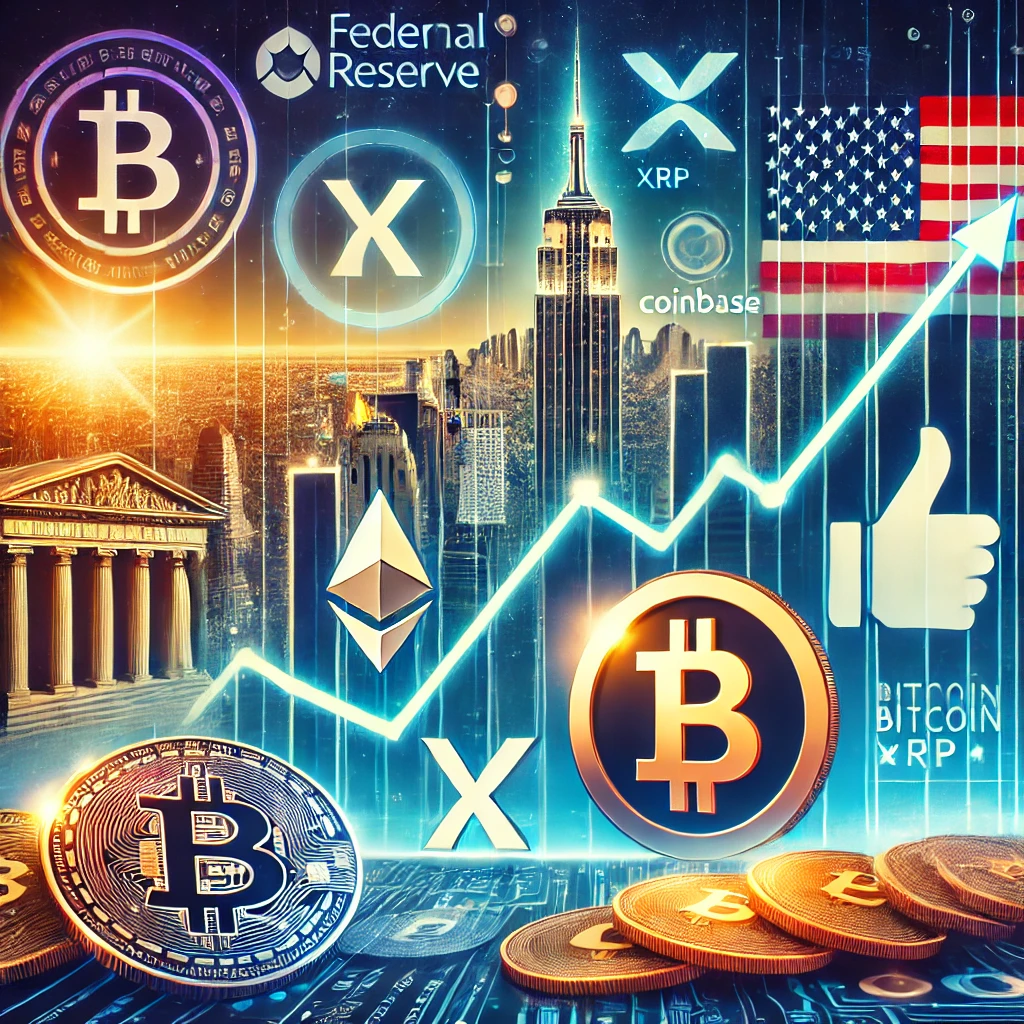
Crypto Revolution 2.0: Trump’s Return, Bitcoin ETFs, and the Fed’s Rate Cuts Drive New Market Optimism


The financial landscape is shifting rapidly as Donald Trump’s re-election, anticipated Federal Reserve rate cuts, and the introduction of Bitcoin ETFs fuel a wave of optimism across both traditional markets and the cryptocurrency space. Unlike the last time Bitcoin hit an all-time high, the environment today is uniquely favorable: a pro-Bitcoin president, potential regulatory easing, and the first Bitcoin ETFs are creating conditions for what many see as the next crypto bull run.

Trump’s Return and a Pro-Crypto Stance

Trump’s presidency marks a significant shift for digital assets. The last time Bitcoin reached its all-time high in late 2021, it did so without institutional support through ETFs and without a president publicly favorable toward Bitcoin. Today, Trump’s administration is expected to take a more open approach to cryptocurrency, positioning digital assets as an innovation-friendly sector rather than a regulatory target. This pro-Bitcoin stance, coupled with expectations of eased regulations from a potentially revamped SEC, has invigorated the crypto community, which sees this as a foundation for sustained growth and mainstream adoption.

Bitcoin ETFs and Institutional Access

Another key difference is the availability of Bitcoin ETFs, which could bring a flood of institutional capital to the market. With products that provide easy access to Bitcoin, institutional investors who previously faced regulatory or logistical hurdles are now able to participate in the market. This structural change in access to Bitcoin is expected to be a game-changer, allowing a broad spectrum of investors to enter the market in ways they couldn’t before. The potential of a pro-crypto administration to fast-track ETF approvals further adds to the momentum, and with Trump’s pro-business stance, the path to full regulatory acceptance for crypto looks more promising than ever.

Federal Reserve’s Rate Cuts: Fueling Risk Assets and Crypto

The Fed’s anticipated rate cuts are another powerful catalyst for both the stock and crypto markets. Rate cuts lower the cost of capital, encouraging investment in higher-risk, high-growth assets like tech stocks and cryptocurrencies. This accommodative monetary stance aligns well with Trump’s economic goals, as a lower interest rate environment can stimulate spending, lending, and market optimism. For crypto markets, this could translate to increased demand as investors seek higher returns in a favorable borrowing environment. Additionally, lower rates make Bitcoin’s appeal as a hedge against traditional monetary policies even more compelling.

XRP and Coinbase Rally on Regulatory Hopes

XRP and Coinbase are two standout beneficiaries of the potential regulatory shift. Under the previous administration, the SEC, led by Gary Gensler, aggressively pursued legal action against Ripple (XRP), casting uncertainty over the crypto’s status. With Gensler likely to be replaced, there’s hope that XRP’s prolonged regulatory woes could be alleviated, potentially clearing its path to widespread adoption.

Coinbase, the only major U.S.-listed crypto exchange, has surged more than 20% on the belief that Trump’s pro-business stance will bring a friendlier regulatory environment. As both XRP and Coinbase react to the shifting regulatory landscape, the broader market is seeing this as a strong signal that crypto companies may face fewer hurdles and more regulatory clarity going forward.

A New Geopolitical Climate: War De-escalation and Trade Risks

The geopolitical landscape is also factoring into market sentiment. Hints at de-escalation in global conflicts could lead to easing supply chain disruptions, while successful negotiations could open up more global market opportunities. Although tariffs remain a possible risk, a more stable global economy with less wartime tension could foster stronger global trade relationships, which would likely boost market confidence. Trump’s past stance on tariffs raises concerns, but a shift toward negotiated outcomes rather than trade wars could reduce these risks.

Risks and Rewards: Inflation, Tariffs, and Optimism

Though market sentiment is overwhelmingly optimistic, there are risks. Trump’s focus on economic growth and potential tax reforms could reignite inflation concerns, forcing the Fed to reverse its accommodative stance, potentially destabilizing markets. Tariffs, particularly if re-imposed or escalated, could impact trade costs and consumer prices, affecting companies with international supply chains. However, most investors see these as manageable risks against a backdrop of pro-growth, pro-crypto policies, Fed rate cuts, and a regulatory shift toward clarity rather than confrontation.

Conclusion: The Dawn of a New Market Era?

With Trump’s pro-Bitcoin stance, the Fed’s rate cuts, and the arrival of Bitcoin ETFs, we’re witnessing a convergence of favorable conditions that could propel crypto markets into a new era of growth. Investors are watching closely to see if this alignment of factors will lead to sustained bull markets across both traditional and digital assets, marking a sharp contrast to previous cycles.

While risks such as inflation and tariffs remain, the broader outlook is one of optimism. With a supportive regulatory environment, lower borrowing costs, and mainstream access through ETFs, the stage may be set for Bitcoin and the broader crypto market to reach unprecedented heights. For investors, this could be the beginning of a long-awaited crypto renaissance, underpinned by a unique set of market, regulatory, and geopolitical dynamics not seen in previous cycles.

https://gokhansakalli.medium.com/crypto-revolution-2-0-trumps-return-bitcoin-etfs-and-the-fed-s-rate-cuts-212c91c13bf7