The Stoic Investor: Mastering Emotions in a Wild Market

Markets are noisy. One day Bitcoin is soaring; the next, headlines scream recession. In the chaos, most investors fall into a trap: reacting emotionally, chasing hype, or running from fear. But what if you approached your portfolio the way a Stoic would—calm, disciplined, and focused on what you can control? In this guide, we’ll explore how ancient Stoic wisdom can help you master modern financial markets, stay rational during volatility, and build long-term wealth with clarity.


Chaos Is the New Normal

Volatility isn’t an exception anymore—it’s the rule. Whether it’s crypto crashes, meme stock frenzies, or inflation scares, markets seem to lurch from one extreme to the next. In times like these, emotional investors tend to buy high, sell low, and repeat the cycle. The solution? A mindset grounded in timeless principles, not trends. That’s where Stoicism comes in.


What Is Stoicism?

Stoicism is an ancient Greek philosophy built around one powerful idea: you cannot control external events, only your responses to them. That core belief maps perfectly to investing.

Three essential Stoic principles:

  1. Control what you can — your decisions, your discipline
  2. Accept what you can’t — market moves, news cycles
  3. Act with reason — no panic, no greed, just clarity

“We suffer more in imagination than in reality.” — Seneca

These aren’t just ideas—they’re tools.


How Emotions Ruin Returns

The data is clear: emotional investing is expensive. According to Dalbar, the average investor underperforms the market by several percentage points annually. Why?

  • FOMO (Fear of Missing Out): Chasing price spikes without fundamentals
  • Panic Selling: Liquidating at the bottom to avoid further pain
  • Overconfidence: Making big bets based on gut feelings or short-term trends

These are reactions, not strategies. Stoicism teaches us to respond intentionally, not impulsively.


The Stoic Investor’s Toolkit

Here’s how to apply Stoic principles to your investing habits:

✅ Detachment from Outcomes

Focus on your investment process, not whether you beat the market this month. Define your system, trust it, and let time do the work.

✅ Pre-Mortem Thinking

Before buying an asset, imagine what could go wrong. How would you feel if it dropped 30%? If you can stomach it, you’re prepared. If not, reassess.

✅ Daily Reflection

Keep a brief journal: What did you do today? Was it rational or emotional? Self-awareness compounds just like interest.

✅ Long-Term Vision

Zoom out. Stoics view time in centuries. You only need to outperform in the long game—not every headline cycle.


Real-World Example

Let’s say the crypto market crashes 25% in a week. Most investors panic. A Stoic investor?

  • Revisits their original thesis
  • Checks whether fundamentals changed
  • Adds to their position if it aligns with their plan

They stay grounded not because they ignore risk, but because they prepared for it.


Calm Is a Superpower

Modern markets reward emotional discipline. While others react to noise, the Stoic investor moves with intention. They play the long game. They understand that the real battle is internal: not against the market, but against fear, greed, and impatience.

“You have power over your mind—not outside events. Realize this, and you will find strength.” — Marcus Aurelius

Better yet, become a FutureFinanceLab.com member to unlock exclusive lessons, market insights, and real-time tools designed to help you invest with discipline, strategy, and peace of mind.


Why Smart Investors Ignore the Noise (Even in Crypto)

Diversified investment portfolio with crypto allocation

In a world where headlines change faster than markets can react, investors face a constant temptation: do something. But more often than not, that urge does more harm than good.

Whether it’s political uncertainty, inflation fears, interest rate debates, or market volatility, the smart move is often counterintuitive:

Tune out the noise — and stick to what works over time.


The Problem With Short-Term Reactions

Let’s be honest: predicting markets based on headlines is a losing game.

  • Trade tariffs, wars, or elections may sound impactful, but rarely translate into predictable outcomes.
  • Even professional managers who try to tactically shift portfolios underperform static, balanced strategies.
  • From 2005 to 2025, tactical asset-allocation funds trailed simple 60/40 portfolios by up to 2–3% per year.

That’s a significant drag — and one that’s often driven by reacting emotionally rather than thinking strategically.


Enter Bitcoin: The New Long-Term Benchmark

While stocks, bonds, and gold all play roles in a diversified portfolio, Bitcoin stands apart.

  • Over the past decade, Bitcoin has outperformed every traditional asset class, even after brutal drawdowns.
  • It’s the only major asset with a fixed supply, growing global adoption, and no ties to any central authority.
  • Despite market cycles, those who held Bitcoin — not traded it — have been rewarded more than any other investor group.

That doesn’t mean go all-in. But it does mean that ignoring Bitcoin is increasingly a strategic blind spot.


So, What Should Investors Actually Do?

1. Review Your Core Allocation

Your mix of stocks, bonds, crypto, and cash should reflect your goals, not headlines. If you’re long-term focused, ask yourself:

  • Am I too concentrated in one asset class?
  • Have I ignored crypto entirely out of fear or bias?
  • Does my portfolio align with my future, not just my past?

For many investors, adding a small but meaningful allocation to Bitcoin makes sense as a hedge against systemic risks and fiat currency debasement.

2. Rebalance, Don’t React

If your growth stocks have ballooned or your bond exposure feels excessive, consider trimming and reallocating—not because of fear, but because of balance.

That might include:

  • Topping up underperforming sectors (like international equities or value stocks).
  • Reintroducing some fixed income or even cash for optionality.
  • Adding or increasing Bitcoin allocation as part of a modern, diversified strategy.

3. Hold Some Cash (But Not Too Much)

In uncertain markets, it’s okay to hold a bit more cash. Yields are higher, and dry powder is useful. But remember: inflation eats idle money, and long-term returns come from assets, not bank accounts.

4. Don’t Get Trapped by “Safe Havens”

Gold, for example, surged recently—but it’s historically volatile and underperformed both stocks and Bitcoin long-term. A safe haven is only useful if it preserves and grows purchasing power over time.

Bitcoin, on the other hand, has shown resilience in inflationary environments — and is increasingly being viewed as digital gold with exponential upside.

5. Keep Investing (Even When It’s Uncomfortable)

This applies most to younger investors or those with long horizons. It might feel like “buying high” or “waiting for a crash” makes more sense—but regular contributions beat perfect timing every time.

If you believe in the future of markets, innovation, and sound money — keep investing through the noise.


Final Thought: Block Out the Panic, Focus on Progress

From Wall Street to the blockchain, the markets will always test your patience. The key isn’t to outsmart the next event—it’s to outlast it.

With a strategy that’s diversified, disciplined, and forward-looking, you won’t just survive market volatility — you’ll thrive through it.

And in that mix, Bitcoin deserves a seat at the table.

Crypto Wallets 101: Hot vs. Cold, and How to Store Your Coins Safely

✍️ Introduction

You’ve bought your first cryptocurrency—great! But now what?
If you’re leaving your coins on an exchange, you could be taking unnecessary risks.
This guide breaks down the two main types of crypto wallets—hot and cold—and helps you choose the best way to store your crypto securely.


🔐 What Is a Crypto Wallet?

A crypto wallet doesn’t hold your coins physically. Instead, it stores the private keys that let you access and control your funds on the blockchain.

Think of your private key as your digital signature—whoever holds it, owns the crypto.


🔥 What Is a Hot Wallet?

Hot wallets are connected to the internet and are best for convenience.

✅ Pros:

  • Easy to set up
  • Great for frequent trading
  • Often free

❌ Cons:

  • More vulnerable to hacks and malware
  • Best for small amounts or short-term use

Examples:

  • Exchange wallets (Binance, Coinbase)
  • Mobile apps (Trust Wallet, MetaMask)
  • Browser extensions (Phantom, MetaMask)

❄️ What Is a Cold Wallet?

Cold wallets are offline storage methods. Your keys are kept completely disconnected from the internet.

✅ Pros:

  • Much safer from online threats
  • Ideal for long-term holders (“HODLers”)

❌ Cons:

  • Not as convenient for active trading
  • Hardware wallets cost money

Examples:

  • Hardware wallets (Ledger, Trezor)
  • Paper wallets (printed QR code and keys)
  • Air-gapped computers (for advanced users)

🔐 Which One Should You Use?

If You’re…Go With…
A casual traderHot wallet
A long-term HODLerCold wallet
Holding large amountsCold wallet
Using DeFi apps oftenHot wallet
Just getting startedHot wallet + research cold storage later

🔄 Bonus Tip: Use Both

Many investors use a hybrid approach:

  • Keep some funds in a hot wallet for daily use
  • Store the rest in a cold wallet for long-term safety

🛡️ Best Practices for Crypto Security

  • Always enable 2FA (two-factor authentication)
  • Never share your seed phrase—not even with support teams
  • Backup your wallet info securely (offline or in a fireproof safe)
  • Be cautious of phishing websites or fake wallet apps

✅ Final Thoughts

If crypto is digital gold, then your wallet is the vault.
Understanding the difference between hot and cold wallets is key to staying safe in the crypto space.
Choose what works for your needs—and remember, not your keys = not your coins.

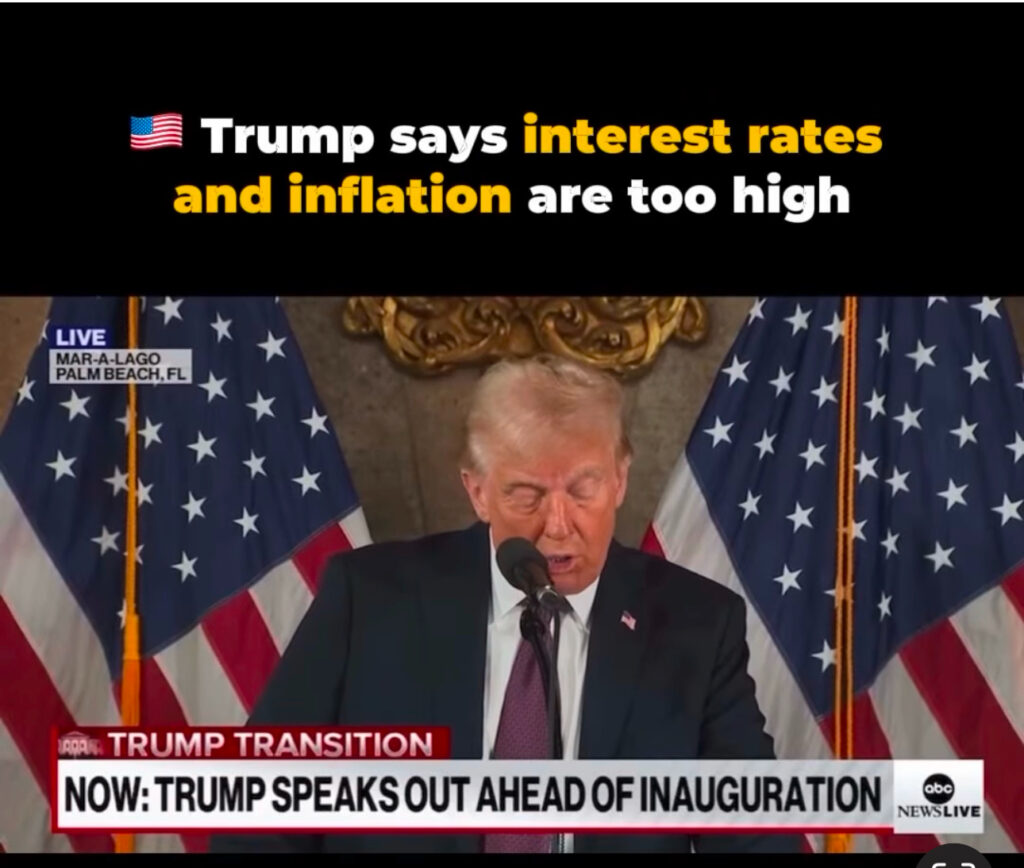
Why Did Markets and Bitcoin Dip? Is Inflation and High Interest Rates the Culprit?

Recent dips in traditional markets and Bitcoin have sparked conversations, with many pointing to Donald Trump’s remarks on high interest rates and persistent inflation. Here’s what’s happening and what could be next.

What’s Behind the Market Dip?

1. High Interest Rates:

• The Federal Reserve’s stance of maintaining higher interest rates has created headwinds for both traditional and crypto markets. High rates make borrowing expensive, reduce liquidity, and pressure riskier assets like Bitcoin.

2. Inflation Concerns:

• Although inflation has cooled from its 2022 peaks, it remains above the Fed’s 2% target. Persistent inflation reduces purchasing power and leaves the Fed little room to lower rates aggressively.

3. Trump’s Comments:

• Former President Donald Trump called attention to high interest rates and inflation as major economic threats, echoing concerns shared by investors. His remarks may have heightened market jitters, fueling sell-offs.

4. Crypto-Specific Weakness:

• Bitcoin and cryptocurrencies are particularly sensitive to macroeconomic conditions. High interest rates reduce demand for speculative assets, and with fewer new buyers entering the market, prices have dipped.

What’s Next for Markets and Bitcoin?

1. Federal Reserve Decisions:

• Markets will closely watch the Fed’s actions in 2025. If inflation moderates, the Fed could cut rates, providing relief to both equities and crypto. However, a stubbornly high inflation rate might keep rates elevated, sustaining pressure on risk assets.

2. Earnings and Economic Data:

• Corporate earnings, unemployment figures, and inflation reports will shape market sentiment. Any signs of economic slowdown could trigger a pivot to more accommodative policies.

3. Bitcoin’s Long-Term Outlook:

• Despite near-term challenges, Bitcoin’s fundamentals remain strong. Adoption continues to grow, and the next halving event in 2024 is likely to tighten supply, which historically has supported price growth in the medium term.

What Can Investors Do?

1. Stay Diversified:

• Don’t put all your eggs in one basket. Spread your investments across traditional assets, crypto, and inflation-resistant sectors like commodities.

2. Monitor Economic Indicators:

• Keep an eye on inflation, GDP growth, and Fed policy announcements. These will set the tone for markets in 2025.

3. Focus on Fundamentals:

• For Bitcoin enthusiasts, price dips can present buying opportunities. If your conviction in crypto’s long-term potential remains strong, this could be a time to accumulate.

4. Be Patient:

• Volatility is normal in uncertain times. Avoid knee-jerk reactions and focus on your long-term investment strategy.

Conclusion

High interest rates and inflation are creating challenging conditions for both traditional and crypto markets. While short-term pain is evident, the long-term outlook for Bitcoin and equities remains cautiously optimistic, especially if inflation moderates and the Fed adjusts its policies. For now, staying informed and diversified is the best way forward.

The Top-Performing ETFs of 2024: Key Trends and What to Expect in 2025


The ETF market in 2024 has been a year of record-breaking growth, innovation, and shifting investor sentiment. With total assets under management surpassing $10.6 trillion and over $1 trillion in new investments, ETFs have solidified their role as the go-to investment vehicle for both institutional and retail investors.

Driven by advancements in artificial intelligence, a resurgence in cryptocurrencies, and evolving macroeconomic conditions, certain ETFs have emerged as clear winners this year. In this article, we’ll spotlight the top-performing ETFs of 2024, analyze the trends that fueled their success, and outline what investors can expect in 2025.

For more in-depth financial insights and expert analysis, visit FutureFinanceLab.com. 🚀


🚀 The Best-Performing ETFs of 2024

1. FXI – iShares China Large-Cap ETF

  • Focus: Large-cap Chinese equities
  • 2024 Performance: +31.20%

Why It Stood Out:
Despite economic uncertainty and geopolitical tensions, FXI rebounded strongly due to aggressive stimulus measures from the Chinese government. Investors saw an opportunity in undervalued state-owned enterprises, resulting in impressive gains for this ETF.


2. IWM – iShares Russell 2000 ETF

  • Focus: U.S. small-cap stocks
  • 2024 Performance: +10.61%

Why It Stood Out:
Small-cap stocks historically outperform during economic recoveries, and IWM benefited from expectations of Federal Reserve rate cuts and improving domestic economic indicators.


3. XLF – Financial Select Sector SPDR Fund

  • Focus: U.S. financial sector (banks, insurance, financial services)
  • 2024 Performance: +27.86%

Why It Stood Out:
Rising interest margins and higher lending activity contributed to a stellar year for XLF. Banking stocks surged amid increased investor confidence in financial stability.


4. QQQ – Invesco QQQ Trust ETF

  • Focus: Nasdaq-100 Index (large-cap tech stocks)
  • 2024 Performance: +38.5%* (Approximate market trend)

Why It Stood Out:
Driven by mega-cap tech stocks like Microsoft, Apple, and NvidiaQQQ thrived amid surging demand for AI technologies and robust corporate earnings.


5. SPY – SPDR S&P 500 ETF Trust

  • Focus: Tracks the S&P 500 Index
  • 2024 Performance: +25% (Approximate market trend)

Why It Stood Out:
SPY, one of the most widely held ETFs globally, reflected the broad strength of the S&P 500. Gains were primarily driven by sectors such as technology, healthcare, and consumer discretionary.


6. EEM – iShares MSCI Emerging Markets ETF

  • Focus: Emerging markets equities
  • 2024 Performance: +15% (Approximate market trend)

Why It Stood Out:
EEM provided broad exposure to emerging market equities, with gains driven by China’s recovery, India’s tech boom, and favorable trade conditions in Southeast Asia.


7. IBIT – iShares Bitcoin Trust

  • Focus: Bitcoin spot price exposure
  • 2024 Performance: +170%

Why It Stood Out:
The launch and institutional acceptance of IBIT marked a significant milestone in the financial world. Backed by BlackRock, this ETF allowed investors regulated access to Bitcoin exposure, attracting significant institutional capital.


8. FBTC – Fidelity Wise Origin Bitcoin Fund

  • Focus: Bitcoin spot price exposure
  • 2024 Performance: +165%

Why It Stood Out:
FBTC, managed by Fidelity, benefited from Bitcoin’s surge past $100,000. Its strong institutional backing and simplified investment structure made it an appealing option for long-term investors seeking digital asset exposure.


📈 Key Trends That Defined ETF Success in 2024

1. Artificial Intelligence Dominance

AI-driven growth propelled tech-focused ETFs like QQQ to new heights. Companies leveraging AI technologies for productivity and innovation were clear winners.

2. Cryptocurrency Resurgence

Bitcoin ETFs, including IBIT and FBTC, made it easier for institutional and retail investors to gain exposure to digital assets, leading to significant inflows.

3. Rate Cut Expectations

The anticipation of Federal Reserve rate cuts created optimism in small-cap stocks (IWM) and financials (XLF).

4. Energy Infrastructure Recovery

Energy-focused ETFs gained traction amid global energy transition efforts and infrastructure investments.

5. Emerging Markets Revival

ETFs like EEM benefited from a revival in emerging economies, particularly in Asia and Latin America, driven by favorable trade policies and infrastructure spending.


🔮 What to Expect in 2025

1. Rise of Thematic ETFs

Thematic ETFs focused on AI, clean energy, robotics, and blockchain are expected to remain in high demand.

2. Rate Cuts and Fixed Income ETFs

As the Federal Reserve is projected to cut interest rates to around 4%bond ETFs and fixed-income products are set to gain investor interest.

3. Increased Adoption of Alternative ETFs

Expect to see more ETFs offering exposure to private equity, digital assets, and multi-asset strategies.

4. Continued Crypto ETF Growth

With increasing institutional adoption, Bitcoin ETFs like IBIT and FBTC could attract even more inflows in 2025.

5. Sector Rotation

Sectors like healthcare, materials, and industrials may outperform in 2025, while utilities and consumer discretionarycould lag.


💡 Investor Takeaways for 2025

  • Diversify Across Themes: Include a mix of AI, energy, crypto, and fixed income ETFs in your portfolio.
  • Stay Informed on Macro Trends: Watch for interest rate cuts, geopolitical events, and technological advancements.
  • Focus on Long-Term Goals: Align your ETF investments with your financial objectives and risk profile.
  • Monitor Emerging Markets: Growth opportunities in Asia, Latin America, and Southeast Asia remain promising.

📚 Conclusion

2024 showcased the immense potential of ETFs across technology, financials, energy, and cryptocurrency sectors. As we step into 2025, opportunities abound, but so do risks.

For more expert insights and strategies tailored to your financial goals, visit FutureFinanceLab.com. 🚀📊