Driving Through a Foggy Night: Powell’s Metaphor for the Fed’s Cautious Path

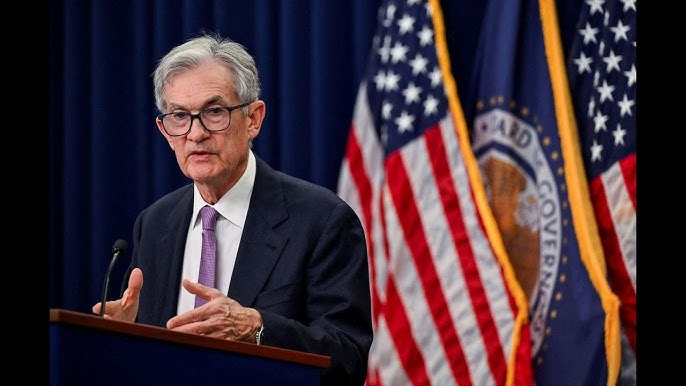
In a pivotal moment during today’s Federal Reserve meeting, Chair Jerome Powell used a striking metaphor to describe the challenges of navigating monetary policy in the current economic climate. He likened the Fed’s approach to driving on a foggy night, where the road ahead is unclear and careful adjustments are essential to avoid going off course.

This simple yet evocative image perfectly captures the complexities the Fed is grappling with: balancing inflation control, economic growth, and financial stability, all while peering through the haze of unpredictable global and domestic factors.

What Powell Meant by the “Foggy Night”

Powell’s metaphor reflects three key uncertainties facing the Fed:

  1. Inflation’s Path:
    While inflation has moderated from its pandemic-era peaks, it remains stubbornly above the Fed’s 2% target. Powell emphasized the challenge of predicting how quickly it will decline, given persistent wage pressures and supply chain disruptions that still linger in pockets of the economy.
  2. Economic Momentum:
    The U.S. economy has shown surprising resilience, with strong labor markets and steady consumer spending. But questions linger about whether this strength can endure as higher interest rates weigh on borrowing and investment.
  3. Global and Domestic Risks:
    Powell acknowledged that geopolitical tensions, volatile energy markets, and shifts in fiscal policy add layers of complexity, making the economic outlook even murkier.

When you’re driving through fog, you rely on limited visibility, adjusting your speed and course as you encounter each obstacle. Similarly, Powell’s Fed is moving cautiously, reacting to new data and avoiding bold moves that could lead to unintended consequences.


Why the “Fog” Matters to You

The metaphor of a foggy night resonates not just for economists and investors but for everyday people, too. Here’s how:

  1. Borrowers:
    For those with mortgages, car loans, or credit cards, the Fed’s cautious approach means interest rates might remain elevated for a bit longer. Refinancing decisions or new loans will need careful consideration.
  2. Savers and Retirees:
    Higher rates might seem like a boon for savings accounts, but uncertainty about inflation and future rate cuts can complicate long-term financial planning.
  3. Investors:
    Whether you’re in stocks, bonds, or crypto, Powell’s “foggy night” highlights the need for patience. Volatility is likely to persist, and markets will continue to react sharply to incoming data.
  4. Business Owners:
    For companies, especially small businesses, unclear economic conditions mean making tough calls on hiring, expansion, and inventory.

How the Markets Interpreted the Fog

The markets weren’t thrilled by Powell’s metaphor. A cautious Fed means no quick return to the era of ultra-low interest rates, and investors responded with a risk-off attitude:

  • Stocks plunged, with major indices dropping 2-3%.
  • Bitcoin tumbled, reflecting broader market jitters.
  • Treasury yields rose, signaling a shift in expectations for higher long-term rates.

Powell’s careful tone reminded investors that the path ahead isn’t straightforward, and the Fed is prepared to slow its pace to avoid missteps.


Lessons From the Foggy Road

Navigating uncertainty is something we all face, whether in monetary policy or daily life. Powell’s metaphor offers a timeless lesson: when the road ahead is unclear, the best course of action is to slow down, proceed with caution, and adjust as visibility improves.

For the Fed, this means being data-driven and adaptable. For everyone else—borrowers, savers, investors—it’s a reminder to take stock of your financial situation, stay informed, and prepare for potential twists and turns.

Like any journey through fog, the conditions won’t last forever. Clarity will return, and the Fed will eventually have a clearer road map. But until then, Powell’s words remind us to stay alert, stay cautious, and trust that every cautious step forward brings us closer to the destination.

Bitcoin, the Fed, and the Market Dance: A Day in Crypto’s World

As I scrolled through the headlines this morning, the air was charged with anticipation: the Federal Reserve was gearing up for its final monetary policy decision of the year. Would they cut rates? Hold steady? Hike unexpectedly? For market-watchers like me, it’s the kind of day where even a sip of coffee feels like a luxury—everything is moving fast, especially in the volatile world of Bitcoin.

The Fed, true to the whispers of analysts, trimmed interest rates by 0.25%. The new target range: 4.25% to 4.5%. While this was expected, it wasn’t without drama. The Fed Chair, Jerome Powell, delivered his trademark cautious optimism, hinting at only two further cuts in 2025, fewer than the market had hoped. And just like that, the ripple effects began.

Bitcoin: The Risk Asset with a Mind of Its Own

Bitcoin has been described as “digital gold,” a hedge against inflation, a decentralized store of value. But on days like today, Bitcoin behaves less like gold and more like a thrill-seeking daredevil. As Powell’s words sank in, Bitcoin took a sharp tumble, falling below the $101,000 mark after flirting with $107,000 earlier in the day.

Why? It’s all about sentiment. In recent years, Bitcoin has grown up. It’s no longer a niche playground for tech geeks—it’s a macroeconomic participant, reacting to central bank decisions and global liquidity just like equities.

When the Fed signaled a slower pace of rate cuts, the message was clear: easy money isn’t coming back as quickly as some investors hoped. And Bitcoin, often seen as a high-risk, high-reward asset, reflected that sentiment instantly.

The Market Mood

Traditional markets weren’t immune to the Fed’s cautious tone either. The S&P 500 sank 2.6%, the Nasdaq dropped over 3%, and Treasury yields ticked higher. The stock market was throwing its own tantrum, and Bitcoin was caught in the crossfire.

It was a reminder of just how interconnected everything is. In 2023, Bitcoin’s correlation to tech stocks began to fade, but the connection hasn’t disappeared completely. A risk-off mood in equities often spills over into crypto.

But here’s the twist: Bitcoin’s dip wasn’t met with despair.

A Silver Lining?

Scrolling through Twitter, Telegram groups, and crypto forums, there was a surprising undercurrent of optimism. Long-term holders saw this dip not as a warning but as an opportunity. “Bitcoin under $101K is a gift,” one post declared confidently. Others pointed out that BTC has weathered far worse storms and emerged stronger.

And that’s what fascinates me about Bitcoin. It’s not just an asset; it’s a movement. Every pullback, every surge carries with it a narrative that transcends numbers. Today’s drop? For some, it’s the Fed tightening the leash on risk assets. For others, it’s just another moment in Bitcoin’s endless dance of volatility—a feature, not a bug.

Lessons From the Day

Here’s the thing about days like today: they remind you why you’re in the game. Bitcoin, for all its volatility, is a mirror to the broader financial ecosystem. The Fed’s decisions, inflation numbers, geopolitical events—they all manifest in Bitcoin’s price chart with stunning immediacy.

But there’s another lesson, too: patience. Markets overreact in the short term, but long-term trends tell the real story. As I watched Bitcoin bounce slightly off its lows, I thought about how many times I’d seen this play out. Back in 2020, a dip to $10K felt catastrophic. Today, $101K feels like a minor blip.

That’s the journey Bitcoin takes you on—a rollercoaster of emotions, sure, but also a journey of perspective.

Where Do We Go From Here?

Nobody knows. And that’s the beauty of it. The Fed may have a roadmap for rates in 2025, but markets—and especially Bitcoin—have a way of surprising everyone.

If today’s action taught me anything, it’s this: Bitcoin thrives on chaos. And for those of us along for the ride, days like today are why we’re here. It’s not just about the price—it’s about witnessing the evolution of a financial revolution, one Fed meeting at a time.

Tomorrow’s another day. The market will open, Bitcoin will move, and the dance will continue. The question isn’t whether Bitcoin will recover—it’s whether you’re ready to keep up with the music.

“The Bank of England’s Secret Moves: Why Bitcoin Is the Financial Revolution We Need”

Why People Are Turning to Bitcoin: The Bank of England’s Crisis Explained

Imagine you’re watching a game of Monopoly, but instead of everyone following the rules, one player secretly controls the bank. They hand out money to certain players, hide their mistakes, and keep everything under wraps. Would you trust that game? Probably not.

This is what’s happening in the real world. The Bank of England recently announced that it will hide the identities of pension funds, hedge funds, and insurers that it bails out in an effort to “stabilize the economy.” While it might sound like a necessary measure to prevent financial chaos, it leaves the public in the dark.

Let’s break down what’s happening, why it’s wrong, and why more and more people are turning to alternatives like Bitcoin.

The Bank of England’s Secret Moves

The Bank of England is essentially saying, “We’ll bail out risky players, but we won’t tell you who they are or what they did to end up here.” They argue that secrecy prevents panic and further economic instability. But here’s the problem: this lack of transparency removes accountability.

If a hedge fund or pension fund made reckless investments and got itself into trouble, why should they get a bailout without public scrutiny? And worse, why should taxpayers indirectly foot the bill without even knowing it?

This is where people start asking: Is there a better way?

Why Secrecy Hurts Us

1. Encouraging Risky Behavior

When big financial players know they’ll be bailed out in secret, they’re more likely to take bigger risks. It’s like letting someone gamble with your money, knowing they won’t face any consequences if they lose.

2. Eroding Trust

People lose faith in the system when governments and central banks make backroom deals. Trust is the backbone of any financial system, and secrecy undermines it.

3. Hurting Everyday People

While powerful institutions get bailed out, ordinary people bear the cost. Inflation rises, taxes increase, and the gap between the rich and everyone else widens.

This is why many people are frustrated. It feels like the rules are stacked against them. Enter Bitcoin.

Bitcoin: A Different System

Bitcoin works differently. It doesn’t rely on governments, banks, or central authorities. Instead, it’s a decentralized system where everyone follows the same rules, and everything is out in the open.

Here’s why people are turning to Bitcoin:

1. Transparency

Every Bitcoin transaction is recorded on a public ledger called the blockchain. Anyone can view it. There are no secret bailouts, no hidden deals, and no favoritism. It’s a system built on trust—trust in math and code, not in flawed human institutions.

2. No Middlemen

Bitcoin lets you control your own money. You don’t need a bank or government to hold, move, or spend it. This eliminates the risk of someone else mismanaging your funds.

3. Fixed Supply

Unlike traditional money, which central banks can print endlessly, Bitcoin has a capped supply of 21 million coins. This means no inflation caused by reckless money printing.

4. Global and Borderless

Bitcoin isn’t tied to any country or government. It’s accessible to anyone with an internet connection, making it a powerful tool for financial freedom.

Why This Matters Now

The Bank of England’s decision to hide bailout recipients highlights the problems of centralized financial systems. When a few powerful entities control the money, they can manipulate it to serve their own interests. And when things go wrong, they ask the public to pay the price—often without explanation.

Bitcoin offers a solution to these problems. It’s not perfect, but it represents a new way of thinking about money—one that prioritizes fairness, transparency, and individual control.

The Shift Is Happening

More and more people are waking up to the flaws in traditional finance. They’re tired of a system that bails out the reckless while leaving the responsible to pick up the pieces. Bitcoin isn’t just a currency—it’s a movement toward financial independence.

As the world watches decisions like the Bank of England’s, the question becomes clear: Do we keep trusting a system that operates in the shadows, or do we explore alternatives that put power back in our hands?

The choice is yours. And for many, the answer is Bitcoin.

MicroStrategy’s Big Gamble: Pioneering the Future of Finance with Bitcoin

A Bet Worth Taking

When MicroStrategy made headlines for converting its corporate treasury into Bitcoin, skeptics raised eyebrows. Critics dismissed the move as reckless, gambling the company’s future on a volatile and unpredictable cryptocurrency. But for Michael Saylor, MicroStrategy’s executive chairman, the strategy was clear: Bitcoin isn’t just an investment—it’s a revolutionary asset poised to disrupt global finance.

With over 150,000 Bitcoin now in its portfolio, MicroStrategy isn’t just buying digital currency—it’s betting on a future where Bitcoin could become a global reserve asset. Let’s dive into why this vision, though ambitious, holds incredible potential.

The Digital Gold Standard

For centuries, gold served as the backbone of monetary systems. Its scarcity and durability made it a reliable store of value, anchoring economies through times of uncertainty. But in today’s digital world, the limitations of gold—its physicality, lack of portability, and difficulty in dividing or transferring it—have become glaringly evident.

Bitcoin is often called “digital gold” for a reason. It shares gold’s scarcity, with a fixed supply of 21 million coins, but eliminates the limitations of physical assets. Bitcoin can be transferred instantly across borders, stored securely in digital wallets, and divided into minuscule fractions, making it a perfect fit for the modern, interconnected economy.

MicroStrategy recognized this potential early, positioning itself as a corporate pioneer in this new digital gold rush.

Why Bitcoin, Why Now?

The global financial system is at a crossroads. Inflation is eroding the purchasing power of fiat currencies, central banks are printing money at unprecedented rates, and geopolitical tensions are shaking confidence in traditional economic models. In this context, Bitcoin represents a safe haven—a decentralized, transparent, and incorruptible asset that governments and central banks cannot manipulate.

By shifting its reserves into Bitcoin, MicroStrategy is hedging against the vulnerabilities of fiat systems. While other companies hold depreciating cash or low-yield bonds, MicroStrategy has transformed its balance sheet into a bet on the future of decentralized finance.

MicroStrategy’s Vision: Setting the Standard

Far from a speculative move, MicroStrategy’s Bitcoin strategy is rooted in a long-term vision. Saylor views Bitcoin as the most secure and reliable store of value ever created, comparing it to the rise of the internet in the 1990s. Just as companies that embraced the internet early gained an edge in the digital age, those adopting Bitcoin today could lead the next financial revolution.

MicroStrategy’s approach has already influenced other corporations and institutional investors. Tesla, Square (now Block), and even governments like El Salvador have followed suit, incorporating Bitcoin into their financial strategies. Saylor’s bold leadership has turned MicroStrategy into a beacon for businesses exploring the possibilities of Bitcoin.

Bitcoin as a Reserve Asset: A Paradigm Shift

The idea of Bitcoin becoming a global reserve asset is no longer a fringe concept. As a decentralized currency, Bitcoin transcends borders, politics, and monetary policies. It’s a neutral asset that can be held by individuals, corporations, and governments alike.

Imagine a future where central banks hold Bitcoin alongside gold and foreign currencies in their reserves. Such a scenario could stabilize Bitcoin’s price over time, as adoption increases and volatility diminishes. In this environment, companies like MicroStrategy would not only survive but thrive as early adopters of a transformative financial asset.

The Critics and the Risks

Of course, MicroStrategy’s strategy is not without detractors. Critics argue that tying the company’s fate to a volatile asset like Bitcoin is risky, especially given its price swings and regulatory uncertainty. If Bitcoin’s value crashes, MicroStrategy could face significant financial challenges, including its debt obligations tied to Bitcoin purchases.

However, these criticisms overlook the broader context. Bitcoin has demonstrated remarkable resilience, rebounding from every major downturn to reach new heights. Its network effect—driven by increasing adoption and limited supply—suggests that its value will continue to grow over time. For MicroStrategy, the risks are dwarfed by the potential rewards.

The Long-Term Vision

Michael Saylor has often compared Bitcoin to an unstoppable force, akin to the invention of electricity or the internet. His strategy is not about quarterly earnings or short-term gains—it’s about positioning MicroStrategy for the future. As the world moves toward digital assets, decentralized finance, and blockchain-based systems, Bitcoin’s role as a foundational asset will only grow.

By aligning itself with this vision, MicroStrategy is not just investing in Bitcoin—it’s leading a movement. It’s betting on a future where Bitcoin underpins the global economy, providing stability and value in an era of uncertainty.

A Bet Worth Taking

Critics may call it a gamble, but MicroStrategy’s Bitcoin strategy is a calculated move based on a deep understanding of the shifting financial landscape. In a world where fiat currencies lose value and trust in traditional systems erodes, Bitcoin offers a beacon of hope—a decentralized, transparent, and incorruptible store of value.

If Bitcoin becomes the global reserve asset, MicroStrategy won’t just survive—it will become a financial powerhouse, a pioneer that saw the future before anyone else. For Michael Saylor and MicroStrategy, the question isn’t whether Bitcoin will succeed—it’s whether the world is ready for the revolution they’ve already embraced.

MicroStrategy’s bold bet may very well shape the future of finance. And if they’re right, history will remember them not as gamblers, but as visionaries who redefined what it means to invest in tomorrow.

Bitcoin Blasts Past $85,000: Is Altcoin Season About to Ignite?

Bitcoin’s epic surge past $85,000 has everyone talking—and it’s not just about Bitcoin anymore. As the top cryptocurrency reaches new highs, many are asking: Is an “altcoin season” about to kick off?

Altcoin Season Index: Are We Getting Closer?

The Altcoin Season Index is currently at 40/100, meaning we’re still technically in “Bitcoin Season.” But this index has been inching up, signaling rising interest in altcoins. Typically, a score of 75 or more marks a full altcoin season. If Bitcoin’s momentum cools slightly, we might see the index cross into altcoin season territory soon—historically a period of high returns for altcoins.

XRP’s Legal Battle and New SEC Chairman

Amid Bitcoin’s rally, Ripple’s XRP is fighting a critical legal battle with the SEC, which could shape the future of crypto regulation. The recent appointment of a new SEC chairman has sparked hope that the agency may adopt a more balanced approach. A favorable outcome could boost XRP and strengthen the entire altcoin market by providing much-needed regulatory clarity.

Stacks (STX): DeFi Potential on Bitcoin

Another standout altcoin, Stacks (STX), is riding Bitcoin’s wave by bringing smart contracts to the Bitcoin network. STX is positioned as a bridge between Bitcoin and DeFi, appealing to investors seeking innovation on Bitcoin’s robust blockchain. As Bitcoin rises, STX could see a surge in interest as well.

So, Are We on the Verge of Altcoin Season?

All signs point to potential. The Altcoin Season Index is climbing, Bitcoin’s rally is setting the stage, and key altcoins like XRP and STX are positioned for growth. For retail investors, this could mean exciting opportunities are just around the corner. If Bitcoin consolidates, keep an eye on the index and altcoins for what could be the start of a true altcoin season.

What Is Fair Value?

• Fair value is the estimated true worth of an asset based on an objective assessment of its financial fundamentals, market conditions, and other relevant factors.

• It represents a price at which a willing buyer and seller would agree to exchange the asset, assuming no undue pressure on either side.

Key Factors in Fair Value

Fair value isn’t just about the current market price; it takes into account a broader view:

Intrinsic Factors: These are factors directly related to the asset, like revenue, profitability, growth potential, and risk.

External Factors: These include the economic environment, industry trends, competitive landscape, interest rates, and broader market conditions.

Why Fair Value Matters

• Fair value helps investors determine if an asset is undervalued, overvalued, or fairly priced relative to its “true” worth.

• It’s useful for making investment decisions, as buying assets below fair value can potentially provide higher returns if the market price rises to align with fair value.

Fair Value Calculation Methods

There are several methods to determine fair value, each depending on the type of asset (stocks, bonds, real estate, etc.). Here are some common approaches:

Discounted Cash Flow (DCF) Analysis:

• Often used for stocks, this method calculates the present value of an asset’s future cash flows, discounted by a rate that reflects the risk.

• Example: If a company is expected to generate $1 million in cash each year and you expect a 10% return, the DCF model helps calculate today’s worth of those future cash flows.

Comparable Company Analysis (CCA):

• Compares an asset to similar assets that are publicly traded to estimate its value.

• For instance, if a similar company has a price-to-earnings (P/E) ratio of 15, you might apply the same multiple to estimate fair value for another company in the same industry.

Market Sentiment and Demand:

• In cases like real estate or commodities, supply-demand dynamics can play a role in establishing fair value.

• Fair value for an asset like Bitcoin might be influenced by demand factors, network effects, or scarcity, considering its limited supply.

Example: Fair Value of a Stock

• Let’s say you’re evaluating the fair value of a tech stock. You believe it can generate $50 million annually in free cash flow and has a 5% annual growth rate.

• Using DCF, you discount these future cash flows by your required return rate (say 10%). You’d calculate the present value of each year’s cash flow and sum them to arrive at a fair value for the stock.

• If the market price is below this fair value, it might indicate a buying opportunity; if above, it might suggest the stock is overvalued.

Fair Value in Cryptocurrency

• Cryptocurrencies are unique, as they don’t have traditional cash flows or earnings. Here, fair value is more speculative and often based on:

Network value (how many people use it),

Utility (use cases, like cross-border payments for XRP),

Scarcity (like Bitcoin’s fixed supply of 21 million),

Market adoption and sentiment (demand dynamics).

7. Interpreting Fair Value and Market Price

Market Price: The price at which an asset is currently trading. This can be above, below, or equal to fair value.

Fair Value Discrepancy: Often, the market price diverges from fair value due to market sentiment, hype, fear, or temporary events.

Undervalued: Market price is below fair value—potential buying opportunity.

Overvalued: Market price is above fair value—possible caution for sellers.

Real-World Application

To apply fair value analysis:

• Research the asset’s fundamentals and calculate fair value using models that suit its characteristics.

• Compare fair value to the current market price.

• Factor in your own risk tolerance, financial goals, and investment timeframe to make informed decisions.

Summary

In essence, fair value represents a rational price based on an asset’s intrinsic and market factors. It’s a powerful concept, helping you look beyond market noise to focus on the underlying worth of an investment.

Crypto Revolution 2.0: Trump’s Return, Bitcoin ETFs, and the Fed’s Rate Cuts Drive New Market Optimism


The financial landscape is shifting rapidly as Donald Trump’s re-election, anticipated Federal Reserve rate cuts, and the introduction of Bitcoin ETFs fuel a wave of optimism across both traditional markets and the cryptocurrency space. Unlike the last time Bitcoin hit an all-time high, the environment today is uniquely favorable: a pro-Bitcoin president, potential regulatory easing, and the first Bitcoin ETFs are creating conditions for what many see as the next crypto bull run.

Trump’s Return and a Pro-Crypto Stance

Trump’s presidency marks a significant shift for digital assets. The last time Bitcoin reached its all-time high in late 2021, it did so without institutional support through ETFs and without a president publicly favorable toward Bitcoin. Today, Trump’s administration is expected to take a more open approach to cryptocurrency, positioning digital assets as an innovation-friendly sector rather than a regulatory target. This pro-Bitcoin stance, coupled with expectations of eased regulations from a potentially revamped SEC, has invigorated the crypto community, which sees this as a foundation for sustained growth and mainstream adoption.

Bitcoin ETFs and Institutional Access

Another key difference is the availability of Bitcoin ETFs, which could bring a flood of institutional capital to the market. With products that provide easy access to Bitcoin, institutional investors who previously faced regulatory or logistical hurdles are now able to participate in the market. This structural change in access to Bitcoin is expected to be a game-changer, allowing a broad spectrum of investors to enter the market in ways they couldn’t before. The potential of a pro-crypto administration to fast-track ETF approvals further adds to the momentum, and with Trump’s pro-business stance, the path to full regulatory acceptance for crypto looks more promising than ever.

Federal Reserve’s Rate Cuts: Fueling Risk Assets and Crypto

The Fed’s anticipated rate cuts are another powerful catalyst for both the stock and crypto markets. Rate cuts lower the cost of capital, encouraging investment in higher-risk, high-growth assets like tech stocks and cryptocurrencies. This accommodative monetary stance aligns well with Trump’s economic goals, as a lower interest rate environment can stimulate spending, lending, and market optimism. For crypto markets, this could translate to increased demand as investors seek higher returns in a favorable borrowing environment. Additionally, lower rates make Bitcoin’s appeal as a hedge against traditional monetary policies even more compelling.

XRP and Coinbase Rally on Regulatory Hopes

XRP and Coinbase are two standout beneficiaries of the potential regulatory shift. Under the previous administration, the SEC, led by Gary Gensler, aggressively pursued legal action against Ripple (XRP), casting uncertainty over the crypto’s status. With Gensler likely to be replaced, there’s hope that XRP’s prolonged regulatory woes could be alleviated, potentially clearing its path to widespread adoption.

Coinbase, the only major U.S.-listed crypto exchange, has surged more than 20% on the belief that Trump’s pro-business stance will bring a friendlier regulatory environment. As both XRP and Coinbase react to the shifting regulatory landscape, the broader market is seeing this as a strong signal that crypto companies may face fewer hurdles and more regulatory clarity going forward.

A New Geopolitical Climate: War De-escalation and Trade Risks

The geopolitical landscape is also factoring into market sentiment. Hints at de-escalation in global conflicts could lead to easing supply chain disruptions, while successful negotiations could open up more global market opportunities. Although tariffs remain a possible risk, a more stable global economy with less wartime tension could foster stronger global trade relationships, which would likely boost market confidence. Trump’s past stance on tariffs raises concerns, but a shift toward negotiated outcomes rather than trade wars could reduce these risks.

Risks and Rewards: Inflation, Tariffs, and Optimism

Though market sentiment is overwhelmingly optimistic, there are risks. Trump’s focus on economic growth and potential tax reforms could reignite inflation concerns, forcing the Fed to reverse its accommodative stance, potentially destabilizing markets. Tariffs, particularly if re-imposed or escalated, could impact trade costs and consumer prices, affecting companies with international supply chains. However, most investors see these as manageable risks against a backdrop of pro-growth, pro-crypto policies, Fed rate cuts, and a regulatory shift toward clarity rather than confrontation.

Conclusion: The Dawn of a New Market Era?

With Trump’s pro-Bitcoin stance, the Fed’s rate cuts, and the arrival of Bitcoin ETFs, we’re witnessing a convergence of favorable conditions that could propel crypto markets into a new era of growth. Investors are watching closely to see if this alignment of factors will lead to sustained bull markets across both traditional and digital assets, marking a sharp contrast to previous cycles.

While risks such as inflation and tariffs remain, the broader outlook is one of optimism. With a supportive regulatory environment, lower borrowing costs, and mainstream access through ETFs, the stage may be set for Bitcoin and the broader crypto market to reach unprecedented heights. For investors, this could be the beginning of a long-awaited crypto renaissance, underpinned by a unique set of market, regulatory, and geopolitical dynamics not seen in previous cycles.

https://gokhansakalli.medium.com/crypto-revolution-2-0-trumps-return-bitcoin-etfs-and-the-fed-s-rate-cuts-212c91c13bf7