Crypto Revolution 2.0: Trump’s Return, Bitcoin ETFs, and the Fed’s Rate Cuts Drive New Market Optimism


The financial landscape is shifting rapidly as Donald Trump’s re-election, anticipated Federal Reserve rate cuts, and the introduction of Bitcoin ETFs fuel a wave of optimism across both traditional markets and the cryptocurrency space. Unlike the last time Bitcoin hit an all-time high, the environment today is uniquely favorable: a pro-Bitcoin president, potential regulatory easing, and the first Bitcoin ETFs are creating conditions for what many see as the next crypto bull run.

Trump’s Return and a Pro-Crypto Stance

Trump’s presidency marks a significant shift for digital assets. The last time Bitcoin reached its all-time high in late 2021, it did so without institutional support through ETFs and without a president publicly favorable toward Bitcoin. Today, Trump’s administration is expected to take a more open approach to cryptocurrency, positioning digital assets as an innovation-friendly sector rather than a regulatory target. This pro-Bitcoin stance, coupled with expectations of eased regulations from a potentially revamped SEC, has invigorated the crypto community, which sees this as a foundation for sustained growth and mainstream adoption.

Bitcoin ETFs and Institutional Access

Another key difference is the availability of Bitcoin ETFs, which could bring a flood of institutional capital to the market. With products that provide easy access to Bitcoin, institutional investors who previously faced regulatory or logistical hurdles are now able to participate in the market. This structural change in access to Bitcoin is expected to be a game-changer, allowing a broad spectrum of investors to enter the market in ways they couldn’t before. The potential of a pro-crypto administration to fast-track ETF approvals further adds to the momentum, and with Trump’s pro-business stance, the path to full regulatory acceptance for crypto looks more promising than ever.

Federal Reserve’s Rate Cuts: Fueling Risk Assets and Crypto

The Fed’s anticipated rate cuts are another powerful catalyst for both the stock and crypto markets. Rate cuts lower the cost of capital, encouraging investment in higher-risk, high-growth assets like tech stocks and cryptocurrencies. This accommodative monetary stance aligns well with Trump’s economic goals, as a lower interest rate environment can stimulate spending, lending, and market optimism. For crypto markets, this could translate to increased demand as investors seek higher returns in a favorable borrowing environment. Additionally, lower rates make Bitcoin’s appeal as a hedge against traditional monetary policies even more compelling.

XRP and Coinbase Rally on Regulatory Hopes

XRP and Coinbase are two standout beneficiaries of the potential regulatory shift. Under the previous administration, the SEC, led by Gary Gensler, aggressively pursued legal action against Ripple (XRP), casting uncertainty over the crypto’s status. With Gensler likely to be replaced, there’s hope that XRP’s prolonged regulatory woes could be alleviated, potentially clearing its path to widespread adoption.

Coinbase, the only major U.S.-listed crypto exchange, has surged more than 20% on the belief that Trump’s pro-business stance will bring a friendlier regulatory environment. As both XRP and Coinbase react to the shifting regulatory landscape, the broader market is seeing this as a strong signal that crypto companies may face fewer hurdles and more regulatory clarity going forward.

A New Geopolitical Climate: War De-escalation and Trade Risks

The geopolitical landscape is also factoring into market sentiment. Hints at de-escalation in global conflicts could lead to easing supply chain disruptions, while successful negotiations could open up more global market opportunities. Although tariffs remain a possible risk, a more stable global economy with less wartime tension could foster stronger global trade relationships, which would likely boost market confidence. Trump’s past stance on tariffs raises concerns, but a shift toward negotiated outcomes rather than trade wars could reduce these risks.

Risks and Rewards: Inflation, Tariffs, and Optimism

Though market sentiment is overwhelmingly optimistic, there are risks. Trump’s focus on economic growth and potential tax reforms could reignite inflation concerns, forcing the Fed to reverse its accommodative stance, potentially destabilizing markets. Tariffs, particularly if re-imposed or escalated, could impact trade costs and consumer prices, affecting companies with international supply chains. However, most investors see these as manageable risks against a backdrop of pro-growth, pro-crypto policies, Fed rate cuts, and a regulatory shift toward clarity rather than confrontation.

Conclusion: The Dawn of a New Market Era?

With Trump’s pro-Bitcoin stance, the Fed’s rate cuts, and the arrival of Bitcoin ETFs, we’re witnessing a convergence of favorable conditions that could propel crypto markets into a new era of growth. Investors are watching closely to see if this alignment of factors will lead to sustained bull markets across both traditional and digital assets, marking a sharp contrast to previous cycles.

While risks such as inflation and tariffs remain, the broader outlook is one of optimism. With a supportive regulatory environment, lower borrowing costs, and mainstream access through ETFs, the stage may be set for Bitcoin and the broader crypto market to reach unprecedented heights. For investors, this could be the beginning of a long-awaited crypto renaissance, underpinned by a unique set of market, regulatory, and geopolitical dynamics not seen in previous cycles.

https://gokhansakalli.medium.com/crypto-revolution-2-0-trumps-return-bitcoin-etfs-and-the-fed-s-rate-cuts-212c91c13bf7

Bitcoin Breaks Records: How a Potential Trump Victory Could Shape the Future of Crypto

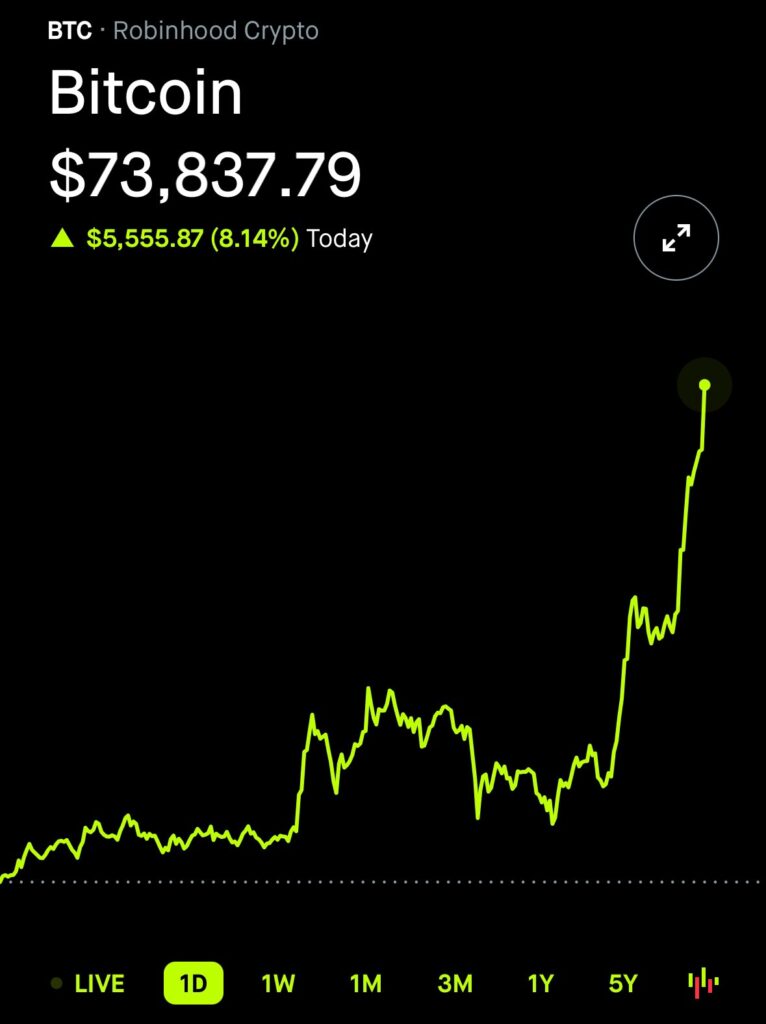
Bitcoin’s recent surge to an all-time high of $74.9K has electrified the financial world. While price rallies are nothing new in the volatile crypto market, this particular movement carries a unique twist—the anticipation of political change in the U.S. With the presidential election on the horizon, a Trump victory could dramatically reshape the landscape for Bitcoin and the broader crypto industry.

Why the Trump Factor?

Donald Trump’s previous administration was marked by deregulation and a willingness to embrace innovation, including aspects of fintech and emerging technologies. While his stance on cryptocurrencies has had mixed interpretations, a return to the White House could signal more lenient regulatory policies, potentially creating a more favorable environment for digital assets.

What This Could Mean for Bitcoin:

1. Pro-Crypto Regulatory Stance: If Trump were to return to office, many analysts believe that we could see a continuation of his deregulatory approach, creating opportunities for Bitcoin and other cryptocurrencies to thrive. A political shift like this could make the U.S. a more attractive hub for crypto firms and investors, pushing Bitcoin prices even higher.

2. Increased Institutional Confidence: Political stability and clear regulatory frameworks are key for large-scale investments. The prospect of policies that favor financial innovation might embolden institutions to deepen their positions in Bitcoin and blockchain technology. A Trump-led administration could remove some of the uncertainty that has kept cautious investors on the sidelines.

3. Global Ripple Effects: A U.S. president supportive of deregulated financial practices could have international implications. Global markets often follow the U.S.’s lead, and a pro-crypto administration could influence other nations to adopt similar stances, accelerating the global acceptance of Bitcoin.

Market Sentiment Speaks Volumes:

The current price surge shows that the market is already factoring in this potential political outcome. Traders are positioning themselves early, betting that the regulatory tide could shift to their favor. Bitcoin’s performance reflects not just a response to domestic politics but an anticipation of how global financial policies might pivot if the U.S. signals a new chapter for cryptocurrency.

Risks and Realities:

However, a Trump victory isn’t a guaranteed win for Bitcoin. While some predict a favorable regulatory shift, others warn that political unpredictability could still pose challenges. Past remarks from Trump himself have been contradictory—once calling Bitcoin a “scam,” but also recognizing the potential of blockchain and fintech.

Looking Forward:

Bitcoin’s climb to $74.9K may just be the beginning of a broader movement influenced by political and financial currents. As the 2024 U.S. presidential election approaches, the crypto world will be watching closely. A Trump victory could pave the way for a new era of digital finance—potentially fast-tracking Bitcoin’s journey toward further institutionalization and adoption.

Conclusion: Embracing a New Financial Era

Whether you’re a seasoned investor or new to the crypto scene, understanding the influence of global politics on the market is essential. A potential Trump win may herald changes that extend far beyond national policies, impacting the global stance on digital assets. Bitcoin’s recent all-time high isn’t just a spike—it could be the start of a transformative period in the financial world.

Stay connected with FutureFinanceLab.com for more insights, analysis, and updates as we navigate this thrilling chapter in crypto and finance.

“Latest in Crypto: Bitcoin Hits New Highs, Layer 2 Expansion, and Real-World Asset Tokenization”

Latest Updates in Finance and Crypto Market

1. Crypto Market Trends:

• Bitcoin’s price surged past $69,000, driven by optimism for potential all-time highs, as it enters a historically bullish period for crypto markets. The U.S. election campaign, with a possible Trump victory, adds to this positive sentiment due to his pro-crypto stance. Additionally, the market cap for USDT hit a record $120 billion, signaling increased confidence in stablecoins and the broader crypto market  .

• Retail interest in crypto is rising, with a notable shift toward derivatives trading, which reached $260 billion in volume this month. This trend shows retail investors favoring derivatives over spot trading, adding to overall market activity .

2. Regulatory and Institutional Developments:

• The SEC’s approval of options trading for spot Bitcoin ETFs on major U.S. exchanges signals increased institutional involvement. This development is anticipated to further strengthen the Bitcoin market. Additionally, Pennsylvania’s proposed “Bitcoin Rights Bill” could enhance state-level support for Bitcoin transactions  .

3. Layer 2 Growth and Tokenization:

• Ethereum is facing challenges in retaining a deflationary model, as Layer 2 solutions drive down mainnet activity. Meanwhile, tokenization of real-world assets (RWAs) like private credit and U.S. treasuries has grown significantly, exceeding $12 billion and highlighting blockchain’s appeal for tangible asset management .

4. Security and DeFi:

• Security remains a concern, with $1.3 billion lost in hacks in 2024, although security measures are improving. DeFi has seen positive growth, with total value locked (TVL) up 9.6%, led by chains like Sui and Sei that have introduced protocol upgrades, increasing their DeFi activity .

These developments reveal a market driven by institutional confidence and technological progress, even as challenges persist around security and regulatory clarity.

Sources:

Finbold, CoinSwitch   

FinanceFeeds 

BeInCrypto 

https://decrypt.co/crypto-news/bitcoin

Worldcoin: Potential Red Flags You Shouldn’t Ignore

Worldcoin: Potential Red Flags You Shouldn’t Ignore

In the world of crypto and decentralized finance, Worldcoin is one of the latest projects capturing attention. Promising a vision of universal financial inclusion, it sounds appealing at first glance. However, a deeper look reveals some significant concerns. Here are some critical red flags to consider before getting involved in Worldcoin.

1. Privacy and Security Risks

One of the most controversial aspects of Worldcoin is its requirement for iris scanning to verify user identity. Biometric data like your iris scan is sensitive and, once collected, can never be changed or undone. Despite claims that the data is anonymized and stored securely, any data breach could expose users to serious security and privacy risks.

Further, biometric data can be misused, leading to identity theft or unauthorized surveillance. Unlike a password, which you can reset, your iris scan is unique and permanent. Even with security assurances, many experts warn that this kind of data collection opens the door to potential misuse.

2. Centralization and Control

Though Worldcoin markets itself as part of the decentralized finance (DeFi) movement, the reality is that a centralized company manages and controls the project. Decentralization is a cornerstone of blockchain technology because it reduces the risk of control by a few individuals or entities. In Worldcoin’s case, central management means a small group retains significant control, potentially allowing them to make unilateral decisions or manipulate aspects of the network.

This centralization raises concerns about transparency, accountability, and the project’s commitment to the principles of decentralized finance. When one entity holds too much power, the project can become vulnerable to conflicts of interest or even future regulation pressures.

3. Data Exploitation of Vulnerable Populations

Worldcoin has primarily targeted economically disadvantaged areas by offering small financial incentives to users willing to share their biometric data. Critics argue that this approach preys on financially vulnerable individuals who may not fully understand the potential long-term implications of sharing their sensitive data.

By providing small amounts of cryptocurrency in exchange for biometric data, the project risks becoming exploitative. Individuals in these communities might feel compelled to participate for the immediate financial reward, without a complete understanding of what they’re giving up. This raises ethical questions about consent and whether Worldcoin truly aims to empower these individuals or is simply using their data for corporate gain.

4. Uncertain Financial Model

While Worldcoin promises universal financial access, the project’s economic model is somewhat vague. Its long-term sustainability depends on widespread adoption and continued investment. If the project doesn’t reach the critical mass of users it needs, there’s a chance that early participants could find themselves in a devalued system.

Furthermore, Worldcoin’s value relies heavily on hype, which is a common red flag for projects that might not have a solid foundational structure. Any collapse in user interest or funding could leave participants with nothing.

5. High Risk of Regulatory Backlash

With privacy and data protection laws tightening globally, Worldcoin’s model could face regulatory challenges. Governments worldwide are implementing strict regulations on how companies collect, store, and manage biometric data. There’s a real possibility that Worldcoin’s data collection practices could become illegal or heavily restricted in certain regions, which would disrupt its operations.

A legal crackdown could have serious financial implications for the project and, by extension, for those who have invested time, data, and resources into it. Participants may face restrictions on using their Worldcoin tokens or find themselves unable to access or transfer their assets.

6. Lack of Transparency and Clear Communication

Finally, many participants have pointed out that Worldcoin lacks transparency in its operations and goals. While the project boasts a noble vision of financial inclusion, there are few concrete details about how it plans to achieve this sustainably. Moreover, the project hasn’t provided clear information about data security, revenue models, and long-term goals.

When projects lack transparency, it’s often a sign that they’re hiding potential issues. Transparency is essential in building user trust, particularly in finance, where participants need to know how their data will be used, who has access to it, and what protections are in place.

Final Thoughts

Worldcoin’s mission to create universal financial inclusion through digital identity might sound groundbreaking, but the execution raises serious questions. From privacy risks to ethical concerns, centralization, and regulatory challenges, there are several red flags that potential users should carefully consider. It’s essential to approach any new technology, especially in finance, with caution and critical thinking.

Always remember, your biometric data is one of the most personal forms of identification. Giving it away for a small incentive might not be worth the potential risks down the line. If you’re considering getting involved with Worldcoin, be sure to weigh these concerns thoroughly and stay informed about the project’s development.

*https://gokhansakalli.medium.com/worldcoin-potential-red-flags-you-shouldnt-ignore-d1a4eef20659