How to Know If a Stock Is Overvalued

The market might love it. But is it overpriced? Here’s how to spot red flags in plain English.

When a stock is trending, it’s tempting to jump in. But just because everyone’s buying doesn’t mean it’s a good deal. In investing, one of the most important skills is knowing whether a stock is fairly valued, undervalued, or overvalued. Buying an overvalued stock can leave you holding the bag when the hype fades.

Here’s how to check if a stock is overpriced—explained simply.


1. Check the Price-to-Earnings (P/E) Ratio

  • What it is: The P/E ratio compares the stock price to the company’s earnings.
  • Rule of thumb: A very high P/E could mean investors are paying too much for every dollar of profit.
  • Example: If Company A trades at a P/E of 80 while its peers are around 20, that’s a warning sign.

2. Compare Price-to-Sales (P/S) Ratio

Some companies don’t have strong earnings yet. In that case, look at the P/S ratio (price compared to sales).

  • If a company trades at 20x sales while competitors are at 3x, it may be priced for perfection.

3. Look at Growth vs. Reality

Growth stories can be exciting—but the numbers must back them up.

  • Ask yourself: Is revenue growing as fast as the stock price?
  • If the company is only growing 5% annually but the stock is up 80% in a year, investors might be getting ahead of themselves.

4. Check Debt Levels

An overvalued stock often hides under financial stress.

  • Too much debt compared to profits or cash flow means the company could struggle if the market slows down.

5. Watch Insider & Institutional Activity

  • If insiders (like CEOs and executives) are selling shares aggressively, it might be a sign they think the price is too high.
  • Big institutions trimming positions is also worth noting.

6. Market Sentiment and Hype

  • Overhyped companies often dominate headlines, social media, and videos.
  • Remember the “greater fool theory”: buying just because you think someone else will pay more later is risky.

Quick Checklist: Is the Stock Overvalued?

  • P/E or P/S well above industry average
  • Revenue growth doesn’t match stock price growth
  • High debt compared to peers
  • Insiders are selling heavily
  • The stock is driven by hype, not fundamentals

Final Thoughts

An overvalued stock isn’t always a bad company—it just means the price you pay may not match the value you get. Smart investors focus on fundamentals, not fear of missing out. If you can learn to spot these red flags, you’ll protect your money and be ready to buy when the hype cools down.

At FutureFinanceLab, we simplify investing so you can build wealth with confidence.

Welcome to the Bitcoin Era: What the New U.S. Bills Mean for the Future of Finance

In July 2025, the U.S. House of Representatives passed two landmark pieces of legislation that will shape the next generation of finance:
The Clarity for Payment Stablecoins Act
The Financial Innovation and Technology for the 21st Century Act (FIT21)

These bills bring regulatory clarity to digital assets and mark a shift from financial experimentation to infrastructure.

This is not just regulation. This is the beginning of the Bitcoin Era.


What’s in the Bills

1. Clarity for Payment Stablecoins Act

  • Establishes federal rules for stablecoins such as USDC and USDT
  • Allows both banks and non-banks to issue them under supervision
  • Enforces full reserve backing, regular audits, and consumer protection
  • Aims to protect the dollar’s role in digital payments

2. FIT21 (Financial Innovation for the 21st Century Act)

  • Divides oversight between the SEC and CFTC
  • Defines a legal framework for digital assets
  • Provides a pathway for crypto projects to decentralize and reclassify over time
  • Encourages innovation while creating guardrails

Why It Matters for Bitcoin

Bitcoin already functions as a digital commodity, and this legislation strengthens that legal recognition. Here’s what changes:

  • Bitcoin now clearly falls under CFTC jurisdiction
  • Institutional investors can act with more confidence
  • Crypto entrepreneurs get clarity on how to build legally
  • Bitcoin is validated not just as a store of value, but as core financial infrastructure

A New Financial System Is Emerging

These laws create a dual financial system operating side by side.

Traditional FinanceBitcoin-Era Finance
Centralized institutionsOpen monetary networks
Fiat and paper-basedBitcoin and digital dollars
Bank intermediariesSelf-custody and peer-to-peer
Legacy clearing systemsReal-time blockchain settlement

This signals the rise of digital, programmable finance — built on networks like Bitcoin.


The Bigger Picture

Bitcoin began as a decentralized alternative to central banking. Today, it is becoming the base layer for a global financial system.

With these new laws:

  • Institutions can enter without legal uncertainty
  • Builders can innovate without fear of regulatory whiplash
  • Users can participate with more transparency and safety

This is not about hype. This is about structure and scale.


Final Thought

The United States is not banning crypto. It is regulating and integrating it.

Bitcoin is no longer the outsider. It is becoming the foundation of a redesigned financial world.

This is the official beginning of the Bitcoin era.

Want Help Navigating the New Financial Era?

At FutureFinanceLab, we help investors and everyday earners learn how to thrive in a digital economy.
Don’t just invest understand what’s happening.

Bitcoin Hits New All-Time High: What It Means for Crypto Investors in 2025

The king of crypto is back on top.

In a dramatic surge that captured the attention of investors worldwide, Bitcoin has officially hit a new all-time high, breaking past its previous peak and reinforcing its position as the most dominant digital asset in the world. This latest milestone is not just a price point—it’s a signal.

A signal that digital money is no longer a fringe concept.

Why This ATH Matters

Bitcoin’s new all-time high reflects more than speculation—it shows growing institutional adoptionrising inflation hedging, and global recognition of decentralized finance.

From major asset managers integrating Bitcoin into portfolios to global payment firms offering crypto services, the fundamentals backing this rally are stronger than ever.

This ATH is different.

It’s not fueled by hype alone—it’s supported by:

  • The growth of Bitcoin ETFs
  • Geopolitical shifts away from fiat dependence
  • Regulatory clarity in several key markets
  • And a maturing retail investor base looking for sound money in a digital world

Bitcoin: Still the Benchmark

Bitcoin continues to be the “digital gold” that institutions and individuals turn to first. Its scarcity (21 million cap), security, and network effects have set it apart as the most resilient crypto asset.

But the crypto story doesn’t stop there.

What About HBAR and XRP?

While Bitcoin dominates headlines, HBAR (Hedera Hashgraph) and XRP (Ripple) are quietly gaining traction with different, equally compelling use cases:

🌀 HBAR: The Enterprise Layer for Web3

Hedera’s unique consensus mechanism and enterprise partnerships (like Google, IBM, and LG) make it a serious player in real-world Web3 infrastructure. As tokenized assets, identity, and supply chain solutions expand, HBAR could play a foundational role.

🌊 XRP: The Bridge for Global Payments

Despite legal hurdles in recent years, XRP continues to push boundaries in cross-border finance. With RippleNet expanding globally and growing interest in CBDC interoperability, XRP is more than alive—it’s evolving.

A New Crypto Cycle?

If you’ve been on the sidelines, this is your wake-up call. Bitcoin’s ATH isn’t just a milestone—it’s a reminder of the massive shifts taking place in finance, technology, and trust.

The world is going digital. Is your portfolio ready?


💡 FutureFinanceLab Insight:
Don’t chase price. Understand value.
The smart investor looks beyond headlines and asks:

  • What is the long-term use case?
  • Who’s building?
  • What problem does this solve?

Bitcoin’s new high is a reflection of long-term belief—something every investor should study deeply.


Want to Learn More?

Join the FutureFinanceLab Membership for deeper insights, model portfolios, and private coaching as we navigate the next phase of the crypto and digital finance revolution.

Bitcoin vs Stablecoins: Clearing the Confusion After the Stablecoin Act

With the passing of the Stablecoin Act and recent commentary from Custodia Bank CEO Caitlin Long on CNBC, the digital asset space is once again in the spotlight. But many people are still confused about the difference between Bitcoin and stablecoins. Let’s clarify.

What’s the Difference?

Bitcoin
Bitcoin is a decentralized digital asset. Often referred to as digital gold, it is scarce, censorship-resistant, and not controlled by any government or corporation.

  • Fixed supply: only 21 million will ever exist
  • Volatile: price fluctuates based on market demand
  • Purpose: long-term store of value, hedge against inflation, and financial independence

Stablecoins
Stablecoins are digital tokens pegged to fiat currencies like the US Dollar. They are issued by centralized institutions and designed to maintain price stability.

  • Pegged value: 1 stablecoin is typically equal to 1 USD
  • Issued by: banks or private companies
  • Purpose: trading, remittances, payments, and access to DeFi applications

What Caitlin Long Said on CNBC

In a CNBC interview on July 2, 2025, Caitlin Long made a key point:

“Stablecoins are an on-ramp to Bitcoin.”

She emphasized that regulated, bank-issued stablecoins are making it easier for institutions and everyday users to enter the digital asset ecosystem. As users become comfortable transacting with stablecoins, many begin to explore Bitcoin as a more powerful tool for long-term wealth preservation and personal financial control.


How They Work Together

FeatureBitcoinStablecoins
VolatilityHighLow (pegged to fiat currency)
SupplyFixed (21 million)Flexible and demand-driven
IssuerDecentralized (no central issuer)Centralized (banks or companies)
Use CaseLong-term value, investmentPayments, trading, stability
RegulationLight regulatory frameworkIncreasing oversight under new laws

Conclusion

The Stablecoin Act is not about replacing Bitcoin. It is about creating a safe and regulated gateway into the world of digital finance. Stablecoins offer a convenient entry point. Bitcoin offers long-term value, ownership, and financial sovereignty.

If you want to make sense of where the future of money is heading, FutureFinanceLab is here to help.

Become a Member Today and learn how to navigate digital assets with clarity and confidence.

Bitcoin: The Monetary Base Layer of the Digital Age

As we move deeper into a digitally native world, the question of what kind of money fits this era becomes unavoidable. Paper cash, bank-issued liabilities, and politically managed fiat currencies increasingly feel misaligned with a world driven by code, networks, and decentralization.

Enter Bitcoin—once dismissed as a speculative experiment, now increasingly viewed as the foundational monetary layer for the internet age.


Why Legacy Money No Longer Fits

Traditional currencies are bound by geography, subject to inflation, and governed by entities that often place politics over economic stability. In contrast, the digital age demands:

  • Speed: Real-time, global transactions
  • Security: Immutable and transparent systems
  • Neutrality: Free from state interference
  • Digital-native infrastructure: Interoperability with code and smart contracts

Legacy systems are struggling to meet these expectations. Bitcoin, by design, was built for this transformation.


Bitcoin’s Evolution: From Speculation to Settlement

Initially, Bitcoin was viewed as a speculative asset. Over time, its core features—scarcity, decentralization, and censorship resistance—have proven durable, while its infrastructure has matured:

  • Lightning Network: Enables instant, low-fee payments
  • Institutional custody: Brings secure access to broader audiences
  • Nation-state adoption: El Salvador, and interest from others, signal rising legitimacy
  • Layer 2 & smart contract platforms: Expanding Bitcoin’s utility beyond basic transfers

The network effect is now in motion: the more people, businesses, and governments interact with Bitcoin, the more useful—and inevitable—it becomes.


Bitcoin as a Base Layer: What Does That Mean?

Think of the internet. It runs on foundational protocols like TCP/IP. Most users never think about them—but everything depends on them.

Similarly, Bitcoin is emerging as a monetary protocol. It doesn’t need to be flashy. It just needs to be secure, verifiable, and neutral—traits fiat systems are increasingly lacking.

As this protocol layer gains adoption, other layers—wallets, apps, DeFi platforms, and cross-border solutions—are being built on top of it, reinforcing Bitcoin’s role not just as “digital gold,” but as a financial operating system.


Use Cases: Bitcoin in the Real Digital Economy

Here’s how Bitcoin can function as the money of the digital age:

1. Global Settlement Layer

Multinational companies can use Bitcoin for transparent, fast settlement of international payments—no middlemen, no exchange-rate games.

2. Digital Collateral

Bitcoin’s predictability makes it ideal collateral in DeFi and Web3 systems. It’s already being used to back loans, liquidity pools, and tokenized assets.

3. Censorship-Resistant Savings

In countries facing capital controls or currency collapse, Bitcoin offers a store of value and freedom of financial movement.

4. Micropayments and Streaming Money

With Layer 2 technologies like Lightning, Bitcoin can be used for tiny, fast payments—perfect for content creators, IoT devices, and real-time services.

5. Remittances Without Borders

Sending money across borders can take seconds with Bitcoin—at a fraction of the cost of traditional wire transfers or Western Union fees.


Why Bitcoin, Not Just “Any Crypto”?

Other cryptocurrencies may offer innovation, but most don’t match Bitcoin’s combination of:

  • Security
  • Decentralization
  • Uptime
  • Global liquidity
  • Incentive alignment (miners, holders, developers)

Bitcoin’s neutrality, hard supply cap, and network maturity are what make it suitable to serve as a monetary base, not just a niche application.


Challenges to Watch

To be clear, Bitcoin’s future as digital base money isn’t guaranteed. It must overcome:

  • Regulatory pushback
  • Scalability friction
  • Competing central bank digital currencies (CBDCs)

Yet with each challenge, Bitcoin adapts—its open-source nature attracting global talent to continuously improve and build.


Conclusion: The Future Is Layered, and Bitcoin Is the Foundation

The digital age doesn’t just need better interfaces—it needs better money. Bitcoin, with its growing infrastructure and proven resilience, is positioning itself not just as an investment, but as the monetary foundation for a decentralized, digital-native economy.

As new applications are built on top, and as trust in traditional money erodes, Bitcoin’s quiet power grows.

The network is alive. The foundation is set. The digital age has its money.

How Europe Controls Your Money & Why It’s Dangerous (And How Bitcoin Can Protect You)

The increasing financial control by European institutions is a major concern. From Cyprus’ 2013 bail-in to the push for a digital euro and investment mandates, the EU is slowly tightening its grip on people’s savings. But there’s a way to protect yourself—Bitcoin.

1. The Cyprus 2013 Bail-In: A Warning Sign

One of the biggest financial wake-up calls was the 2013 Cyprus bank crisis.

• The government froze bank deposits and imposed a levy on savings over €100,000.

• People couldn’t withdraw their own money freely.

• Up to 47.5% of large deposits were seized to bail out the banks.

• The European Central Bank (ECB) and IMF approved this move, proving that your money isn’t really yours in a crisis.

🔴 Lesson:

• Banks can block or seize your money overnight.

• Government bail-ins are real.

2. The EU’s Growing Financial Control: What’s Happening Now?

A. The “Savings & Investments Union” – A Soft Takeover of Private Wealth?

Ursula von der Leyen announced that the EU will “turn private savings into much-needed investment.”

• This could mean pushing banks, pensions, or individuals to invest in government-approved sectors.

• If enforced, it would be a form of financial control—steering your wealth where the EU wants it, not where you want it.

🔴 Why this is dangerous:

• Limits financial freedom—less choice over your own money.

• Could lead to financial restrictions like limits on withdrawals or forced investments.

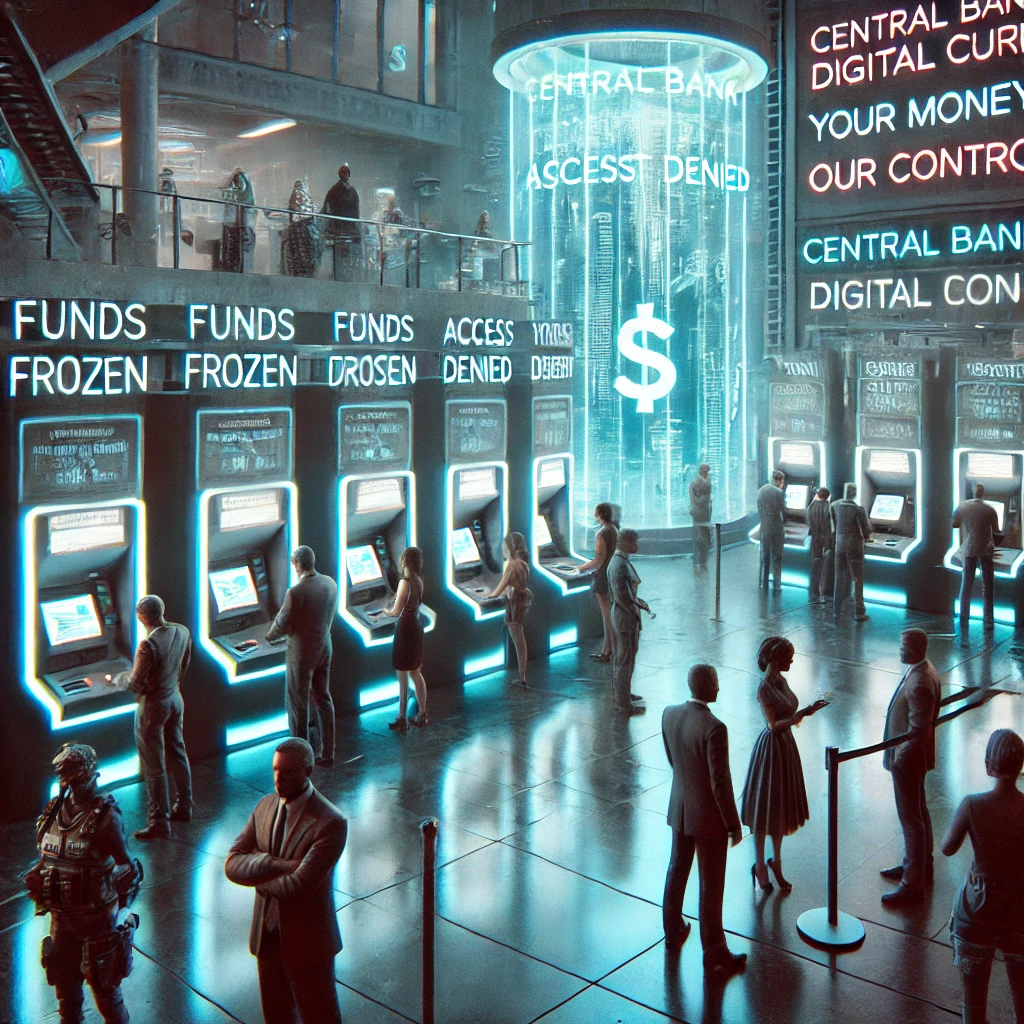
B. The Digital Euro (CBDC) – The Ultimate Financial Control Tool

The ECB is pushing the digital euro, which would replace physical cash and give central authorities total control over transactions.

• Programmable money: The ECB can control how, where, and when you spend your money.

• Expiring currency: They could force you to spend savings within a set time to stimulate the economy.

• Negative interest rates: They could automatically reduce your savings to prevent hoarding.

• Frozen accounts: If your spending doesn’t align with their policies, they could restrict access to your funds.

🔴 Why this is dangerous:

• You don’t control your money.

• Cash will disappear, making it impossible to transact outside the system.

• It’s a surveillance tool, tracking every purchase and movement.

C. Europe’s “Green Finance” Policies – Forcing You to Invest in Their Agenda

• Banks and pension funds are being forced to divest from industries like oil, gas, or independent investments and invest in government-backed “green” projects.

• There is a growing push for investment mandates—forcing individuals or institutions to allocate wealth into EU-approved sectors.

• You may be unable to invest freely in assets that don’t align with their agenda.

🔴 Why this is dangerous:

• You lose investment freedom.

• Your savings could be redirected into sectors with lower returns, harming long-term financial security.

3. How Bitcoin Can Protect You from Financial Control

A. Bitcoin is Self-Sovereign Money

Unlike fiat currency held in banks, Bitcoin is decentralized. No government or bank can seize it, freeze it, or control how you use it.

✔ No bail-ins – Your Bitcoin cannot be taken like Cyprus’ deposits were.

✔ No financial restrictions – No government can limit your spending or transactions.

✔ No forced investments – You decide where to store or invest your wealth.

B. Bitcoin is Censorship-Resistant

• If a government imposes capital controls, Bitcoin still works.

• If bank accounts are frozen or restricted, Bitcoin can still be accessed globally.

• Transactions are peer-to-peer, meaning you don’t need approval from a third party.

🔴 Example:

• In Canada’s 2022 trucker protests, the government froze bank accounts of protesters and donors.

• Bitcoin was used to send funds without government interference.

C. Bitcoin is a Hedge Against Inflation and Economic Manipulation

• Governments print money, causing inflation.

• Bitcoin has a fixed supply of 21 million coins—it cannot be inflated.

• As fiat currency loses value, Bitcoin tends to appreciate over time due to scarcity.

4. What You Can Do to Protect Yourself

✔ Diversify your assets – Keep a mix of Bitcoin, cash, real estate, and hard assets.

✔ Withdraw funds from banks – Holding too much in the system puts you at risk of financial controls.

✔ Learn how to use Bitcoin properly – Store it in cold wallets (not on exchanges) for maximum security.

✔ Stay ahead of CBDCs – Be prepared for a world where digital euros may limit financial freedom.

Final Thoughts: A Fight for Financial Freedom

Europe is moving toward more financial control, using regulations, digital currencies, and investment mandates to steer your money where they want. Bitcoin is one of the only tools that gives people financial sovereignty.

🚨 The more control governments take, the harder it is to resist. Bitcoin offers a way out—a way to own money that no government can touch.

AI-Powered Market Manipulation – Is Wall Street Outsmarting Retail Investors?

Artificial intelligence (AI) is reshaping financial markets, giving institutional traders a powerful edge. With AI-driven algorithms analyzing data in milliseconds, retail investors often find themselves at a disadvantage. But is Wall Street using AI to manipulate the market?

How AI Gives an Edge to Big Players

  • High-Frequency Trading (HFT): AI algorithms execute trades at lightning speed, potentially front-running retail orders.
  • Market Sentiment Exploitation: AI scans news and social media to predict trends before the public reacts.
  • Artificial Volatility: Some firms use rapid trades to create price swings that retail investors unknowingly follow.

Should Retail Traders Be Concerned?

With institutional AI systems dominating the market, retail traders struggle to compete. Regulators are trying to catch up, but transparency remains a challenge. However, AI-powered tools for retail investors are emerging, aiming to level the playing field.

The future of trading will depend on who controls AI—and whether retail investors can access the same technology. Stay ahead of the game with the latest insights at FutureFinanceLab.com.

Crypto Projects to Watch: Real Estate Tokenization – Transforming Property Investment

The real estate industry has long been known for its high barriers to entry, slow transactions, and reliance on intermediaries. Blockchain technology is changing this by enabling real estate tokenization, allowing properties to be divided into digital assets that can be bought, sold, and traded seamlessly.

Several crypto projects are leading the charge in real estate tokenization, leveraging blockchain to create a more transparent and efficient property market. Let’s take a look at the key players, including Hedera (HBAR), XRP Ledger, and others, as well as the risks involved in this emerging space.


How Real Estate Tokenization Works

Real estate tokenization involves converting ownership rights of a property into blockchain-based tokens. These tokens can be:

  • Fractionalized, meaning investors can buy small portions of a property
  • Traded on secondary markets, improving liquidity
  • Stored on a blockchain, ensuring transparency and security
  • Accessible globally, allowing investors from anywhere to participate

With blockchain, real estate investment becomes faster, cheaper, and more efficient compared to traditional methods.


Top Crypto Projects in Real Estate Tokenization

1. Hedera Hashgraph (HBAR) – Enterprise-Grade Tokenization

Hedera Hashgraph is one of the most promising blockchain platforms for real estate tokenization due to its high-speed, low-cost, and secure infrastructure.

Why HBAR for Real Estate?

  • Fast transactions – Hedera can handle 10,000+ TPS with near-instant finality
  • Low fees – A fraction of a cent per transaction, making token transfers cost-effective
  • Enterprise adoption – Major institutions like Avery Dennison, Google, and Standard Bank already use Hedera’s network
  • Sustainability – Energy-efficient consensus mechanism

Example Use Case:
Hedera’s Token Service (HTS) allows real estate firms to tokenize properties, enabling fractional ownership and seamless property transfers on-chain.


2. XRP Ledger (XRP) – Real Estate Payments & Settlements

XRP Ledger (XRPL) is another strong player in the real estate tokenization space, offering fast and efficient cross-border payments that can be used in real estate transactions.

Why XRP for Real Estate?

  • Instant, low-cost payments – Transactions settle in 3-5 seconds with fees under $0.01
  • Interoperability – XRPL supports smart contracts and tokenized assets
  • Regulatory focus – Ripple is working on compliant tokenization solutions

Example Use Case:
Real estate firms can use XRPL for international property transactions, allowing buyers and sellers to transfer funds instantly without needing traditional banks.


3. Propy (PRO) – NFT-Based Real Estate Ownership

Propy is an Ethereum-based real estate platform that enables users to buy and sell properties using NFTs (Non-Fungible Tokens).

Why Propy for Real Estate?

  • NFT-based property ownership – Homes can be bought/sold as digital tokens
  • Smart contract automation – Reduces paperwork and legal costs
  • Real-world adoption – Properties have already been sold as NFTs via Propy

Example Use Case:
A Miami property was sold using Propy’s blockchain platform, showing how NFTs can revolutionize real estate transactions.


Risks of Real Estate Tokenization

While real estate tokenization has significant potential, it also comes with several risks that investors should consider.

1. Regulatory Uncertainty

Tokenized real estate is still a gray area in many jurisdictions. Governments may introduce new regulations that impact how these digital assets are issued, traded, or taxed.

2. Market Liquidity Issues

While tokenization improves liquidity, secondary markets for real estate tokens are still in their early stages. Selling a tokenized property share may not always be as easy as selling traditional crypto assets.

3. Smart Contract Risks

Blockchain relies on smart contracts, which can be vulnerable to hacks, bugs, or exploits. If a contract is poorly written, it could lead to financial losses for investors.

4. Centralization Risks

Some real estate tokenization platforms are still partially centralized, meaning they rely on companies or legal structures that could introduce risks like fraud, mismanagement, or legal disputes.

5. Lack of Consumer Protection

Unlike traditional real estate investments, tokenized real estate may not be covered by standard consumer protections, increasing the risk of fraud or asset disputes.


The Future of Real Estate Tokenization

The tokenization of real estate is still in its early stages, but the potential is massive. With blockchain, real estate investment is becoming:

  • More accessible – Anyone can invest, even with small amounts
  • More liquid – Sell your tokens anytime instead of waiting months for a buyer
  • More transparent – No hidden fees, middlemen, or fraud risks

Projects like Hedera (HBAR), XRP Ledger, Propy, RealT, and Landshare are paving the way for a new era of real estate investing.


Learn More at FutureFinanceLab.com

If you want to stay ahead of the curve and understand how crypto, DeFi, and tokenization are shaping the future of finance, check out FutureFinanceLab.com.

  • Get insights on blockchain, investing, and financial innovation
  • Explore the latest trends in tokenized assets
  • Stay informed about new crypto opportunities

The future of real estate is on the blockchain—are you ready?

Ultimate Beginner’s Guide to Cryptocurrency: How to Get Started

At FutureFinanceLab.com, we don’t just teach you about cryptocurrency—we help you take action. If you’re ready to dive into the world of digital currencies, here’s everything you need to know to open an account and get started.


1. What is Cryptocurrency?

Cryptocurrency is digital money that exists only online. Unlike regular currency, it operates without a central authority (like a bank) and uses blockchain technology to track transactions.

The most famous cryptocurrency is Bitcoin (BTC), but there are many others like Ethereum (ETH) and Litecoin (LTC).


2. Step-by-Step Guide: How to Open an Account and Buy Your First Cryptocurrency

Step 1: Choose a Cryptocurrency Exchange

To buy cryptocurrency, you need to open an account on a cryptocurrency exchange. Popular exchanges include:

  • Coinbase: Great for beginners.
  • Binance: Offers a wide range of cryptocurrencies.
  • Kraken: Known for its strong security features.

Step 2: Sign Up and Verify Your Identity

Once you’ve chosen an exchange, you’ll need to create an account by entering your basic personal information, like your name and email address. Most exchanges will require you to verify your identity (KYC—Know Your Customer), which typically involves submitting a photo of your ID and a selfie.


Step 3: Deposit Funds Into Your Account

After your account is verified, you can deposit funds into it. Most exchanges allow you to deposit using USDEUR, or other fiat currencies via:

  • Bank Transfer
  • Credit or Debit Card
  • PayPal (on certain exchanges)

Step 4: Buy Your Cryptocurrency

Once your account is funded, you’re ready to buy cryptocurrency. You’ll find a variety of coins available for purchase, but to get started, you might want to buy Bitcoin (BTC) or Ethereum (ETH), as they are the most widely used.

  • Select the coin you want to buy.
  • Choose how much you want to invest.
  • Complete the transaction.

Step 5: Store Your Cryptocurrency Safely

After buying your cryptocurrency, it’s important to store it securely. Here’s how:

  • Hot Wallet: An online wallet connected to the internet (easy to access but less secure).
  • Cold Wallet: A hardware wallet that stores your cryptocurrency offline (more secure for long-term storage).

3. Why Cryptocurrency?

  • Potential for High Returns: Bitcoin and other cryptocurrencies have experienced significant growth in recent years.
  • Decentralization: You have control over your funds, with no bank or government involved.
  • Innovation: Cryptocurrency and blockchain are transforming industries, including finance, healthcare, and technology.

4. The Risks of Cryptocurrency

While cryptocurrency offers huge opportunities, it’s important to be aware of the risks:

  • Volatility: Prices can change rapidly.
  • Security Risks: Always store your crypto safely, and use secure exchanges.
  • Regulation: Cryptocurrency is still being regulated in many countries, so it’s important to stay updated on legal matters.

5. Start Your Journey Today at FutureFinanceLab.com

At FutureFinanceLab.com, we don’t just give you the basics—we guide you step by step. We offer exclusive tutorials and resources to help you make the right choices when opening an account, investing, and securing your cryptocurrency.

Ready to take the first step? Join our membership today to access more detailed guides, expert strategies, and a community of crypto enthusiasts like you.


By joining FutureFinanceLab.com, you’ll not only learn how to get started but also discover advanced strategies to grow your portfolio and manage risks effectively.

Start your crypto journey today! 🚀