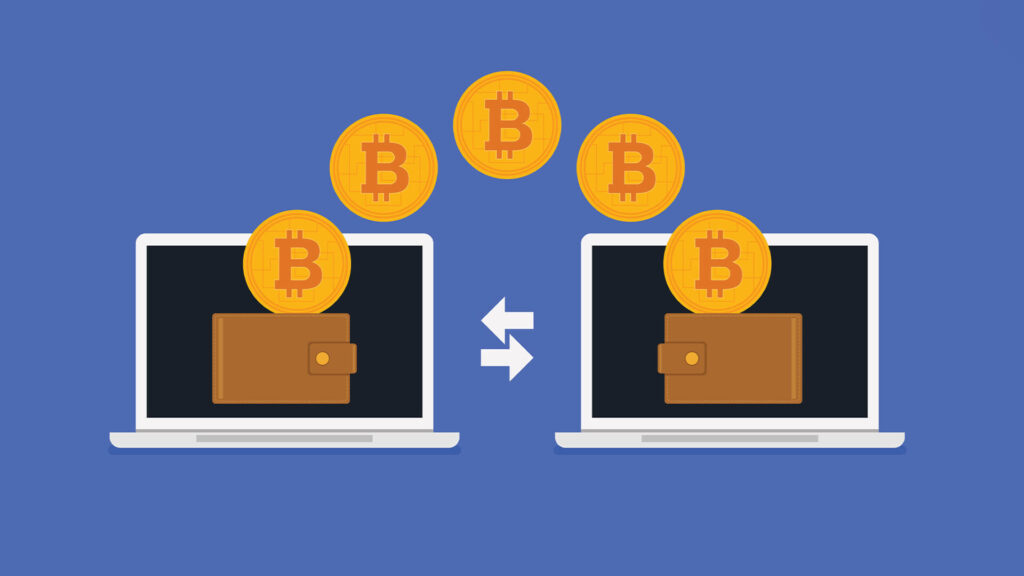
Beginner’s Guide to Crypto Investment

Beginner’s Guide to Crypto Investment

Learn How to Invest in Crypto Responsibly

Investing in cryptocurrencies can be exciting and rewarding, but it’s essential to approach it with caution and strategy. This guide will help you understand the basics and make informed decisions while minimizing risks.


1. Understand the Basics

Before diving in, familiarize yourself with key terms and concepts:

  • Cryptocurrency: Digital or virtual currencies secured by cryptography (e.g., Bitcoin, Ethereum).
  • Blockchain: The technology that powers cryptocurrencies by maintaining a decentralized ledger.
  • Wallet: A digital tool for storing, sending, and receiving cryptocurrencies.

Tip: Start by researching popular cryptocurrencies like Bitcoin (BTC) and Ethereum (ETH) before exploring smaller projects.


2. Assess Your Financial Situation

Only invest money you can afford to lose. Cryptocurrencies are highly volatile, and prices can fluctuate dramatically.

  • Create an investment budget.
  • Build an emergency fund before allocating money to crypto.
  • Diversify your investments to balance risk.

3. Choose a Reliable Exchange

Select a trusted platform to buy and trade cryptocurrencies. Look for:

  • Security Features: Two-factor authentication (2FA), encryption, and cold storage.
  • Ease of Use: User-friendly interfaces for beginners.
  • Reputation: Platforms like Coinbase, Binance, and Crypto.com are widely recognized.

4. Secure Your Investments

Protect your cryptocurrencies by using secure storage solutions:

  • Hot Wallets: Convenient for frequent trading but vulnerable to online threats.
  • Cold Wallets: Offline storage, such as hardware wallets, offering maximum security.
  • Avoid sharing your private keys or passwords.

5. Start Small and Stay Informed

  • Begin with a small amount to get familiar with the process.
  • Regularly follow crypto news and trends from reliable sources.
  • Learn about emerging technologies and updates in the crypto space.

6. Beware of Scams

  • Avoid “get rich quick” schemes or unsolicited investment offers.
  • Verify the authenticity of any platform or project before investing.
  • Use official websites and links to avoid phishing attacks.

7. Long-Term Perspective

Cryptocurrencies can be a long-term investment. Avoid panic selling during market dips and focus on projects with solid fundamentals.

Remember: Patience is key.


8. Learn About Taxes and Regulations

Understand your country’s tax policies on crypto gains and abide by local regulations. Responsible investing includes reporting earnings correctly.


9. Tools and Resources

  • Portfolio Trackers: Apps like CoinGecko or Blockfolio to monitor your investments.
  • Educational Platforms: Future Finance Lab offers in-depth tutorials to guide you.

Ready to Start Your Crypto Journey?

Investing in cryptocurrencies responsibly requires knowledge, discipline, and a long-term approach. By following these tips, you can confidently take your first steps in the world of digital assets.

Explore More Resources

Check out our latest articles and tools to help you succeed in crypto investing at Future Finance Lab!

What Is Fair Value?

• Fair value is the estimated true worth of an asset based on an objective assessment of its financial fundamentals, market conditions, and other relevant factors.

• It represents a price at which a willing buyer and seller would agree to exchange the asset, assuming no undue pressure on either side.

Key Factors in Fair Value

Fair value isn’t just about the current market price; it takes into account a broader view:

Intrinsic Factors: These are factors directly related to the asset, like revenue, profitability, growth potential, and risk.

External Factors: These include the economic environment, industry trends, competitive landscape, interest rates, and broader market conditions.

Why Fair Value Matters

• Fair value helps investors determine if an asset is undervalued, overvalued, or fairly priced relative to its “true” worth.

• It’s useful for making investment decisions, as buying assets below fair value can potentially provide higher returns if the market price rises to align with fair value.

Fair Value Calculation Methods

There are several methods to determine fair value, each depending on the type of asset (stocks, bonds, real estate, etc.). Here are some common approaches:

Discounted Cash Flow (DCF) Analysis:

• Often used for stocks, this method calculates the present value of an asset’s future cash flows, discounted by a rate that reflects the risk.

• Example: If a company is expected to generate $1 million in cash each year and you expect a 10% return, the DCF model helps calculate today’s worth of those future cash flows.

Comparable Company Analysis (CCA):

• Compares an asset to similar assets that are publicly traded to estimate its value.

• For instance, if a similar company has a price-to-earnings (P/E) ratio of 15, you might apply the same multiple to estimate fair value for another company in the same industry.

Market Sentiment and Demand:

• In cases like real estate or commodities, supply-demand dynamics can play a role in establishing fair value.

• Fair value for an asset like Bitcoin might be influenced by demand factors, network effects, or scarcity, considering its limited supply.

Example: Fair Value of a Stock

• Let’s say you’re evaluating the fair value of a tech stock. You believe it can generate $50 million annually in free cash flow and has a 5% annual growth rate.

• Using DCF, you discount these future cash flows by your required return rate (say 10%). You’d calculate the present value of each year’s cash flow and sum them to arrive at a fair value for the stock.

• If the market price is below this fair value, it might indicate a buying opportunity; if above, it might suggest the stock is overvalued.

Fair Value in Cryptocurrency

• Cryptocurrencies are unique, as they don’t have traditional cash flows or earnings. Here, fair value is more speculative and often based on:

Network value (how many people use it),

Utility (use cases, like cross-border payments for XRP),

Scarcity (like Bitcoin’s fixed supply of 21 million),

Market adoption and sentiment (demand dynamics).

7. Interpreting Fair Value and Market Price

Market Price: The price at which an asset is currently trading. This can be above, below, or equal to fair value.

Fair Value Discrepancy: Often, the market price diverges from fair value due to market sentiment, hype, fear, or temporary events.

Undervalued: Market price is below fair value—potential buying opportunity.

Overvalued: Market price is above fair value—possible caution for sellers.

Real-World Application

To apply fair value analysis:

• Research the asset’s fundamentals and calculate fair value using models that suit its characteristics.

• Compare fair value to the current market price.

• Factor in your own risk tolerance, financial goals, and investment timeframe to make informed decisions.

Summary

In essence, fair value represents a rational price based on an asset’s intrinsic and market factors. It’s a powerful concept, helping you look beyond market noise to focus on the underlying worth of an investment.

“Latest in Crypto: Bitcoin Hits New Highs, Layer 2 Expansion, and Real-World Asset Tokenization”

Latest Updates in Finance and Crypto Market

1. Crypto Market Trends:

• Bitcoin’s price surged past $69,000, driven by optimism for potential all-time highs, as it enters a historically bullish period for crypto markets. The U.S. election campaign, with a possible Trump victory, adds to this positive sentiment due to his pro-crypto stance. Additionally, the market cap for USDT hit a record $120 billion, signaling increased confidence in stablecoins and the broader crypto market  .

• Retail interest in crypto is rising, with a notable shift toward derivatives trading, which reached $260 billion in volume this month. This trend shows retail investors favoring derivatives over spot trading, adding to overall market activity .

2. Regulatory and Institutional Developments:

• The SEC’s approval of options trading for spot Bitcoin ETFs on major U.S. exchanges signals increased institutional involvement. This development is anticipated to further strengthen the Bitcoin market. Additionally, Pennsylvania’s proposed “Bitcoin Rights Bill” could enhance state-level support for Bitcoin transactions  .

3. Layer 2 Growth and Tokenization:

• Ethereum is facing challenges in retaining a deflationary model, as Layer 2 solutions drive down mainnet activity. Meanwhile, tokenization of real-world assets (RWAs) like private credit and U.S. treasuries has grown significantly, exceeding $12 billion and highlighting blockchain’s appeal for tangible asset management .

4. Security and DeFi:

• Security remains a concern, with $1.3 billion lost in hacks in 2024, although security measures are improving. DeFi has seen positive growth, with total value locked (TVL) up 9.6%, led by chains like Sui and Sei that have introduced protocol upgrades, increasing their DeFi activity .

These developments reveal a market driven by institutional confidence and technological progress, even as challenges persist around security and regulatory clarity.

Sources:

Finbold, CoinSwitch   

FinanceFeeds 

BeInCrypto 

https://decrypt.co/crypto-news/bitcoin

The Autonomous Economy: How AI, Blockchain, and Robots Are Shaping the Future

The future is arriving faster than we think, with advancements in artificial intelligence (AI), blockchain, and robotics creating a new economic landscape known as the “autonomous economy.” In this world, machines, algorithms, and decentralized networks will increasingly handle tasks that once required human intervention, from financial transactions to manufacturing processes. Here’s a two-minute overview of what the autonomous economy means for Americans and how these technologies could transform daily life.

What Is the Autonomous Economy?

The autonomous economy refers to an economic system where AI, blockchain, and connected devices operate independently to manage tasks like supply chains, energy consumption, and financial services. The aim is to create more efficient, transparent, and cost-effective systems, reducing the need for manual processes and human decision-making.

Decentralized Decision-Making and Smart Contracts

Blockchain plays a key role by providing a secure, decentralized network where transactions are verified without the need for intermediaries. Smart contracts — self-executing agreements coded on the blockchain — automate tasks like processing payments, executing trades, or even scheduling maintenance for machinery. Imagine a world where your electric car autonomously pays for charging or where machines order replacement parts without human input.

The Decentralized Data Economy

In the autonomous economy, data is not just collected by companies; it becomes a shared asset in a decentralized data economy. Powered by blockchain, individuals and devices can securely share and even monetize their data without relying on large, centralized corporations. For example, autonomous vehicles could share traffic data with city planners or other cars in real-time, improving urban mobility. In return, individuals might receive compensation in tokens or credits for their data, creating a new form of passive income.

Machine-to-Machine Transactions

The Internet of Things (IoT) and connected devices are also shaping the autonomous economy. In smart cities, for example, autonomous vehicles could interact directly with parking meters, toll stations, and even other cars to optimize routes and reduce traffic. Similarly, smart home devices could manage energy usage based on real-time electricity prices, autonomously buying and selling energy through a decentralized grid.

AI-Driven Automation Across Industries

AI is at the heart of the autonomous economy, driving automation in industries ranging from finance to manufacturing. In the financial sector, AI can manage investments and execute trades, while in factories, robots equipped with AI can oversee production lines, ensuring optimal performance. The result is a more efficient, self-sustaining system that adapts to changing market conditions on its own.

Benefits and Challenges

The autonomous economy promises to boost productivity and lower costs, potentially leading to new business models and economic growth. However, there are challenges, including cybersecurity risks, regulatory hurdles, and the impact on employment as jobs shift from manual to automated tasks. Balancing these benefits with ethical and social considerations will be crucial as the autonomous economy evolves.

The Road Ahead

While the autonomous economy is still emerging, its impact will be profound. Americans can expect more connected devices, smarter cities, and seamless digital interactions. As AI, blockchain, and robotics continue to advance, the way we live and work will be reshaped — ushering in a future where autonomy is the new normal.

The autonomous economy isn’t just a tech buzzword; it’s a glimpse into a world where technology seamlessly integrates into our daily lives, making systems smarter, more efficient, and more capable than ever before. And with the decentralized data economy, individuals will have more control over their information, allowing them to participate in and benefit from the data-driven future.

How Blockchain and Bitcoin Can Help Prevent IT Outages: Lessons from the CrowdStrike and Microsoft Incident

On a recent Friday, a widespread IT outage caused by a faulty software update from U.S. cybersecurity firm CrowdStrike disrupted government services and businesses across the country. The incident, which included Microsoft’s infamous “blue screen of death,” affected emergency call centers, banks, airlines, and hospitals, highlighting the significant market share and influence both companies hold in their respective sectors.

This event serves as a painful wake-up call about the vulnerabilities in our current IT infrastructure. However, emerging technologies like blockchain and Bitcoin offer promising solutions to prevent such problems in the future.

The Problem with Centralized Systems

Centralized IT systems, where a single point of failure can disrupt entire networks, are inherently vulnerable. In the case of the CrowdStrike and Microsoft outage, a single software update caused widespread disruption. This centralized nature means that any malfunction or cyberattack can have catastrophic consequences, as was evident in this incident.

How Blockchain Can Help

  1. Decentralization:

Blockchain technology operates on a decentralized network, eliminating a single point of failure. In a blockchain network, data is distributed across multiple nodes (computers), ensuring that no single entity has control over the entire network. This decentralization makes it significantly harder for an outage to occur, as the system can continue to operate even if some nodes fail.

2. Immutable and Transparent Records:

Blockchain’s immutable ledger ensures that all transactions and data entries are transparent and cannot be altered or deleted. This feature can help prevent the introduction of faulty updates, as all changes would be recorded and could be easily audited. If an issue arises, it can be quickly identified and traced back to its source, allowing for faster resolution.

3. Enhanced Security:

Blockchain uses cryptographic techniques to secure data, making it highly resistant to tampering and unauthorized access. This enhanced security can protect against cyberattacks, which are a significant risk for centralized systems. With blockchain, data integrity is maintained, reducing the likelihood of an outage caused by malicious activities.

The Role of Bitcoin and Cryptocurrencies

Bitcoin, the first and most well-known cryptocurrency, operates on a blockchain network. Beyond its use as a digital currency, Bitcoin’s underlying technology offers several benefits for IT systems:

  1. Resilient Infrastructure:

Bitcoin’s blockchain is one of the most secure and resilient networks in existence. Its proof-of-work consensus mechanism ensures that all transactions are verified and recorded in a manner that is extremely difficult to tamper with. This robust infrastructure can serve as a model for developing more resilient IT systems.

2. Smart Contracts:

Smart contracts are self-executing contracts with the terms of the agreement directly written into code. They run on blockchain networks like Ethereum and can automate processes, reducing the need for manual intervention. In the context of IT updates, smart contracts could automate the deployment and verification of software updates, ensuring they are applied correctly and without causing disruptions.

Case Study: Preventing Future Outages

Imagine a scenario where critical IT infrastructure is built on a blockchain network. Instead of relying on a single entity to manage and distribute software updates, updates could be deployed through a decentralized system where multiple nodes verify and validate the update before it is applied. This process would prevent faulty updates from being widely distributed, as the decentralized nature of blockchain ensures that updates are thoroughly vetted.

Furthermore, in the event of an attempted cyberattack, the blockchain’s security features would make it much harder for attackers to succeed. Even if some nodes were compromised, the rest of the network would continue to operate, preventing a complete outage.

Conclusion

The recent IT outage caused by a CrowdStrike software update underscores the vulnerabilities in our centralized IT systems. Blockchain and Bitcoin offer promising solutions to enhance the resilience, security, and transparency of IT infrastructures. By leveraging these technologies, we can build systems that are better equipped to prevent and withstand outages, ensuring continuous and reliable services for critical sectors.

Sources

Schulz, B., Wellington Radel, F., & Meyer, J. (2024). “’Painful’ wake-up call: What’s next for CrowdStrike, Microsoft after update causes outage?” USA TODAY.

Nakamoto, S. (2008). Bitcoin: A Peer-to-Peer Electronic Cash System.

Tapscott, D., & Tapscott, A. (2016). Blockchain Revolution: How the Technology Behind Bitcoin is Changing Money, Business, and the World.

Mougayar, W. (2016). The Business Blockchain: Promise, Practice, and the Application of the Next Internet Technology.