America’s Wealth Gap: Why It Matters and What We Can Do

The Growing Divide

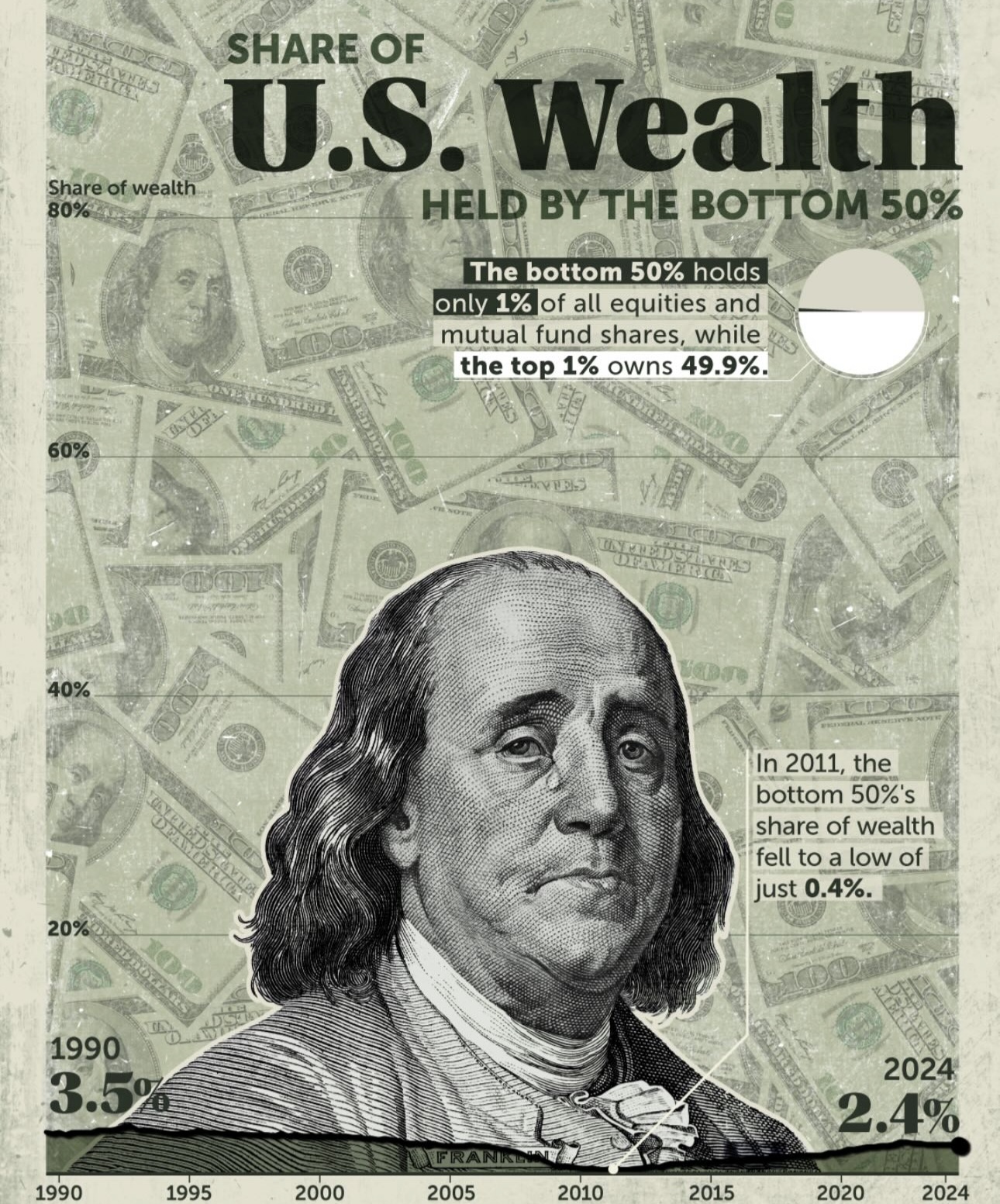
The U.S. economy is growing, but not everyone is benefiting equally. Today, the bottom 50% of Americans own just 2.4% of the country’s wealth, while the top 1% controls nearly 50%. This gap has been widening for decades, making it harder for everyday people to build financial security.

Why Is This Happening?

Several key factors are driving wealth inequality:

Stock Market Gains Favor the Wealthy: The rich own most stocks, while the bottom 50% hold just 1% of all equities and mutual funds. Since stocks grow in value over time, the wealthy keep getting richer.

Wages Aren’t Keeping Up: While living costs like housing and healthcare keep rising, wages for most workers have stayed the same or grown very slowly.

Lack of Investment Opportunities: Many lower-income individuals don’t have enough savings or knowledge to invest, missing out on long-term wealth-building.

What Can We Do?

To close the wealth gap, we need to:

1. Improve Financial Education :Teaching people how to invest and save wisely.

2. Make Investing More Accessible :Encouraging apps and programs that help everyday people invest in stocks and assets.

3. Support Fairer Economic Policies :Tax reforms and wage policies that help lower-income workers build wealth.

The Future of Wealth

If we don’t address this gap, financial inequality will continue to grow, making it harder for future generations to succeed. By promoting smart financial habits, accessible investing, and fair policies, we can work toward a more balanced and inclusive economy.

At FutureFinanceLab, we believe financial knowledge is power. Stay informed, start investing, and take control of your financial future!

📊 How to Read Stock Market Trends Without Feeling Overwhelmed 🧠💼

 Simplified Strategies for Spotting Market Opportunities and Making Confident Decisions


🚀  The Stock Market Doesn’t Have to Be Scary

The stock market often feels like a chaotic storm of graphs, financial jargon, and numbers that never stop moving. For beginners and even seasoned investors, trying to “read the market” can feel like learning a foreign language.

But here’s the truth: you don’t need a PhD in finance or a Wall Street office to understand stock market trends. With a few simplified tools and strategies, you can confidently interpret market movements and make informed investment choices.

This guide, brought to you by FutureFinanceLab.com, breaks down easy-to-understand methods for analyzing market trends—without the stress. 🧘‍♀️📈


📚 1. Understanding Stock Market Trends: The Basics

stock market trend is the general direction in which the market, a sector, or an individual stock is moving. Trends can be:

  • 📈 Uptrend (Bullish): Prices are generally increasing.
  • 📉 Downtrend (Bearish): Prices are generally decreasing.
  • ➡️ Sideways Trend: Prices fluctuate within a narrow range.

🔑 Quick Tip: Don’t get caught up in every small movement. Focus on the bigger picture over weeks or months rather than minute-by-minute changes.

🛠️ Tool to Use: Free apps like Yahoo Finance or TradingView to visualize trends with simple charts.


🧠 2. Simplified Tools for Reading Trends

📊 A. Moving Averages (The Smooth Line Trick)

  • What Is It? Moving averages smooth out daily price fluctuations to show the overall direction.
  • Simple Moving Average (SMA): Average price over a specific time (e.g., 50-day or 200-day).
  • How to Use It:
    • If the stock price is above the moving average, it’s an uptrend.
    • If the stock price is below the moving average, it’s a downtrend.

🧩 Quick Hack: The 50-day SMA crossing above the 200-day SMA is often called the “Golden Cross”—a bullish signal.


📊 B. Support and Resistance (The Invisible Floor and Ceiling)

  • What Is It?
    • Support: The price level where demand is strong enough to prevent further decline.
    • Resistance: The price level where selling pressure prevents further growth.
  • How to Use It:
    • Buy near support levels (lower price points).
    • Sell or take profits near resistance levels (higher price points).

🧩 Quick Hack: Look for 3–4 bounces off a price point on a chart to confirm strong support or resistance.


📊 C. RSI (Relative Strength Index) – The “Overbought” or “Oversold” Gauge

  • What Is It? A momentum indicator showing whether a stock is overbought (expensive) or oversold (cheap).
  • Scale: Ranges from 0 to 100.
    • Above 70: Stock may be overbought (could pull back).
    • Below 30: Stock may be oversold (could bounce back).

🧩 Quick Hack: A stock with an RSI under 30 and sitting near a support level is often a good buy signal.


📈 3. Pay Attention to Broader Market Signals

🌍 A. Economic Indicators:

  • GDP Growth: A growing economy supports rising stock prices.
  • Inflation Rates: Moderate inflation is healthy, but rapid inflation can hurt markets.
  • Federal Reserve Policies: Interest rate hikes usually slow down stock growth.

📰 B. Market Sentiment (The Investor Mood Swing)

  • Fear and Greed Index: Tracks investor emotions.
  • VIX (Volatility Index): High VIX = Uncertainty, Low VIX = Confidence.

🔑 Rule of Thumb:

  • High fear = Potential buying opportunity.
  • High greed = Time to be cautious.

🛠️ 4. Easy-to-Use Tools for Beginners

You don’t need Bloomberg Terminals to follow market trends. Start with these beginner-friendly platforms:

✅ Yahoo Finance: Free, simple charts and news updates.
✅ TradingView: Visual charts with built-in indicators.
✅ Google Finance: Quick summaries and portfolio tracking.
✅ Finviz: Easy-to-read heatmaps and trend screeners.

🧩 Pro Tip: Spend 10 minutes a day reviewing market summaries and top movers to stay informed.

For more beginner-friendly resources, check out FutureFinanceLab.com—your hub for simplified finance knowledge.


🎯 5. Keep It Simple: Build a Routine

Understanding trends doesn’t mean analyzing every stock daily. Here’s an easy 3-step weekly routine:

1️⃣ Weekly Chart Review (Sunday Night): Check major indices (S&P 500, Nasdaq) for overall market direction.
2️⃣ Set Alerts (Mid-Week): Use apps to set price alerts for your favorite stocks.
3️⃣ Reflect and Adjust (Friday): Review what worked and what didn’t.

🔑 Key Takeaway: Consistency beats complexity.


💡 6. Common Mistakes to Avoid

🚫 1. Chasing Hype: Avoid stocks just because they’re trending on social media.
🚫 2. Analysis Paralysis: Don’t overthink—stick to 2–3 indicators max.
🚫 3. Ignoring Stop-Loss Orders: Always have a stop-loss to limit downside risk.

🔑 Golden Rule: If a trend doesn’t make sense to you, stay out until it does.


🧠 7. Final Thoughts: Keep Calm and Invest Smart

Reading stock market trends doesn’t require you to be a financial wizard. It’s about:
✅ Using simple tools effectively (SMA, RSI, Support/Resistance).
✅ Staying consistent with a routine.
✅ Ignoring emotional impulses driven by hype.

The stock market rewards patience, discipline, and preparation.

Start small, stay focused, and you’ll find that understanding market trends isn’t as intimidating as it seems.

👉 Ready to simplify your investment strategy? Bookmark this guide and start building your confidence in reading market trends today! 🚀📊


📢 For more practical investing tips, deep market insights, and easy-to-follow financial education, visit FutureFinanceLab.com. 🌟

Stay informed. Stay empowered. Stay ahead. 🧠📈✨

ECB president Christine Lagarde : How She’s Wrong About Bitcoin While Fiat Fails

Lagarde’s Dismissal of Bitcoin

European Central Bank (ECB) President Christine Lagarde has openly rejected the idea of Bitcoin entering central bank reserves, dismissing it as too volatile and lacking intrinsic value. She insists that Bitcoin will never play a role in official monetary policy, reinforcing the ECB’s commitment to traditional fiat currencies like the Euro.

However, history has shown that central authorities often fail to recognize disruptive financial innovations until they become too big to ignore. Lagarde’s stance is not only outdated but also a desperate attempt to maintain control over a failing fiat system.

Why Fiat Currencies Are Losing

The Euro and the U.S. Dollar are both facing significant declines in purchasing power due to reckless monetary policies. Governments and central banks continue to print excessive amounts of money, increasing debt burdens and fueling inflation. As a result, the value of these currencies is eroding, and people are searching for alternatives.

Inflation and Central Bank Failures

Inflation is steadily eroding savings and wages, making it harder for individuals to maintain their purchasing power. Central banks attempt to counteract inflation with interest rate hikes, but this often slows economic growth and leads to economic downturns. Despite these measures, the long-term trend remains clear: fiat currencies are losing value.

Bitcoin’s Victory Over Centralized Control

Unlike fiat currencies, Bitcoin operates outside the control of any government or central bank. It is decentralized, has a fixed supply of 21 million coins, and cannot be manipulated by inflationary policies.

Bitcoin as a Hedge Against Inflation

With more institutions and individuals turning to Bitcoin as a hedge against inflation, its adoption continues to grow. Major corporations are adding Bitcoin to their treasuries, ETFs are bringing Bitcoin into mainstream investment portfolios, and nations struggling with inflation are increasingly embracing Bitcoin as a store of value.

The Real Reason Central Banks Fear Bitcoin

Lagarde and other central bankers reject Bitcoin not because it lacks value but because it threatens their monopoly on money. If Bitcoin were to enter central bank reserves, it would signal the decline of government-controlled monetary policy. This is why central banks continue to push their own digital currencies (CBDCs) while dismissing Bitcoin’s superior financial properties.

The Inevitable Shift

As fiat currencies continue their downward spiral, Bitcoin’s role as a global financial alternative will only strengthen. The market is speaking louder than central bank rhetoric, and individuals are waking up to the reality that traditional money is failing them.

Lagarde can dismiss Bitcoin all she wants, but history will prove her wrong. The decentralized financial revolution is already here, and Bitcoin is leading the way.


Stay ahead of the financial revolution. Join Future Finance Lab for expert insights on Bitcoin, digital assets, and the evolving economy.

Unlocking Hidden Value: The Magic of Hidden Assets in Investing

In the stock market, sometimes two and two equals eight. How? Because a company can possess hidden assets that aren’t reflected in its stock price. When Wall Street finally recognizes these hidden gems, the stock can skyrocket.

Disney: A Case Study in Hidden Assets

Take Disney as an example. After opening Disney World and EPCOT, the company’s growth appeared to slow. However, hidden within Disney were untapped treasures. The Disney name itself became a powerhouse, launching initiatives like the Disney Channel, licensing Mickey Mouse, and expanding their merchandise. Remarkably, many of these assets were sitting on the books for little to no value!

But it didn’t stop there. Disney owned extensive land inside Disney World, while competitors built hotels outside. Instead of letting the opportunity slip by, Disney transformed that land into new parks and invited other companies to pay for the privilege of building within their property. These moves unlocked immense value and reignited growth.

Identifying Hidden Assets

Hidden assets come in many forms:

  • Real Estate: Companies often own valuable real estate whose market value isn’t fully reflected on their balance sheets.
  • Patents and Intellectual Property: Patents can provide a significant competitive edge, as seen with companies like Intel.
  • Brand Power: Iconic brands like Coca-Cola carry immense value, even though this might not appear on financial statements.

Buying Stocks Below Cash Value

Sometimes, a stock might even trade below its cash value after subtracting all debt. In such cases, it’s like getting the underlying business for free. These opportunities are rare but highly rewarding when they align with a strong, sustainable business model.

What This Means for Investors

When researching a stock, always ask yourself: Are there hidden assets waiting to be unlocked? A company’s true value often goes beyond its balance sheet, and recognizing these hidden opportunities can lead to exceptional returns. So keep your eyes open for those 2 + 2 equals 8 moments—you might just find your next big investment.

📊 What is CAGR and How Can It Help You Make Smart Investment Decisions?

CAGR (Compound Annual Growth Rate) is a simple tool that helps you understand how much an investment has grown on average every year over a specific period — even if it didn’t grow the same amount each year.

Think of it like this: If your investment were growing at a steady rate every year, CAGR tells you what that rate would be.


🧠 Why is CAGR Important for Smart Investing?

  • 📈 Compare Investments Easily: See which investment performed better over time.
  • ⏳ Long-Term Clarity: Understand long-term growth without worrying about yearly ups and downs.
  • 🎯 Set Realistic Goals: Plan future investments with clear expectations.

🛠️ How to Calculate CAGR (The Easy Way)

Here’s the formula:CAGR=(Ending ValueBeginning Value)1n−1CAGR=(Beginning ValueEnding Value​)n1​−1

Or just use an online CAGR calculator!


💡 Quick Example:

  • You invested $1,000 in a stock.
  • After 5 years, it grew to $2,000.

The CAGR formula tells us:CAGR=(2,0001,000)15−1=14.87%CAGR=(1,0002,000​)51​−1=14.87%

This means your investment grew 14.87% per year on average over 5 years.


🚀 How to Use CAGR for Smart Decisions:

1️⃣ Compare Investments: Which stock or fund had better average yearly growth?
2️⃣ Track Your Goals: Are your investments growing fast enough to meet your targets?
3️⃣ Adjust Your Strategy: If the CAGR is lower than expected, it might be time to rethink your plan.


📌 Key Takeaway:

CAGR isn’t just a number — it’s a tool for smart, informed investment decisions. Whether you’re comparing stocks, planning retirement, or setting financial goals, CAGR helps you see the bigger picture.

Want to learn more about making smart investment choices? Explore more guides on FutureFinanceLab.com. 🌟

Understanding Balance Sheets: A Quick Guide to Smarter Investing

A balance sheet is one of the most powerful tools to understand a company’s financial health. At FutureFinanceLab.com, we simplify finance, and today we’re breaking down the balance sheet into digestible insights that every investor should know.


What’s a Balance Sheet?

Think of a balance sheet as the financial snapshot of a company. It reveals what the company owns (assets), what it owes (liabilities), and its net worth (equity). By subtracting liabilities from assets, you get equity—a critical metric that shows the company’s real value. Simple yet essential.


Why Cash is King

Cash gives a company the flexibility to seize opportunities or weather tough times. Whether it’s buying back shares, paying off debt, or fueling expansion, having plenty of cash is always a positive sign. Here’s the secret: subtract total debt from cash on hand. If the result is strong and positive, you’re looking at a company with a rock-solid balance sheet.


A Real-World Example

Imagine a company with $20 million in cash, no debt, and 4 million shares outstanding. That means $5 cash per share. If the stock price is $10, you’re effectively paying just $5 for the business itself. Now that’s a potential bargain worth considering!


The Debt Factor

Debt is a double-edged sword. While some debt can help a company grow, too much can be a red flag. A quick rule of thumb: if total debt exceeds 50% of the company’s capitalization, it’s risky. However, if it’s under 20%, you’ve got a safer bet. Remember, some industries like banking and financial services naturally operate with higher debt levels—so always check what’s typical for the sector.


Hidden Liabilities: Leases in Disguise

Not all debts are obvious. Long-term leases can be hidden in the fine print as capitalized lease obligations. These commitments can significantly impact a company’s financial health but are often overlooked by investors. Always dive into the footnotes for a complete picture.


The Democratization of Data

In the past, professional investors had a significant edge in accessing financial data. Today, technology has leveled the playing field. With the right tools and a basic understanding of balance sheets, anyone can evaluate a company’s financial standing like a pro.


Final Thoughts

Mastering balance sheets can transform the way you invest. At FutureFinanceLab.com, our mission is to equip you with the knowledge to make informed financial decisions. From spotting cash-rich companies to avoiding debt traps, understanding the basics is your first step toward smarter investing.

3D Printing in Healthcare: Revolutionizing Patient Care and Medical Innovation

3D printing has quickly evolved from a futuristic concept to a game-changing technology across various industries. In healthcare, this innovation is transforming medical devicesprosthetics, and bioprinting—a process that involves printing human tissues and organs. With the medical industry’s growing demand for personalized carecost-effective solutions, and more efficient production methods, 3D printing is playing a crucial role in shaping the future of healthcare.


How 3D Printing is Revolutionizing Healthcare

3D printing in healthcare uses a layer-by-layer approach to create customized medical devicesimplants, and prosthetics that are tailored to the individual patient. This technology is not only enabling personalized medicine but also offering groundbreaking advancements in medical treatments and surgical procedures.

Here’s how 3D printing is making waves in healthcare:

  1. Personalized Medical Devices and Implants:
    Traditional medical devices and implants are often mass-produced and standardized, but 3D printing allows for customization. For example, implants for joint replacementsdental implants, and cranial implants can be printed to fit a patient’s unique anatomy. This reduces complications, improves comfort, and enhances recovery times.
  2. Prosthetics:
    3D printing has made it more affordable to produce prosthetic limbs that are customized to the exact specifications of the patient. This technology also enables faster production times, reducing the overall cost of prosthetics while increasing accessibility, especially in low-income areas.
  3. Bioprinting:
    One of the most exciting advancements in 3D printing is bioprinting, where human cells are used to print tissuesand organs. While this technology is still in its early stages, it has the potential to address the global shortage of organ donors and create lab-grown tissues for medical research and transplants.
  4. Surgical Planning and Simulation:
    Surgeons can use 3D printed models of a patient’s anatomy to plan complex surgeries. This can help with pre-surgical planningpractice procedures, and educational purposes for medical professionals. Printing models of organs or body parts allows for a better understanding of individual patient conditions, leading to more precise and safer surgeries.
  5. Drug Development and Testing:
    3D printing can also be used to create personalized drug delivery systems, where medications are tailored to fit the patient’s specific needs. In addition, drug testing can be done on printed models of tissues, allowing researchers to test new drugs and treatments in a more accurate and cost-effective way.

Companies Leading the Charge in 3D Printing for Healthcare

Several companies are at the forefront of 3D printing technology in healthcare. Some of the top stocks to watch in this space include:

  1. 3D Systems Corporation (DDD)
    3D Systems is one of the pioneers in 3D printing technology, and they have a strong focus on healthcare applications. Their 3D printers are used to create medical devices, prosthetics, and even surgical tools. With their healthcare division, 3D Systems continues to lead the way in bioprinting and the production of custom implants.Why Watch: 3D Systems has made significant investments in the medical sector and is well-positioned for future growth in personalized healthcare products and bioprinting.
  2. Stratasys Ltd. (SSYS)
    Stratasys is another key player in the 3D printing market. The company provides additive manufacturing solutions for industries including aerospace, automotive, and healthcare. Stratasys is focused on printing biocompatible materials for use in creating prostheticsorthopedic devices, and dental implants.Why Watch: Stratasys is advancing in the field of 3D-printed dental and orthopedic implants, and its partnerships with healthcare providers make it an important player in medical 3D printing.
  3. Materialise NV (MTLS)
    Materialise is a leading provider of 3D printing software and services for a wide range of industries, including healthcare. The company’s 3D printing platform is used by medical professionals to create customized implantsprosthetics, and surgical guides. Materialise is also making strides in bioprinting, with a focus on developing customized 3D-printed medical solutions.Why Watch: Materialise is heavily involved in medical research, and its customization capabilities have strong potential for growth in both bioprinting and personalized medicine.
  4. Organovo Holdings (ONVO)
    Organovo is one of the leaders in bioprinting, a form of 3D printing that involves printing human cells to create tissues for medical research. The company’s technology allows for the printing of functional human tissues, which can be used in drug testing, disease modeling, and even for future organ transplants.Why Watch: Organovo is one of the most promising companies in the bioprinting space, with significant potential to revolutionize organ transplantation and medical research.

Challenges and Future of 3D Printing in Healthcare

While 3D printing offers tremendous potential, there are still challenges to overcome:

  1. Regulatory Hurdles:
    Medical products, including 3D printed devices and implants, are subject to strict regulations from agencies like the FDA. This means that companies must go through comprehensive testing and approval processes before their products can reach the market.
  2. Material Limitations:
    While progress is being made, there are still limitations regarding the range of biocompatible materials that can be used for 3D printing, particularly in bioprinting. Expanding the materials pool will be essential for future advancements in organ printing and tissue engineering.
  3. Cost and Accessibility:
    Although 3D printing makes customized healthcare solutions more affordable than traditional methods, the initial investment in 3D printing technology can still be costly. This might limit its adoption in certain regions or healthcare settings.

Conclusion

3D printing is revolutionizing healthcare by enabling the creation of personalized medical devicesprosthetics, and bioprinted tissues. As technology continues to evolve, bioprinting and custom implants will play an increasingly important role in improving patient care. Companies like 3D SystemsStratasys, and Organovo are at the forefront of this innovation and are poised to make a significant impact on the healthcare industry in the years ahead.

For investors, keeping an eye on these 3D printing companies could offer promising opportunities as the healthcare sector continues to embrace the benefits of this groundbreaking technology.


Top MedTech Companies to Watch in 2025

The MedTech industry is filled with innovative companies shaping the future of healthcare. From robotic surgery and wearable devices to diagnostic technologies and 3D printing, these companies are at the forefront of transforming patient care. Here are some top MedTech companies to watch in 2025:


1. Medtronic (MDT)

Sector: Cardiovascular, Diabetes, Neurology, Surgery
Medtronic is one of the largest and most well-established names in MedTech. With products spanning across multiple specialties, including cardiac devicesspinal implants, and insulin pumps, Medtronic remains a leader in innovation. The company is also investing heavily in robotic surgery and AI-powered diagnostics.

Why Watch: Their Minimally Invasive Therapies Group and the HawkOne robotic platform are expected to drive future growth.


2. Intuitive Surgical (ISRG)

Sector: Robotic Surgery
Intuitive Surgical is the maker of the da Vinci Surgical System, a leading robotic-assisted surgery platform. This technology revolutionized the field of minimally invasive surgery and continues to lead innovation with new advancements in robotic systems.

Why Watch: Their new da Vinci SP system and potential growth in AI integration are set to drive their position in the robotic surgery market.


3. Boston Scientific (BSX)

Sector: Cardiovascular, Endoscopy, Urology, Neurology
Boston Scientific is well-known for its minimally invasive devices used in the treatment of cardiovascular diseasesoncologyspinal conditions, and gastrointestinal disorders. With significant market share in stentscatheters, and balloon dilatation devices, the company is expanding into emerging areas like robotic surgery and bioelectric medicine.

Why Watch: Their focus on endoscopic solutions and cardiovascular treatments is driving innovation in healthcare.


4. Stryker Corporation (SYK)

Sector: Orthopedics, Surgical, Neurotechnology
Stryker is a key player in the orthopedic and neurotechnology spaces. They specialize in joint replacement systems, spinal implants, and surgical instruments. Their investment in robotic surgery, specifically with the Mako robotic-arm system for joint replacement, continues to grow.

Why Watch: Stryker’s continuous focus on advanced robotics and innovative implant technologies makes it a company to keep an eye on in 2025.


5. Abbott Laboratories (ABT)

Sector: Diagnostics, Cardiovascular, Diabetes, Neuromodulation
Abbott has a broad range of medical devices, particularly in diagnosticscardiac monitoring, and diabetes management. Their Freestyle Libre glucose monitoring system is a breakthrough in diabetes care, and their heart stents are also market leaders.

Why Watch: Abbott’s point-of-care diagnostics and next-gen glucose monitoring systems are paving the way for more accessible, real-time health data.


6. Philips Healthcare (PHG)

Sector: Diagnostics, Imaging, Patient Monitoring
Philips is a leader in healthcare technology, particularly known for its medical imaging systems, patient monitoring solutions, and diagnostic equipment. They are expanding into AI-driven healthcare solutions and personalized health technologies.

Why Watch: Philips’ push for AI integration in imaging and personal health devices will shape the future of diagnostics and patient care.


7. Thermo Fisher Scientific (TMO)

Sector: Diagnostics, Laboratory Equipment, Life Sciences
Thermo Fisher Scientific is a leader in laboratory equipment and diagnostic solutions for a wide range of healthcare applications. With a focus on genomicsproteomics, and biological sciences, Thermo Fisher is expanding its role in personalized medicine and biotechnology.

Why Watch: Their involvement in the biopharma space and next-generation sequencing technologies positions them for growth in precision medicine.


8. Edwards Lifesciences (EW)

Sector: Cardiovascular, Critical Care
Edwards Lifesciences specializes in heart valves and critical care monitoring devices. Their transcatheter heart valve therapies are a game-changer in heart disease treatments, particularly for high-risk patients who would otherwise require open-heart surgery.

Why Watch: Edwards is a leader in transcatheter valve replacement (TAVR) and hemodynamic monitoringtechnologies, which are gaining traction in heart disease management.


9. ResMed (RMD)

Sector: Sleep Apnea, Respiratory Devices
ResMed focuses on sleep apnea treatmentchronic obstructive pulmonary disease (COPD) management, and ventilation devices. With the increasing global prevalence of sleep disorders, ResMed’s solutions are in high demand.

Why Watch: ResMed’s focus on cloud-based solutions for health data management and expanding into digital healthmakes it a key player in the sleep medicine field.


10. Zimmer Biomet (ZBH)

Sector: Orthopedics, Surgical, Spine
Zimmer Biomet is a leader in orthopedic products, including joint replacementspinal devices, and trauma products. The company’s focus on robotics3D printing, and personalized joint implants sets it apart in the orthopedic sector.

Why Watch: Zimmer’s focus on next-gen robotics and innovative spinal solutions provides long-term growth potential.


Conclusion

The MedTech industry continues to grow and evolve, driven by innovative technologies and an increasing demand for minimally invasive procedures and personalized healthcare solutions. Companies like MedtronicIntuitive Surgical, and Boston Scientific are leading the charge with new products and technologies that are transforming how healthcare is delivered.

These companies, along with others in the space, are paving the way for more efficienteffective, and patient-friendly solutions. Investors and healthcare professionals alike should keep an eye on these leaders as the MedTech sectorexpands and reshapes the future of healthcare.

Exploring the MedTech Sector: Innovation, Growth, and Future Trends

The MedTech sector—short for medical technology—is one of the most dynamic and rapidly evolving industries in the world today. It includes everything from medical devices and diagnostic tools to robotic surgery and wearable health tech. This article will explore the importance of MedTech, the trends driving its growth, and how it’s revolutionizing healthcare globally.


What is MedTech?

MedTech refers to any technology used in the prevention, diagnosis, treatment, or monitoring of medical conditions. It encompasses a broad range of products and solutions that help improve patient outcomes, increase the efficiency of healthcare systems, and enhance the quality of life for patients.

Some common examples of MedTech products include:

  • Diagnostic devices (e.g., MRI machines, blood glucose monitors)
  • Surgical instruments (e.g., minimally invasive robots, stents)
  • Therapeutic devices (e.g., pacemakers, infusion pumps)
  • Wearables (e.g., fitness trackers, smartwatches that monitor heart rate or sleep)

Why is the MedTech Sector Growing?

The MedTech sector is experiencing significant growth due to several key factors:

  1. Aging Population:
    The global aging population is driving increased demand for medical devices and services. Older adults are more likely to experience chronic conditions that require continuous monitoring or intervention, such as heart diseasediabetes, and arthritis.
  2. Advances in Technology:
    Breakthroughs in artificial intelligence (AI)robotics, and 3D printing are enhancing the design, development, and functionality of MedTech products. For example, robotic surgery offers greater precision, shorter recovery times, and fewer complications for patients.
  3. Shift to Minimally Invasive Procedures:
    There’s a growing preference for minimally invasive surgeries. Procedures that require smaller incisions result in quicker recoveries and less pain, and they are more cost-effective, benefiting both patients and healthcare providers.
  4. Health Monitoring and Personalization:
    The rise of wearables and smart medical devices allows for real-time health monitoring, leading to more personalized care. These devices can track vital signs and send alerts to both patients and doctors, enabling earlier intervention for conditions like heart disease and diabetes.
  5. Increased Investment and Funding:
    The MedTech industry has attracted substantial venture capital investment due to the increasing demand for innovative healthcare solutions. Startups and established companies alike are pushing the boundaries of medical technology to provide cutting-edge solutions.

Key Areas Driving MedTech Innovation

  1. Robotic Surgery:
    Robotic-assisted surgery is transforming how surgeons perform operations. Robots like Intuitive Surgical’s da Vinci system provide greater precision and flexibility, improving patient outcomes. Surgeons can perform complex procedures with smaller incisions, reducing recovery times.
  2. Wearable Health Devices:
    Wearables like smartwatches and fitness trackers are not only popular for fitness tracking but also provide valuable health insights. Devices that monitor heart rateblood oxygen levels, and ECG can help detect abnormalities early and prevent more serious health issues.
  3. 3D Printing in Healthcare:
    3D printing has been a game-changer in the MedTech sector. It allows for the creation of custom prosthetics, implants, and even bioprinted tissues. This technology is reducing costs and improving the personalization of medical devices.
  4. Artificial Intelligence (AI) in Diagnostics:
    AI is enhancing medical imaging and diagnostic accuracy. By analyzing images like X-rays, MRIs, and CT scans, AI algorithms can help detect conditions like cancer and neurological disorders earlier than traditional methods, offering better outcomes for patients.
  5. Minimally Invasive Devices:
    Devices that support minimally invasive surgeries (e.g., stentscatheters) continue to evolve, offering fewer complications and faster recovery times. Innovations in this space are expanding the options available for surgeons and reducing the strain on healthcare systems.

Challenges in the MedTech Sector

While MedTech is booming, it’s not without its challenges:

  1. Regulatory Hurdles:
    The medical device industry is highly regulated, and navigating through the approval processes (e.g., FDA approval) can be lengthy and expensive. Companies must meet strict safety and efficacy standards before their products can reach the market.
  2. Data Privacy and Security:
    With the increasing use of health data from devices and wearables, there are concerns about data security and privacy. Protecting sensitive health information is a critical issue that companies must address.
  3. Cost Pressures:
    Healthcare costs continue to rise globally, and MedTech companies face pressure to keep prices competitive while maintaining high quality. Innovative products, especially cutting-edge technologies, can be expensive, making affordability a key concern.
  4. Ethical Issues:
    As technologies like AI and robotic surgery become more prevalent, there are ongoing discussions about the ethical implications of these technologies in patient care, such as privacy concerns and decision-making transparency.

The Future of MedTech

The future of MedTech looks promising, with continuous advancements in AI, robotics, and personalized medicine. The global shift to digital health and telemedicine will also shape the industry’s growth, allowing for greater access to healthcare worldwide. Furthermore, as more individuals become health-conscious, the demand for self-care devices will increase, contributing to the sector’s expansion.

The MedTech sector is set to play an increasingly vital role in shaping the future of healthcare, helping to create more efficient, accessible, and personalized care for patients everywhere.


The Top-Performing ETFs of 2024: Key Trends and What to Expect in 2025


The ETF market in 2024 has been a year of record-breaking growth, innovation, and shifting investor sentiment. With total assets under management surpassing $10.6 trillion and over $1 trillion in new investments, ETFs have solidified their role as the go-to investment vehicle for both institutional and retail investors.

Driven by advancements in artificial intelligence, a resurgence in cryptocurrencies, and evolving macroeconomic conditions, certain ETFs have emerged as clear winners this year. In this article, we’ll spotlight the top-performing ETFs of 2024, analyze the trends that fueled their success, and outline what investors can expect in 2025.

For more in-depth financial insights and expert analysis, visit FutureFinanceLab.com. 🚀


🚀 The Best-Performing ETFs of 2024

1. FXI – iShares China Large-Cap ETF

  • Focus: Large-cap Chinese equities
  • 2024 Performance: +31.20%

Why It Stood Out:
Despite economic uncertainty and geopolitical tensions, FXI rebounded strongly due to aggressive stimulus measures from the Chinese government. Investors saw an opportunity in undervalued state-owned enterprises, resulting in impressive gains for this ETF.


2. IWM – iShares Russell 2000 ETF

  • Focus: U.S. small-cap stocks
  • 2024 Performance: +10.61%

Why It Stood Out:
Small-cap stocks historically outperform during economic recoveries, and IWM benefited from expectations of Federal Reserve rate cuts and improving domestic economic indicators.


3. XLF – Financial Select Sector SPDR Fund

  • Focus: U.S. financial sector (banks, insurance, financial services)
  • 2024 Performance: +27.86%

Why It Stood Out:
Rising interest margins and higher lending activity contributed to a stellar year for XLF. Banking stocks surged amid increased investor confidence in financial stability.


4. QQQ – Invesco QQQ Trust ETF

  • Focus: Nasdaq-100 Index (large-cap tech stocks)
  • 2024 Performance: +38.5%* (Approximate market trend)

Why It Stood Out:
Driven by mega-cap tech stocks like Microsoft, Apple, and NvidiaQQQ thrived amid surging demand for AI technologies and robust corporate earnings.


5. SPY – SPDR S&P 500 ETF Trust

  • Focus: Tracks the S&P 500 Index
  • 2024 Performance: +25% (Approximate market trend)

Why It Stood Out:
SPY, one of the most widely held ETFs globally, reflected the broad strength of the S&P 500. Gains were primarily driven by sectors such as technology, healthcare, and consumer discretionary.


6. EEM – iShares MSCI Emerging Markets ETF

  • Focus: Emerging markets equities
  • 2024 Performance: +15% (Approximate market trend)

Why It Stood Out:
EEM provided broad exposure to emerging market equities, with gains driven by China’s recovery, India’s tech boom, and favorable trade conditions in Southeast Asia.


7. IBIT – iShares Bitcoin Trust

  • Focus: Bitcoin spot price exposure
  • 2024 Performance: +170%

Why It Stood Out:
The launch and institutional acceptance of IBIT marked a significant milestone in the financial world. Backed by BlackRock, this ETF allowed investors regulated access to Bitcoin exposure, attracting significant institutional capital.


8. FBTC – Fidelity Wise Origin Bitcoin Fund

  • Focus: Bitcoin spot price exposure
  • 2024 Performance: +165%

Why It Stood Out:
FBTC, managed by Fidelity, benefited from Bitcoin’s surge past $100,000. Its strong institutional backing and simplified investment structure made it an appealing option for long-term investors seeking digital asset exposure.


📈 Key Trends That Defined ETF Success in 2024

1. Artificial Intelligence Dominance

AI-driven growth propelled tech-focused ETFs like QQQ to new heights. Companies leveraging AI technologies for productivity and innovation were clear winners.

2. Cryptocurrency Resurgence

Bitcoin ETFs, including IBIT and FBTC, made it easier for institutional and retail investors to gain exposure to digital assets, leading to significant inflows.

3. Rate Cut Expectations

The anticipation of Federal Reserve rate cuts created optimism in small-cap stocks (IWM) and financials (XLF).

4. Energy Infrastructure Recovery

Energy-focused ETFs gained traction amid global energy transition efforts and infrastructure investments.

5. Emerging Markets Revival

ETFs like EEM benefited from a revival in emerging economies, particularly in Asia and Latin America, driven by favorable trade policies and infrastructure spending.


🔮 What to Expect in 2025

1. Rise of Thematic ETFs

Thematic ETFs focused on AI, clean energy, robotics, and blockchain are expected to remain in high demand.

2. Rate Cuts and Fixed Income ETFs

As the Federal Reserve is projected to cut interest rates to around 4%bond ETFs and fixed-income products are set to gain investor interest.

3. Increased Adoption of Alternative ETFs

Expect to see more ETFs offering exposure to private equity, digital assets, and multi-asset strategies.

4. Continued Crypto ETF Growth

With increasing institutional adoption, Bitcoin ETFs like IBIT and FBTC could attract even more inflows in 2025.

5. Sector Rotation

Sectors like healthcare, materials, and industrials may outperform in 2025, while utilities and consumer discretionarycould lag.


💡 Investor Takeaways for 2025

  • Diversify Across Themes: Include a mix of AI, energy, crypto, and fixed income ETFs in your portfolio.
  • Stay Informed on Macro Trends: Watch for interest rate cuts, geopolitical events, and technological advancements.
  • Focus on Long-Term Goals: Align your ETF investments with your financial objectives and risk profile.
  • Monitor Emerging Markets: Growth opportunities in Asia, Latin America, and Southeast Asia remain promising.

📚 Conclusion

2024 showcased the immense potential of ETFs across technology, financials, energy, and cryptocurrency sectors. As we step into 2025, opportunities abound, but so do risks.

For more expert insights and strategies tailored to your financial goals, visit FutureFinanceLab.com. 🚀📊