Global Crises and Bitcoin: What Happens to Crypto in Uncertain Times?

From wars and recessions to inflation and political instability, global crises shake markets—and leave investors wondering: Is Bitcoin a safe haven or just another risk asset?

In this simplified breakdown, we’ll look at how Bitcoin reacts during uncertain times, how it compares to stocks and real estate, and what that means for your portfolio.


🌍 What Do We Mean by “Global Crisis”?

Crises come in different forms, each with different market reactions:

  • Recessions (e.g., 2008, COVID-19)
  • Wars and geopolitical tension (e.g., Ukraine-Russia, Israel-Gaza)
  • Inflation and currency collapse (e.g., Argentina, Turkey)
  • Financial system failures (e.g., bank runs, credit freezes)

During these moments, traditional investors typically move toward safety—like cash, U.S. Treasury bonds, or gold. So where does Bitcoin fit in?


📉 Bitcoin During Global Crises: Not Always a Safe Haven

Short-Term Volatility

Historically, Bitcoin has often dropped sharply during sudden crises—similar to stocks. This is because:

  • Investors rush to liquidity (selling BTC to get cash)
  • Bitcoin is still seen as a risk-on asset by institutions
  • Markets get driven by fear, not fundamentals

Example:

  • March 2020 (COVID Crash):
    • Stocks plunged
    • Bitcoin dropped over 50% in a week
    • But it recovered faster than many traditional assets

💡 Bitcoin’s Long-Term Narrative: “Digital Gold”

Despite short-term panic, Bitcoin is increasingly seen as:

  • hedge against inflation
  • A store of value outside of government control
  • A tool for financial sovereignty, especially in unstable regions

In countries with hyperinflation or authoritarian regimes, Bitcoin adoption rises during crisis, even if prices remain volatile.


🏠 How It Compares to Stocks and Real Estate

AssetCrisis Reaction (Short-Term)Crisis Reaction (Long-Term)LiquidityGovernment Control
BitcoinHigh volatilityGrowth in adoption, uncertain valueHighLow
StocksUsually declineOften recover with economyHighMedium
Real EstateMore stable short-termDependent on rates/economyLowHigh

🔐 Real-World Use Cases During Crisis

  • Ukraine War: Donations in Bitcoin and stablecoins bypassed banks
  • Argentina & Venezuela: Locals used BTC to escape currency collapse
  • Canada 2022: Bitcoin used to send money during government bank freezes

These examples show Bitcoin’s utility, not just its price.


🧠 What Should You Do During Crisis?

  1. Stay calm: Crypto is volatile panic selling locks in losses
  2. Diversify: Don’t put everything in BTC or stocks
  3. Zoom out: Look at long-term trends, not headlines
  4. Use cold storage: If governments or banks become unstable, custody matters

📈 Key Takeaway

Bitcoin isn’t bulletproof during crisis but it’s a different kind of asset:
Decentralized, global, and uncorrelated over the long term. While stocks and real estate depend on governments and interest rates, Bitcoin’s value proposition is based on scarcity, transparency, and independence.

In uncertain times, understanding what each asset does not just how it moves can help you build smarter financial strategies.


For more simplified crypto content, visit FutureFinanceLab.com

Revolutionizing Crypto Investing: Grayscale’s Bold Move with Cardano and Hedera ETFs

A Game-Changer for Future Finance

Grayscale Investments, a titan in digital asset management, is shaking up the crypto world with its latest move: registering statutory trusts for Cardano (ADA) and Hedera (HBAR) in Delaware. This step hints at the imminent launch of spot exchange-traded funds (ETFs) for these altcoins, potentially transforming how investors engage with cryptocurrencies. Let’s dive into why this development is a big deal for the future of finance.

Source: Grayscale’s Cardano and Hedera ETFs

Grayscale’s Strategic Play: Delaware Trusts and ETF Ambitions

By registering the Grayscale Cardano Trust ETF and Grayscale Hedera Trust ETF in Delaware, Grayscale is laying the groundwork for a major leap in crypto investment options. These registrations are often a prelude to filing Form S-1 with the U.S. Securities and Exchange Commission (SEC), a crucial step toward ETF approval.

Grayscale is no stranger to altcoin trusts, having previously explored assets like Dogecoin and Avalanche. However, spotlighting Cardano and Hedera signals their rising star status in the blockchain universe, positioning them as prime candidates for institutional investment.

Navigating the SEC: A Path to Approval

The SEC is the gatekeeper for ETF approvals, and 2025 has already seen progress. The agency acknowledged filings from NYSE Arca for a Cardano ETF and Nasdaq for a Hedera ETF, marking the start of the regulatory journey. Recent approvals of in-kind redemption for Bitcoin and Ether ETFs have fueled optimism for altcoin ETFs. Plus, the SEC’s collaboration with the CFTC on Project Crypto is working to clarify token classifications, potentially smoothing the path for Cardano and Hedera ETFs.

Why Cardano and Hedera Stand Out

Cardano: The Brainy Blockchain

Cardano’s research-driven approach sets it apart. Its key strengths include:

  • Scalability: Powered by the Ouroboros proof-of-stake protocol, Cardano handles high transaction volumes while staying decentralized.
  • Eco-Friendly Design: Unlike energy-hungry proof-of-work systems, Cardano prioritizes sustainability.
  • Academic Rigor: Every protocol upgrade undergoes peer-reviewed scrutiny, ensuring top-tier security and reliability.

These qualities make Cardano a magnet for investors looking for robust, green blockchain solutions.

Hedera: Built for Business

Hedera’s hashgraph technology delivers blazing-fast, low-cost transactions tailored for enterprise needs. Its standout use cases include:

  • Supply Chain Transparency: Hedera streamlines tracking for goods and services, boosting efficiency.
  • Tokenization Powerhouse: Businesses can create and manage digital assets, perfect for modernizing operations.

Hedera’s enterprise focus makes it a compelling choice for institutional investors, aligning perfectly with Grayscale’s ETF vision.

Why Altcoin ETFs Matter for Investors

The potential launch of Cardano and Hedera ETFs could open new doors for institutional players:

  • Regulated Access: ETFs offer a secure, compliant way to invest in crypto without the complexities of direct ownership.
  • Boosted Liquidity: ETFs could make trading these altcoins easier, attracting more market participation.
  • Diversification: Adding altcoin ETFs to portfolios helps investors hedge against volatility in traditional markets.

Ripple Effects for the Crypto Market

If these ETFs get the green light, the impact could be seismic:

  • Mass Adoption: Regulated ETFs could bring Cardano and Hedera to a broader audience, driving mainstream use.
  • Competitive Surge: Grayscale’s move might inspire other firms to launch their own altcoin ETFs, heating up the market.
  • Market Evolution: More altcoin ETFs signal a maturing crypto space, with increased institutional trust and regulatory clarity.

Grayscale’s Bigger Picture

This isn’t just about Cardano and Hedera. Grayscale’s trust registrations are part of a broader push to diversify its offerings, including new trusts like DeepBook and Walrus on the Sui blockchain. This multichain strategy strengthens Grayscale’s dominance while giving investors more ways to tap into crypto’s potential.

Regulatory Challenges Ahead

Despite the excitement, ETF approval isn’t a done deal. SEC reviews and public consultations could delay the process. However, the SEC and CFTC’s joint efforts under Project Crypto suggest a more crypto-friendly regulatory future, which could ease these hurdles.

The Road Ahead for Crypto Investing

Grayscale’s pursuit of Cardano and Hedera ETFs is a bold step toward mainstreaming altcoin investments. By focusing on two innovative blockchain platforms, Grayscale is not only diversifying its portfolio but also setting the stage for a new wave of institutional crypto adoption. As regulations evolve, these ETFs could mark a turning point, unlocking unprecedented growth and innovation in the crypto market.

Stay tuned to FutureFinanceLab for more insights on the evolving world of crypto investments!

Disclaimer: This article is for informational purposes only and does not constitute investment advice. Crypto investments carry high risks, and prices can be volatile. Always consult a financial professional before investing.

© 2025 FutureFinanceLab. This article is adapted from content originally published by OKX, used with permission.

Bitcoin Taxes Explained: What You Need to Know Before You Sell

If you’ve bought, sold, traded, or earned Bitcoin, the IRS wants to know. Crypto might feel like a decentralized revolution—but when it comes to taxes, it’s firmly on Uncle Sam’s radar.

Here’s a simple, no-nonsense guide to understanding how Bitcoin is taxed, how to report it, and how to avoid mistakes that could cost you.


🧾 Is Bitcoin Taxable?

Yes. In the eyes of the IRS, Bitcoin is property, not currency. That means you owe taxes when you sell, trade, or use it for purchases—just like with stocks or real estate.

You may owe capital gains tax or have to report crypto income, depending on what you did.


💰 1. Capital Gains: When You Sell or Trade Bitcoin

If you sell BTC for USD or swap it for another crypto, you trigger a taxable event.

  • Bought 1 BTC at $20,000
  • Sold it at $30,000
  • → You owe tax on the $10,000 gain

🧮 Capital Gains Tax Depends On:

  • How long you held it
    • Short-term (under 1 year): taxed as ordinary income
    • Long-term (over 1 year): taxed at 0%, 15%, or 20% depending on your income

🏦 2. Crypto Income: If You Earned Bitcoin

If you received BTC as:

  • Payment for work
  • Mining rewards
  • Staking
  • Airdrops or promotions

…it counts as ordinary income at the fair market value on the day you got it.

You’ll report it on your tax return just like wages or freelance income.


🍕 3. Using Bitcoin to Buy Something = Taxable

Yes—even buying a coffee with Bitcoin is a taxable event if the value of your BTC has changed since you acquired it.

You owe tax on the difference between the price you paid for it and its value when you spent it.


📄 How to Report Bitcoin on Your Taxes

  1. Track all transactions (buy/sell dates, amounts, prices)
  2. Use crypto tax software like Koinly, CoinLedger, or CoinTracker
  3. File IRS Form 8949 for capital gains
  4. Include crypto income on your 1040 under “Other Income” or Schedule C (for business)

Tip: Keep detailed records. The IRS asks a yes/no question on every tax return“Did you receive, sell, exchange, or otherwise dispose of any digital asset?” Don’t guess.


⚠️ Common Mistakes to Avoid

  • ❌ Thinking crypto is “anonymous” and untaxed
  • ❌ Not reporting airdrops or staking rewards
  • ❌ Forgetting to record trades between cryptos (ETH → BTC counts)
  • ❌ Using personal wallets and exchanges without tracking tools

The IRS has issued summons to Coinbase and other exchanges to track crypto transactions. Ignoring taxes is a big risk.


🧠 Simplified Example

You bought 0.5 BTC for $15,000. Months later, it’s worth $25,000. You use it to buy a used car.

  • Purchase value = $15,000
  • Value at time of spending = $25,000
  • → You owe tax on $10,000 in capital gains

🪙 What If You Lost Money on Bitcoin?

Good news: capital losses can offset gains, even from stocks or other investments. You can deduct up to $3,000 in lossesper year (or carry them forward).


✅ Summary: What You Need to Do

  • Track everything: dates, prices, and transaction types
  • Understand what’s income vs. capital gains
  • Use crypto tax software or a professional
  • File honestly—even small transactions count

Bitcoin might be borderless, but your taxes aren’t. Knowing the rules means fewer surprises, fewer fines, and smarter investing.

For more simplified crypto education, visit FutureFinanceLab.com.

What Is the Stock Market? A Beginner’s Guide in Plain English

Introduction

Ever heard people talk about “the market” and wondered what the fuss is about? Whether it’s stocks going up, crashing down, or breaking records, the stock market can sound like a mysterious world for insiders only. But it doesn’t have to be. In this guide, we’ll break it down in plain English so anyone—yes, even you—can understand it.


🧠 What Is the Stock Market?

The stock market is a place where people buy and sell pieces of companies, called stocks or shares.
When you buy a stock, you own a small piece of that company.

There are two major parts:

  • Stock exchanges – like the New York Stock Exchange (NYSE) or Nasdaq.
  • Investors – people like you and me (plus big institutions) trading these stocks.

💡 Why Do Companies Sell Stocks?

When companies need money to grow, they can:

  • Take loans
  • OR sell part of their company to investors by going public

Going public = listed on the stock market.

In return, investors hope the company grows and their stock price goes up, so they can sell it for more later.


📊 How Do You Make Money in the Stock Market?

There are two main ways:

  1. Capital Gains – Buy low, sell high.
  2. Dividends – Some companies pay you part of their profits regularly.

🚪 How Do You Start Investing?

  1. Open a brokerage account (like Fidelity, Schwab, or Robinhood).
  2. Fund it with your money.
  3. Choose what to buy – individual stocks, ETFs, or index funds.
  4. Hit “buy” – you’re officially an investor!

👉 Tip: Start small and think long-term.


⚠️ What Are the Risks?

  • Stocks can go up and down.
  • You could lose money in the short term.
  • But history shows the market grows over time.

That’s why long-term investing is key.


🧰 Final Thoughts

You don’t need to be a Wall Street expert to start investing.
You just need to understand the basics, stay curious, and take the first step.

Bitcoin vs. Traditional Assets: Which One Holds Value?

As financial markets evolve, investors are increasingly comparing Bitcoin to traditional assets like stocks, gold, and real estate. But which one truly holds value? In this article, we’ll break down the key differences and explore how Bitcoin stacks up against traditional investments.

Understanding Value in Assets

Value in investments is often determined by scarcity, utility, demand, and historical performance. Traditional assets have long been trusted as stores of value, while Bitcoin, as a digital asset, is challenging conventional wisdom. Let’s analyze each.

Bitcoin: The Digital Gold?

Bitcoin is often compared to gold due to its fixed supply (21 million coins) and decentralized nature. Here’s why some investors see it as a strong store of value:

  • Scarcity: Unlike fiat currencies, Bitcoin has a limited supply, preventing inflationary dilution.
  • Decentralization: No central authority controls Bitcoin, making it resistant to manipulation.
  • Portability & Accessibility: Unlike gold, Bitcoin can be easily transferred across borders.
  • Volatility: While Bitcoin has seen significant price swings, long-term holders have often benefited from its appreciation.

Stocks: Ownership in Companies

Stocks represent ownership in a company and have historically been strong long-term investments. Their value comes from:

  • Dividends & Growth: Stocks generate returns through capital appreciation and dividend payouts.
  • Market Trends: The stock market has decades of data showcasing economic cycles, bull runs, and corrections.
  • Regulation & Stability: Unlike Bitcoin, stocks are regulated by financial authorities, providing investor protections.
  • Inflation Hedge: Historically, stocks have outperformed inflation, offering real growth over time.

Gold: The Timeless Store of Value

Gold has been used as money and a store of value for thousands of years. It is favored for:

  • Intrinsic Value: Unlike Bitcoin, gold is a physical asset with industrial and ornamental uses.
  • Stability: Gold prices tend to be less volatile than Bitcoin, making it a preferred hedge during economic downturns.
  • Inflation Protection: As a hard asset, gold typically retains value in inflationary environments.
  • Liquidity: Easily tradable in global markets with a long-established system of valuation.

Real Estate: A Tangible Investment

Real estate provides both utility and investment potential through:

  • Passive Income: Rental properties generate cash flow over time.
  • Appreciation: Real estate often increases in value due to economic growth and demand.
  • Leverage Opportunities: Investors can use loans to acquire properties, amplifying potential returns.
  • Hedge Against Inflation: Property values and rental income typically rise with inflation.

Performance Since 2009: Bitcoin vs. Traditional Assets

Since Bitcoin’s inception in 2009, it has significantly outperformed traditional assets in terms of returns:

  • Bitcoin: Bitcoin started as a niche digital asset but has grown exponentially, delivering over 100,000% returns for early investors, with an average annual return of approximately 120-150% since 2009.
  • Stocks (S&P 500): The S&P 500 has averaged 10-12% annual returns over the past decade, offering steady growth but far lower than Bitcoin’s trajectory.
  • Gold: Gold has seen modest gains, averaging 3-6% annual returns since 2009, with occasional spikes during economic uncertainty.
  • Real Estate: Housing markets have appreciated at an average rate of 4-7% per year, with variations depending on location and demand.

Bitcoin’s massive gains come with higher volatility, while traditional assets provide more stability and predictable returns. Investors must weigh the potential risks and rewards when allocating their portfolios.

Bitcoin vs. Traditional Assets: A Comparative Table

AssetScarcityVolatilityAccessibilityInflation HedgePassive IncomePerformance Since 2009
BitcoinFixed (21M)HighHighYesNo100,000%+ growth
StocksUnlimitedMediumHighYesYes (Dividends)10-12% annual growth
GoldLimitedLowMediumYesNo3-6% annual growth
Real EstateLimitedLow-MediumLowYesYes (Rent)4-7% annual growth

Which One Holds Value?

Each asset class serves a different purpose. Bitcoin is emerging as a modern alternative to gold, offering decentralization and high potential returns but with volatility risks. Stocks and real estate remain strong long-term investments, providing income and growth potential. Gold remains a reliable hedge during uncertainty.

The ideal investment strategy depends on your risk tolerance, financial goals, and market outlook. Many investors choose a diversified approach, incorporating Bitcoin alongside traditional assets to balance risk and reward.

Final Thoughts

Bitcoin is no longer just a speculative asset—it’s becoming a legitimate part of investment portfolios. However, traditional assets still hold strong historical value. The question isn’t just “which is better?” but rather, “how can they complement each other in a diversified portfolio?”

Want more insights on Bitcoin and investing? Join FutureFinanceLab.com for expert analysis and financial trends!

The Collapse of the Dollar: Fact or Fiction? – How Bitcoin, Gold, and AI-Driven DeFi Play a Role

The U.S. dollar has long been the backbone of global finance, but with rising debt, inflation concerns, and shifting geopolitical dynamics, some believe its dominance is at risk. Could Bitcoin, gold, and AI-driven decentralized finance (DeFi) reshape the future of money?

Is the Dollar Really in Danger?

  • Debt & Inflation: Trillions in U.S. debt and aggressive money printing raise concerns about long-term stability.
  • De-Dollarization: Countries like China and Russia are exploring alternatives, reducing dependence on the USD.
  • CBDCs & AI Finance: Governments are pushing for central bank digital currencies (CBDCs), while AI-driven DeFi offers a decentralized alternative.

The Rise of Bitcoin, Gold & DeFi

  • Bitcoin as Digital Gold: A hedge against inflation and centralized monetary policies.
  • Gold’s Timeless Value: A historically stable asset during economic uncertainty.
  • AI & DeFi Disrupting Finance: Smart contracts, algorithmic trading, and decentralized lending challenge traditional banking.

What’s Next?

While the dollar isn’t collapsing overnight, alternative assets are gaining traction. The financial landscape is shifting—will you adapt? Stay informed with the latest insights at FutureFinanceLab.com.

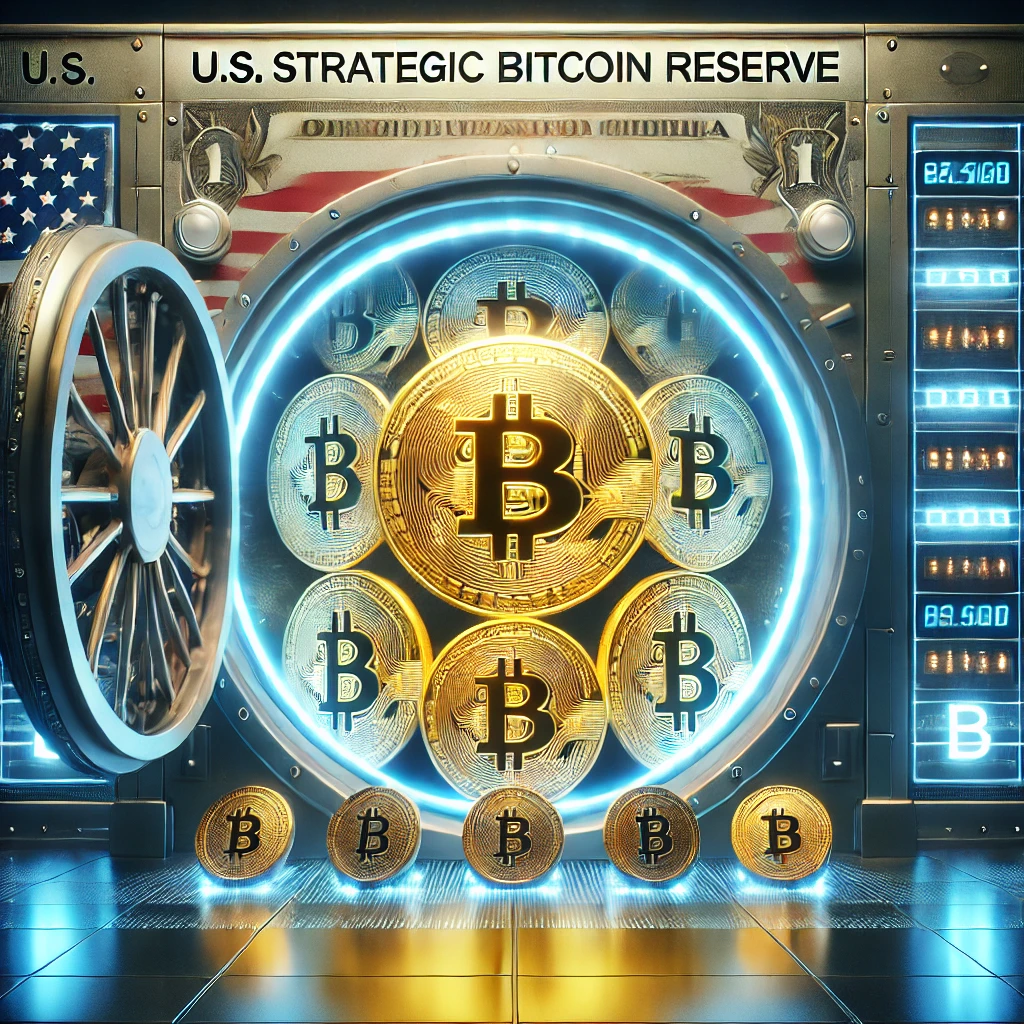
The U.S. Strategic Bitcoin Reserve: A Bold Move Toward Financial Sovereignty

The White House Digital Assets Summit marked a historic shift in the United States’ approach to Bitcoin and digital assets. One of the biggest takeaways from the event was President Donald Trump’s executive order establishing the Strategic Bitcoin Reserve (SBR)—a move that could redefine America’s financial strategy for decades to come.

This initiative signals the government’s recognition of Bitcoin’s role as a store of value, positioning it as a strategic asset that could strengthen economic security, hedge against inflation, and secure financial dominance in an increasingly digital world.

Bitcoin as the New Gold Standard?

For decades, the global economy was backed by the gold standard, which ensured that paper currency was directly tied to physical gold reserves. This system prevented excessive money printing and inflation, providing long-term economic stability.

In his book The Bitcoin Standard, economist Saifedean Ammous argues that Bitcoin could serve as a digital successor to gold, offering an even stronger, tamper-proof monetary system due to its fixed supply of 21 million coins.

With the U.S. now considering holding Bitcoin as a strategic reserve, some experts believe this could be a step toward a Bitcoin-backed monetary system, similar to how gold reserves once backed the U.S. dollar.

Key Takeaways from the Summit

The summit brought together top voices in crypto, finance, and policy. Here’s what key figures had to say about the U.S. Bitcoin reserve:

  • David Sacks, an influential investor and White House advisor on AI and crypto, called the SBR a digital equivalent of Fort Knox, reinforcing its importance in securing the nation’s economic future.
  • Scott Bessent, U.S. Treasury Secretary, highlighted how the reserve could be funded through seized Bitcoin assets, ensuring taxpayers do not bear any financial burden. He also discussed how stablecoins could help maintain the U.S. dollar’s dominance in global markets.
  • Michael Saylor, a long-time Bitcoin advocate, emphasized that Bitcoin is the ultimate long-term asset for national security and financial independence. He argued that establishing an SBR now could ensure America remains at the forefront of the digital financial revolution.

These perspectives reflect a growing consensus that Bitcoin is here to stay and that governments must adapt to this new financial paradigm.

Why the Strategic Bitcoin Reserve Matters

The decision to establish a national Bitcoin reserve carries significant benefits:

1. Strengthening Economic Security

Bitcoin’s fixed supply makes it an ideal hedge against inflation and economic uncertainty. Unlike fiat currencies, which can be printed at will, Bitcoin’s scarcity could help protect national wealth over time, much like gold reserves once did.

2. Reducing National Debt

Analysts suggest that a well-managed Bitcoin reserve could generate trillions in value over the next few decades. By holding Bitcoin as a long-term asset, the U.S. government could use its appreciation to offset debt and fund national initiatives.

3. Enhancing Global Financial Influence

Other nations, including China, Russia, and the UAE, have been exploring Bitcoin and digital asset strategies. By securing a significant share of the Bitcoin network, the U.S. ensures it remains at the forefront of the digital economyrather than falling behind global competitors.

4. Encouraging Innovation and Investment

With the government recognizing Bitcoin’s value, regulatory clarity could improve, encouraging more businesses and investors to operate within the U.S. rather than seeking crypto-friendly jurisdictions overseas. This move could bring capital and jobs back to the country.

The Decentralization Debate: Government vs. Bitcoin’s Core Principles

While many Bitcoin enthusiasts support the idea of nations adopting Bitcoin, some argue that governments owning large portions of the network could undermine its decentralized nature. The Bitcoin ethos is built on individual ownership and financial sovereignty, meaning that no single entity—whether a corporation or a government—should control too much of the supply.

However, others see the U.S. Bitcoin reserve as a safeguard against authoritarian regimes gaining disproportionate influence over the network. The U.S. embracing Bitcoin could also set a precedent for other democratic nations to follow, ensuring that Bitcoin’s future remains aligned with open financial systems rather than centralized control.

Bull vs. Bear Case: What Happens Next?

Bull Case: A Stronger, Bitcoin-Backed U.S. Economy

If the Bitcoin Standard thesis plays out, the U.S. could emerge as the global leader in a new monetary era. Bitcoin’s appreciation could:
✅ Reduce national debt over time
✅ Boost the U.S. dollar’s credibility by integrating Bitcoin reserves
✅ Position America as the digital finance capital of the world

Bear Case: Risks of Government Intervention

Skeptics argue that government involvement could:
❌ Introduce new regulations that slow Bitcoin’s adoption
❌ Encourage market manipulation if the reserve is used for strategic sell-offs
❌ Trigger concerns about centralization, contradicting Bitcoin’s original vision

Conclusion

The establishment of a U.S. Strategic Bitcoin Reserve is a game-changer in the world of finance. While some remain skeptical about government involvement in Bitcoin, there’s no doubt that this move cements Bitcoin’s role in the global financial system.

As the digital economy continues to evolve, Bitcoin’s ability to serve as a hedge against inflation, a store of value, and a tool for economic empowerment makes it an asset worth watching—whether in private hands or national reserves.

Would you like to see more in-depth analysis on Bitcoin and financial trends? Join Future Finance Lab today to stay ahead in the new digital economy!

Nvidia Earnings and Market Outlook: AI, Bitcoin, and the Broader Financial Landscape

As the financial world closely watches Nvidia’s latest earnings report, its impact extends beyond just tech stocks—spilling into broader market sentiment, AI investments, and even the cryptocurrency space. With Nvidia’s continued dominance in artificial intelligence and Bitcoin’s ongoing volatility, both markets are at a crucial juncture that could define trends for the remainder of 2025.

Nvidia’s Strong Earnings Performance

Nvidia has once again surpassed expectations, reporting record-breaking revenue of $39.3 billion, marking a 78% year-over-year increase. The company’s adjusted earnings per share (EPS) of $0.89 exceeded Wall Street estimates, reinforcing Nvidia’s critical role in AI infrastructure and computing.

Key Highlights from Nvidia’s Q4 Earnings:

  • Data Center Revenue: Surged to $35.6 billion, fueled by demand for AI-driven cloud computing solutions.
  • Gaming Division: Despite AI taking center stage, Nvidia’s gaming segment showed resilience, generating $3.1 billion in revenue.
  • Future Guidance: Nvidia projects $43 billion in Q1 revenue, signaling continued demand for AI chips despite increasing competition.

The AI boom remains the primary growth driver for Nvidia, as its GPUs power the next generation of machine learning models, cloud computing, and autonomous systems. Despite minor concerns about rising competition from Chinese firms and supply chain constraints, investors remain overwhelmingly bullish on Nvidia’s long-term trajectory.

Stock Market Reaction and Broader Implications

Nvidia’s stock initially saw a 3.7% gain in regular trading hours but experienced some after-hours volatility. However, long-term investors view Nvidia as a cornerstone of the AI revolution, making it a key player in institutional portfolios.

The tech sector as a whole is looking to Nvidia as a bellwether, with its earnings report influencing sentiment across major indices, including the S&P 500 and Nasdaq. With AI adoption accelerating, Nvidia’s success could reignite momentum in a tech sector that has faced headwinds in early 2025.

Bitcoin’s Volatile Ride: What’s Next for Crypto?

While Nvidia is showcasing strength, Bitcoin is facing a period of heightened volatility. The leading cryptocurrency recently dropped below $85,000, marking a significant decline from its early-year highs near $95,000.

Factors Driving Bitcoin’s Price Movements:

  • ETF Outflows: Institutional investors have been shifting funds away from crypto ETFs, causing temporary downward pressure.
  • Regulatory Uncertainty: Governments worldwide continue to debate crypto regulations, influencing investor sentiment.
  • Market Cycles: Bitcoin historically experiences sharp corrections before major bull runs, making its current dip a potential buying opportunity.

Despite recent declines, Bitcoin remains in a long-term uptrend. Many analysts predict a recovery that could push the price toward $100,000+ by late 2025, driven by increasing institutional adoption and the upcoming Bitcoin halving event.

The Intersection of AI and Crypto

While Nvidia and Bitcoin operate in different sectors, their trajectories often overlap in investor sentiment. AI advancements are playing an increasing role in blockchain efficiency, decentralized finance (DeFi), and crypto trading algorithms, linking the two industries more closely than ever.

As AI-driven finance continues to evolve, Nvidia’s dominance in computing power could also fuel next-generation crypto applications, from AI-powered trading bots to blockchain scalability solutions. This convergence presents exciting opportunities for investors who see the synergy between these two fast-growing sectors.

Final Thoughts: Navigating Market Uncertainty

Both Nvidia and Bitcoin represent high-growth opportunities in 2025, albeit with different risk profiles. Nvidia’s earnings reaffirm its leadership in AI, while Bitcoin’s volatility presents both risks and potential rewards for crypto investors.

For those looking to diversify their portfolios, keeping an eye on Nvidia’s AI expansion and Bitcoin’s price action could provide valuable insights into the evolving digital economy. Whether investing in the AI revolution or betting on the future of decentralized finance, market participants should stay informed and strategically positioned for what lies ahead.


Stay updated with the latest financial trends at FutureFinanceLab.com, where we bring expert insights into the evolving digital economy.

Beginner’s Guide to Common Investment Strategies

If you’re new to investing, you might feel overwhelmed by all the different strategies out there. Don’t worry—I’ve got you covered! Here’s a bite-sized breakdown of six key investment approaches, so you can find the one that fits your goals and risk level.


1️⃣ Contrarian Investing – Buy When Others Are Fearful

🔑 Key Idea: Go against the crowd and invest in assets that others are avoiding.
📈 Best For: Risk-takers who believe in long-term market cycles.
📊 Example: Buying stocks when the market is crashing, expecting them to rebound later.
🔥 Works Best In: Extreme market conditions (when fear is high).


2️⃣ Growth Investing – Bet on the Future

🔑 Key Idea: Invest in companies expected to grow fast, like tech startups.
📈 Best For: Those willing to take on more risk for higher potential rewards.
📊 Example: Investing in companies like Tesla or Nvidia before they became giants.
🔥 Works Best In: Bull markets (when the economy is growing).


3️⃣ Income Investing – Get Paid While You Wait

🔑 Key Idea: Focus on investments that pay you regularly, like dividend stocks.
📈 Best For: Investors looking for steady, passive income.
📊 Example: Buying shares in companies like Coca-Cola that pay dividends.
🔥 Works Best In: Stable markets.


4️⃣ Index Investing – Set It and Forget It

🔑 Key Idea: Invest in the entire market instead of picking individual stocks.
📈 Best For: Beginners and long-term investors who want simple, low-cost investing.
📊 Example: Buying an S&P 500 ETF to own a small piece of the top 500 U.S. companies.
🔥 Works Best In: Any market condition.


5️⃣ Momentum Investing – Ride the Wave

🔑 Key Idea: Buy stocks that are already trending up and sell before the trend fades.
📈 Best For: Short-term traders who follow market trends.
📊 Example: Buying stocks that have been rising fast, like AI companies.
🔥 Works Best In: Trending markets.


6️⃣ Value Investing – Buy Low, Sell High

🔑 Key Idea: Find great companies that are undervalued and wait for their price to rise.
📈 Best For: Patient investors who believe in long-term wealth building.
📊 Example: Warren Buffett’s approach—buying solid businesses at a discount.
🔥 Works Best In: Bear markets or when stocks are undervalued.


Which Strategy is Right for You?

There’s no one-size-fits-all answer. Your best strategy depends on:
✅ Your risk tolerance (Are you comfortable with market ups and downs?)
✅ Your time horizon (Do you want short-term gains or long-term wealth?)
✅ Your financial goals (Are you looking for income, growth, or stability?)

👉 Want to learn more and start your journey? Join FutureFinanceLab.com for expert insights, tools, and a community of smart investors like you! 🚀

Option Trading Strategies: A Simplified Guide

Options trading can seem complex, but understanding a few key strategies can help traders manage risk and maximize potential returns. Whether you’re new to options or looking to refine your approach, this guide will break down essential strategies in a simplified way.

What Are Options?

Options are financial contracts that give traders the right—but not the obligation—to buy or sell an asset at a predetermined price before a specific expiration date. There are two main types:

  • Call options: Give the right to buy an asset at a set price.
  • Put options: Give the right to sell an asset at a set price.

Traders use options for speculation, hedging risk, or generating income. Now, let’s explore the key strategies.


1. Covered Call (Income Strategy)

Best for: Generating income while holding a stock.
covered call involves owning a stock and selling a call option against it. If the stock price stays below the option’s strike price, the trader keeps the premium (income). If the stock rises above the strike price, they must sell at that price.

✅ Pros: Generates passive income, reduces downside risk.
❌ Cons: Limits upside potential if the stock rises significantly.

Example:

  • You buy 100 shares of XYZ at $50.
  • You sell a call option with a $55 strike price for $2 per share.
  • If XYZ stays below $55, you keep the $200 premium. If it rises above $55, you sell at that price, missing any gains beyond it.

2. Protective Put (Insurance Strategy)

Best for: Protecting against downside risk.
protective put involves buying a put option on a stock you own. If the stock price falls, the put option increases in value, limiting losses.

✅ Pros: Protects against major losses.
❌ Cons: Costs money (premium), reducing overall profits.

Example:

  • You own 100 shares of ABC at $100.
  • You buy a put option with a $95 strike price for $3 per share.
  • If ABC drops to $80, the put lets you sell at $95, limiting losses.

3. Long Straddle (Volatility Play)

Best for: Betting on big price moves (up or down).
long straddle involves buying both a call and a put option at the same strike price and expiration. It profits if the asset moves significantly in either direction.

✅ Pros: Profits from volatility regardless of direction.
❌ Cons: Expensive (requires buying both options).

Example:

  • You buy a call and put on XYZ at $50 for $5 each.
  • If XYZ moves to $65 or $35, you profit. If it stays near $50, you lose the premiums.

4. Iron Condor (Range-Bound Strategy)

Best for: Profiting from low volatility.
An iron condor is a combination of four options that profits if the stock remains within a certain range.

✅ Pros: Profits from stability (not big movements).
❌ Cons: Limited profit potential.

Example:

  • XYZ is trading at $50.
  • You sell a $55 call and a $45 put, while buying a $60 call and a $40 put.
  • If XYZ stays between $45 and $55, you collect the premiums.

Which Strategy Should You Use?

  • If you own stocks and want extra income → Covered Call
  • If you fear a market drop → Protective Put
  • If you expect big moves (but unsure of direction) → Long Straddle
  • If you think the stock will stay stable → Iron Condor

Understanding these strategies can help traders manage risks and make informed decisions in options trading.

Want more insights? Join FutureFinanceLab.com for in-depth analysis and trading education.