How the 2024 U.S. Presidential Election Might Impact Bitcoin and Stocks

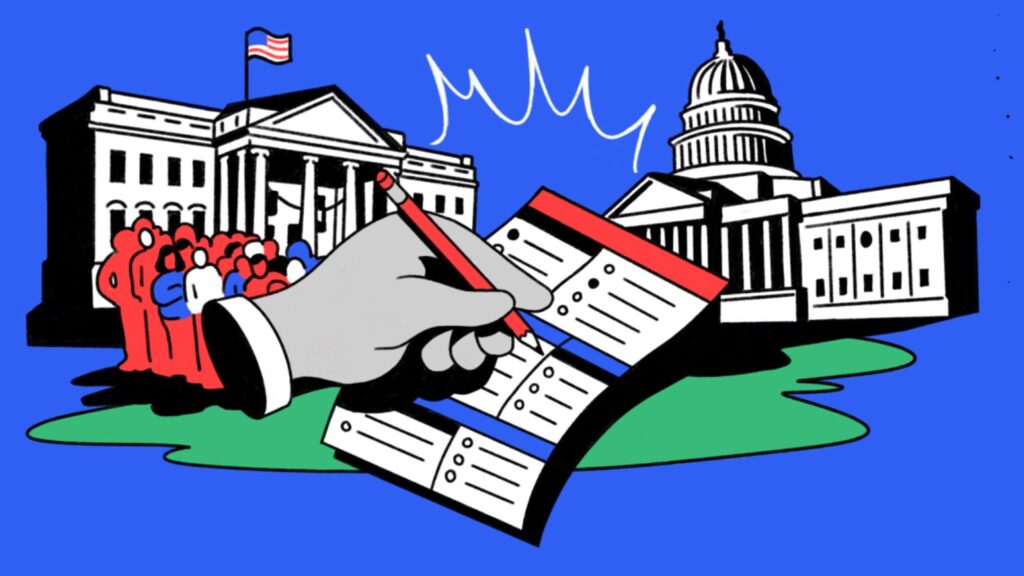
The 2024 U.S. presidential election, featuring Donald Trump and Kamala Harris, could significantly influence financial markets. Elections often bring short-term volatility, and this one is no exception. Here’s how each candidate’s policies might impact stocks and Bitcoin.

1. Stock Market Reactions

Historically, elections stir market uncertainty. A Trump victory might trigger a rally, given his pro-business stance that favors deregulation and tax cuts. This could boost growth sectors like tech and finance. On the other hand, a Harris win would likely maintain the current policy path, focusing on steady economic support but potentially with less dramatic market impact. Sectors like renewable energy and healthcare could see benefits under her leadership.

2. Bitcoin and Cryptocurrency

Bitcoin’s response to political changes is unique, driven by global sentiment and regulatory factors. If Trump wins, expectations of lighter crypto regulations could fuel optimism and push Bitcoin prices higher. Harris, however, may take a more cautious approach, balancing crypto growth with stronger oversight. The market impact could be more subdued but stable.

3. Federal Reserve and Monetary Policy

The Federal Reserve’s post-election meeting is key. A widely expected rate cut could inject liquidity into the market, benefiting Bitcoin as investors seek inflation hedges. Looser monetary policy historically supports riskier assets like stocks and cryptocurrencies.

Conclusion

While immediate reactions will vary based on the election outcome, the long-term effects depend on enacted policies. Stocks may surge with Trump’s deregulatory push, while Harris’s focus might foster stability and boost specific sectors. Bitcoin could thrive under either scenario: bullish with Trump due to regulation relief or steady under Harris as a safe, decentralized asset amid tighter oversight.


Crypto Market Analysis: Bitcoin Volatility and XRP’s Strategic Moves

Bitcoin’s recent 24-hour price drop from $73.4K to $69K has reignited concerns over market volatility. This sudden plunge comes amid mixed market sentiment, with the Fear & Greed Index standing at a neutral 59. Bitcoin’s dominance rose slightly to 60.25%, signaling a cautious return to the leading cryptocurrency during uncertain times.

Key Influences on Bitcoin:

1. Mt. Gox Movements: The dormant entity shifted $35 million in Bitcoin while pushing repayment deadlines to 2025, sparking fears of a potential market dip similar to previous large-scale Bitcoin liquidations.

2. Tether’s Strategic Investments: Tether, with its $7.7 billion profit and $134.4 billion in assets, is now investing in Bitcoin mining and AI. This move suggests confidence in Bitcoin’s long-term value but may also signal a shift towards diversification.

XRP’s Emerging Role:

A major development for XRP is the launch of Aurum’s $1 billion tokenized fund for data center investments on the XRP Ledger, in collaboration with Zoniqx. Touted as the world’s first combined equity and debt tokenized fund, this project spans key regions like the U.S., UAE, and Europe, showcasing XRP Ledger’s capabilities in facilitating large-scale financial operations efficiently.

Implications:

For Bitcoin: Investors should watch for potential market movements from Mt. Gox or strategic expansions by Tether, which could impact price stability.

For XRP: The Aurum fund could drive new institutional interest and broaden XRP’s use case, enhancing its market value if the project succeeds.

Overall, the market reflects a blend of caution and opportunity, where strategic investment and emerging blockchain applications are at the forefront, but concerns over manipulation and regulatory scrutiny linger.

Bitcoin’s Big Bounce? Price Dips to $69,000 as Wall Street and State Governments Eye the Crypto Giant

In the last 24 hours, Bitcoin’s price has taken a sharp dip from $73,000 to $69,000, but there’s more at play than a simple price drop. Behind the scenes, Wall Street and government officials are making moves that could push Bitcoin into new territory. Here’s a look at why this latest dip might just be the setup for Bitcoin’s next big leap.

  1. BlackRock’s Record Inflows Show Institutional Confidence
    Despite Bitcoin’s price drop, BlackRock’s Spot Bitcoin ETF just recorded its largest-ever inflows, showing that big money isn’t phased by the dip. When institutions like BlackRock buy in heavily during a downturn, it’s usually a sign of faith in long-term gains. While retail investors may be rattled, these institutional players see this as an opportunity, hinting that the price drop could be short-lived.
  2. MicroStrategy Sticks to Its Guns
    MicroStrategy’s Q3 earnings report may have missed estimates, causing its stock to fall nearly 6%, but CEO Michael Saylor remains bullish on Bitcoin. Saylor’s firm continues to hold a significant Bitcoin reserve, showing his commitment to its potential despite price fluctuations. For crypto watchers, this reinforces the idea that Bitcoin remains a solid long-term investment, even if the short-term ride gets bumpy.
  3. Florida’s Bold Bitcoin Proposal
    Florida’s CFO, Jimmy Patronis, recently proposed adding Bitcoin to the state’s pension funds, a move that could pave the way for other states to consider crypto investments. This marks a major step in mainstream acceptance of Bitcoin. Though government involvement could bring increased regulation, it also signals confidence in Bitcoin’s future stability and value.
  4. Correction or Opportunity? Bitcoin’s Slide to $69,000
    Bitcoin’s drop to $69,000 may be part of a natural correction after reaching recent highs. Corrections like these often create buying opportunities for new investors or those looking to add to their portfolios. And with a strong base of institutional and governmental interest, the price may rebound sooner rather than later.

Where Does Bitcoin Go from Here?
While Bitcoin’s recent price dip might seem like a setback, the underlying story is one of strength. With major institutions increasing their holdings and governments beginning to see Bitcoin as a viable asset, the stage is set for Bitcoin to push higher in the near future. For investors, this could be a golden moment—whether to enter or hold steady, as Bitcoin’s long-term outlook remains promising.

For now, Bitcoin may be down, but with heavyweights betting on its future, it’s far from out. Keep watching; this dip could be the beginning of a new chapter.

Bitcoin Breaks $71,000: What’s Driving the Surge and What’s Next?

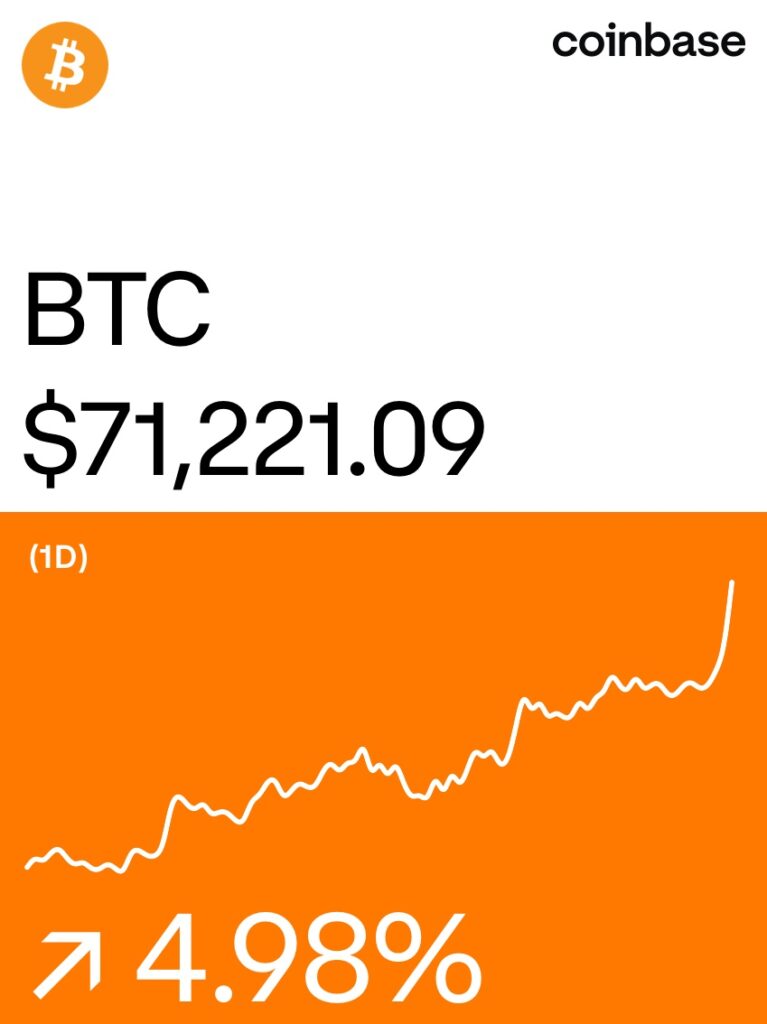
Bitcoin recently soared past $71,000, marking a nearly 5% daily gain and sparking renewed enthusiasm in the market. The rally, occurring just after Bitcoin’s latest halving, reflects a unique combination of reduced supply, institutional interest, and economic conditions pushing investors toward alternative assets. Here’s a look at the key factors driving this surge and what might lie ahead.

Key Drivers Behind Bitcoin’s Rally

1. Institutional Demand and ETF Hopes

The potential approval of a U.S. spot Bitcoin ETF is a significant catalyst. Such an ETF would make Bitcoin accessible to mainstream investors through traditional financial channels. Major institutions like BlackRock and Fidelity are backing ETF applications, fueling optimism that approval could bring billions in new demand, pushing prices higher.

2. Reduced Post-Halving Supply

With the recent halving, the reward for Bitcoin miners has been cut in half, limiting new supply. Historically, these post-halving periods have seen price increases as demand outpaces available Bitcoin, and current price action suggests this dynamic is playing out again.

3. Economic Uncertainty Driving Demand

Global economic instability, inflation, and high-interest rates are leading investors to consider Bitcoin as a hedge. As “digital gold,” Bitcoin’s appeal grows in uncertain times, attracting both retail and institutional investors.

What’s Next for Bitcoin?

Short-Term Outlook

While profit-taking could cause minor pullbacks, if Bitcoin maintains support above $70,000, it may continue its upward momentum. However, the market remains sensitive to regulatory news, especially regarding the ETF approval.

Long-Term Potential

Post-halving, Bitcoin is positioned for sustained growth, driven by reduced supply, institutional accumulation, and wider adoption. If an ETF is approved, it could unlock substantial demand, possibly leading to a sustained bull run.

Final Thoughts

Bitcoin’s rise to $71,000 reflects strong post-halving dynamics, optimism around an ETF, and a global search for inflation-resistant assets. This rally could mark the beginning of a more mature phase for Bitcoin, with growing legitimacy and integration into the broader financial system. For investors, Bitcoin’s journey seems poised to continue upward, backed by both new demand and a shrinking supply.