Escaping the Concorde Fallacy: How to Stop Throwing Good Money After Bad

Have you ever kept investing in something—time, money, or effort—even when deep down you knew it wasn’t working? You’re not alone. This common decision-making trap is called the Concorde fallacy, also known as the sunk cost fallacy, and it silently undermines smart thinking in both life and investing.

In this post, we’ll break it down in plain language, explore why it happens, and show how to outsmart it using both mental clarity and modern tools—with a little help from Stoic wisdom and financial logic.


What Is the Concorde Fallacy?

The Concorde fallacy happens when people continue pouring resources into a failing project just because they’ve already invested a lot into it. The name comes from the famous Concorde jet project—despite clear signs it would be a financial disaster, both the British and French governments kept funding it, unwilling to “waste” their previous investments.

But here’s the truth:

💡 Sunk costs are gone. What matters is what happens next.


A Real-World Example

Imagine a company launches a new product that flops. Sales are weak. Market feedback is poor. But the executives—having invested millions in R&D and branding—decide to double down with more advertising.

Why?
Because they feel emotionally attached. They don’t want to “waste” what they already spent. But ironically, they end up wasting even more.


Why We Fall Into This Trap

The Concorde fallacy is deeply rooted in human psychology. Here’s why we do it:

1. Loss Aversion

We hate losing more than we love winning. That discomfort pushes us to justify past decisions—even bad ones.

2. Commitment Bias

The more we commit to something, the harder it is to walk away. We’ve built a story around it. We’ve tied it to our identity.

3. Cognitive Dissonance

Admitting a mistake hurts. To reduce that mental tension, we tell ourselves, “Maybe it’ll still work out.”


The Emotional Cost of Not Letting Go

It’s not just money we waste. It’s time, energy, mental clarity, and opportunities that could have delivered real value elsewhere.

🧠 As we say at Future Finance Lab: Smart investing is about clarity, not attachment.


How to Avoid the Sunk Cost Trap

You can’t always eliminate bias—but you can outsmart it. Here’s how:

✅ Focus on the Future

Ask yourself: “If I hadn’t already spent anything on this, would I invest now?”
If the answer is no, that’s your signal to walk away.

✅ Detach Emotionally

It’s okay to feel disappointed, but don’t let emotions drive your wallet. Practice Stoic detachment: control what you can, accept what you can’t, and move forward with logic.

✅ Use Decision Frameworks

Systems like checklists or decision trees reduce emotional noise. That’s why many top investors use strict criteria for sell decisions.

✅ Use Technology

Digital tools and AI aren’t swayed by sunk costs. When emotions run high, let algorithms offer you a clean, rational perspective.


Bonus: Try “Debiasing” in Real Time

Picture this:
A cartoon stick figure, eyes closed, sitting cross-legged with a gentle smile. Above it, the word “Debiasing.”
In a speech bubble, it calmly says: “YAS.”

It may sound silly, but taking a step back, breathing, and recognizing your bias is often the first and most powerful move.


Final Thoughts: Sunk Costs Are the Price of Growth

Every investor has made a decision they regret. That’s part of learning. But doubling down on a mistake just to avoid the feeling of failure is like adding bricks to a sinking ship.

At FutureFinanceLab.com, we teach not just how to invest—but how to think. Avoiding traps like the Concorde fallacy isn’t just smart. It’s essential for long-term success.


📘 Want to Master Smart Decision-Making?

Become a member at FutureFinanceLab.com and access our library of behavioral finance lessons, investment psychology breakdowns, and practical tools to build clarity into every decision. Make investing a mindset, not a gamble.


How I Analyze a Stock (Step-by-Step With Real Examples)

If you’ve ever stared at a stock chart or company report and felt overwhelmed, you’re not alone. Stock analysis can seem complex—but it doesn’t have to be. In this article, I’ll walk you through how I personally analyze a stock, step by step, using real-world examples. Whether you’re just starting or refining your strategy, this will give you a solid foundation.


Step 1: Understand the Business

Before looking at numbers, I ask a simple question:
What does this company do—and is it something I understand?

Example: Let’s take Apple (AAPL). It’s easy to grasp—they sell iPhones, Macs, wearables, and services. I understand the products, use them, and see demand. That’s a good start.

✅ Tip: If you can’t explain what the company does in one sentence, skip it for now.


Step 2: Ask: Is This Company Making Life Better?

Beyond profits, I ask:

“Is this company actually improving people’s lives?”
“Is it solving a real-world problem?”

This helps separate hype from substance.

  • Does it save people time?
  • Reduce costs?
  • Improve health, education, or convenience?
  • Make technology more accessible?

Example: Tesla (TSLA) is not just a car company. It’s accelerating the transition to sustainable energy.
Shopify (SHOP) empowers small businesses to build online stores without technical skills.
Zoom (ZM) made global communication easier—especially during the pandemic.

If a company improves lives at scale, it can grow sustainably—and investors tend to reward that.


Step 3: Check the Moat (Competitive Advantage)

A strong company needs a durable competitive edge—this is known as a “moat.” It could be:

  • Brand loyalty (like Nike or Coca-Cola)
  • Network effects (like Facebook or Uber)
  • Cost advantages or patents

Example: Google (GOOGL) owns search, email, maps, cloud, YouTube… Their ecosystem is hard to replicate.


Step 4: Review the Financials

Now I dig into the numbers. Focus on:

Revenue Growth

Is the company consistently growing sales?

Example: Amazon (AMZN) has a long record of revenue growth, thanks to e-commerce and AWS.

Profit Margins

How much money is left after expenses? High margins = pricing power or efficiency.

Earnings Per Share (EPS)

Is the company making more money per share each year?

📈 Rising EPS = good sign of profitability and scalability.


Step 5: Look at Valuation

Even great companies can be bad investments at the wrong price. I look at:

  • P/E Ratio (Price/Earnings)
  • PEG Ratio (P/E relative to growth)
  • Price-to-Sales (P/S)

Example: Nvidia (NVDA) may look expensive by P/E alone, but with booming AI demand, growth may justify it.


Step 6: Consider the Industry & Macro Trends

  • Is the company riding a long-term wave (like AI, healthtech, green energy)?
  • Is it a leader or just a copycat?

Example: Adobe (ADBE) is a creative tools leader, and with the creator economy booming, it remains relevant.


Step 7: Check Management and Ownership

  • Are the founders still involved?
  • Do they own shares themselves?
  • Are they visionary or just corporate caretakers?

I also look at:

  • Insider buying or selling
  • Institutional ownership levels

Step 8: Match It to My Strategy

After all that, I ask:

  • Is this a long-term hold?
  • Should I dollar-cost average in?
  • Is now a good entry point—or wait for a pullback?

Then I track the investment thesis. If it changes, I reassess.


Final Thoughts: Real Value Goes Beyond the Chart

The most important part of stock analysis isn’t the numbers—it’s the human impact.

When you find a company that is financially solid and improving lives in a meaningful way, you’ve found something special. These companies tend to last. They build trust. They grow.

At FutureFinanceLab.com, we teach you how to find companies like this—those that not only perform well, but stand for something real.

If you’re ready to start thinking like a long-term investor with a clear and simple framework, become a member today. Our content is built to help beginners grow from confusion to clarity—step by step.


📌 Summary Checklist

✅ Understand the business
✅ Is it improving people’s lives?
✅ Check for a durable moat
✅ Review key financials
✅ Evaluate valuation
✅ Analyze industry trends
✅ Examine leadership and ownership
✅ Match your strategy to the stock

The Stoic Investor: Mastering Emotions in a Wild Market

Markets are noisy. One day Bitcoin is soaring; the next, headlines scream recession. In the chaos, most investors fall into a trap: reacting emotionally, chasing hype, or running from fear. But what if you approached your portfolio the way a Stoic would—calm, disciplined, and focused on what you can control? In this guide, we’ll explore how ancient Stoic wisdom can help you master modern financial markets, stay rational during volatility, and build long-term wealth with clarity.


Chaos Is the New Normal

Volatility isn’t an exception anymore—it’s the rule. Whether it’s crypto crashes, meme stock frenzies, or inflation scares, markets seem to lurch from one extreme to the next. In times like these, emotional investors tend to buy high, sell low, and repeat the cycle. The solution? A mindset grounded in timeless principles, not trends. That’s where Stoicism comes in.


What Is Stoicism?

Stoicism is an ancient Greek philosophy built around one powerful idea: you cannot control external events, only your responses to them. That core belief maps perfectly to investing.

Three essential Stoic principles:

  1. Control what you can — your decisions, your discipline
  2. Accept what you can’t — market moves, news cycles
  3. Act with reason — no panic, no greed, just clarity

“We suffer more in imagination than in reality.” — Seneca

These aren’t just ideas—they’re tools.


How Emotions Ruin Returns

The data is clear: emotional investing is expensive. According to Dalbar, the average investor underperforms the market by several percentage points annually. Why?

  • FOMO (Fear of Missing Out): Chasing price spikes without fundamentals
  • Panic Selling: Liquidating at the bottom to avoid further pain
  • Overconfidence: Making big bets based on gut feelings or short-term trends

These are reactions, not strategies. Stoicism teaches us to respond intentionally, not impulsively.


The Stoic Investor’s Toolkit

Here’s how to apply Stoic principles to your investing habits:

✅ Detachment from Outcomes

Focus on your investment process, not whether you beat the market this month. Define your system, trust it, and let time do the work.

✅ Pre-Mortem Thinking

Before buying an asset, imagine what could go wrong. How would you feel if it dropped 30%? If you can stomach it, you’re prepared. If not, reassess.

✅ Daily Reflection

Keep a brief journal: What did you do today? Was it rational or emotional? Self-awareness compounds just like interest.

✅ Long-Term Vision

Zoom out. Stoics view time in centuries. You only need to outperform in the long game—not every headline cycle.


Real-World Example

Let’s say the crypto market crashes 25% in a week. Most investors panic. A Stoic investor?

  • Revisits their original thesis
  • Checks whether fundamentals changed
  • Adds to their position if it aligns with their plan

They stay grounded not because they ignore risk, but because they prepared for it.


Calm Is a Superpower

Modern markets reward emotional discipline. While others react to noise, the Stoic investor moves with intention. They play the long game. They understand that the real battle is internal: not against the market, but against fear, greed, and impatience.

“You have power over your mind—not outside events. Realize this, and you will find strength.” — Marcus Aurelius

Better yet, become a FutureFinanceLab.com member to unlock exclusive lessons, market insights, and real-time tools designed to help you invest with discipline, strategy, and peace of mind.

Why Smart Investors Ignore the Noise (Even in Crypto)

Diversified investment portfolio with crypto allocation

In a world where headlines change faster than markets can react, investors face a constant temptation: do something. But more often than not, that urge does more harm than good.

Whether it’s political uncertainty, inflation fears, interest rate debates, or market volatility, the smart move is often counterintuitive:

Tune out the noise — and stick to what works over time.


The Problem With Short-Term Reactions

Let’s be honest: predicting markets based on headlines is a losing game.

  • Trade tariffs, wars, or elections may sound impactful, but rarely translate into predictable outcomes.
  • Even professional managers who try to tactically shift portfolios underperform static, balanced strategies.
  • From 2005 to 2025, tactical asset-allocation funds trailed simple 60/40 portfolios by up to 2–3% per year.

That’s a significant drag — and one that’s often driven by reacting emotionally rather than thinking strategically.


Enter Bitcoin: The New Long-Term Benchmark

While stocks, bonds, and gold all play roles in a diversified portfolio, Bitcoin stands apart.

  • Over the past decade, Bitcoin has outperformed every traditional asset class, even after brutal drawdowns.
  • It’s the only major asset with a fixed supply, growing global adoption, and no ties to any central authority.
  • Despite market cycles, those who held Bitcoin — not traded it — have been rewarded more than any other investor group.

That doesn’t mean go all-in. But it does mean that ignoring Bitcoin is increasingly a strategic blind spot.


So, What Should Investors Actually Do?

1. Review Your Core Allocation

Your mix of stocks, bonds, crypto, and cash should reflect your goals, not headlines. If you’re long-term focused, ask yourself:

  • Am I too concentrated in one asset class?
  • Have I ignored crypto entirely out of fear or bias?
  • Does my portfolio align with my future, not just my past?

For many investors, adding a small but meaningful allocation to Bitcoin makes sense as a hedge against systemic risks and fiat currency debasement.

2. Rebalance, Don’t React

If your growth stocks have ballooned or your bond exposure feels excessive, consider trimming and reallocating—not because of fear, but because of balance.

That might include:

  • Topping up underperforming sectors (like international equities or value stocks).
  • Reintroducing some fixed income or even cash for optionality.
  • Adding or increasing Bitcoin allocation as part of a modern, diversified strategy.

3. Hold Some Cash (But Not Too Much)

In uncertain markets, it’s okay to hold a bit more cash. Yields are higher, and dry powder is useful. But remember: inflation eats idle money, and long-term returns come from assets, not bank accounts.

4. Don’t Get Trapped by “Safe Havens”

Gold, for example, surged recently—but it’s historically volatile and underperformed both stocks and Bitcoin long-term. A safe haven is only useful if it preserves and grows purchasing power over time.

Bitcoin, on the other hand, has shown resilience in inflationary environments — and is increasingly being viewed as digital gold with exponential upside.

5. Keep Investing (Even When It’s Uncomfortable)

This applies most to younger investors or those with long horizons. It might feel like “buying high” or “waiting for a crash” makes more sense—but regular contributions beat perfect timing every time.

If you believe in the future of markets, innovation, and sound money — keep investing through the noise.


Final Thought: Block Out the Panic, Focus on Progress

From Wall Street to the blockchain, the markets will always test your patience. The key isn’t to outsmart the next event—it’s to outlast it.

With a strategy that’s diversified, disciplined, and forward-looking, you won’t just survive market volatility — you’ll thrive through it.

And in that mix, Bitcoin deserves a seat at the table.

BlackRock and BNY Mellon Tokenize $150B Treasury Fund: A Major Leap Toward Blockchain Integration

In a groundbreaking move that signals the rapid evolution of traditional finance, BlackRock and BNY Mellon have announced a partnership to tokenize shares of a $150 billion government money market fund. This represents one of the largest efforts to bring real-world assets (RWAs) into the world of blockchain, showcasing the increasing role of digital technologies in transforming financial markets.

What Does This Mean?

BlackRock’s massive institutional trust fund, which holds short-term U.S. Treasuries, is now set to be tokenized with BNY Mellon providing the infrastructure. This means that shares in the fund will be represented as digital tokens, enabling faster transactions, improved liquidity, and enhanced transparency.

Though the SEC filing does not specify which blockchain will be used, given BlackRock’s past engagements with Ethereum, it’s reasonable to assume that major public blockchains may be part of the picture. However, more enterprise-focused blockchains like Hedera (HBAR), known for its low transaction costs and high throughput, are also strong contenders for tokenization efforts like this. Additionally, XRP—with its proven focus on cross-border payments and speed—could play an important role in facilitating tokenized assets in global financial markets.


Why Tokenize Treasuries?

The tokenization of a $150 billion treasury fund could revolutionize the way the market operates by:

  • Enabling faster settlements with blockchain’s near-instant transaction speeds.
  • Improving liquidity, allowing investors to trade tokenized assets globally and without the traditional market hours restrictions.
  • Enhancing transparency by allowing every transaction to be recorded on an immutable ledger.
  • Making fractional ownership possible, allowing smaller investors to gain exposure to Treasuries with smaller investments.

This is more than just about technological innovation—it’s about creating a more efficient and accessible financial ecosystem.


Bitcoin, HBAR, XRP, and the Broader Digital Asset Ecosystem

As traditional finance continues to integrate blockchain, digital assets like BitcoinHBAR, and XRP are becoming increasingly important. Bitcoin remains the flagship digital asset—often compared to gold in the digital age—offering monetary sovereignty as global economies continue to shift.

HBAR, with its enterprise-grade scalability, and XRP, with its lightning-fast cross-border payment capabilities, are both positioned to be critical players in the tokenized finance world. For tokenizing Treasuries and similar assets, HBAR’s low-cost, high-speed blockchain makes it an attractive option for enterprise adoption, while XRP’s liquidity and settlement capabilities can facilitate efficient transfers across borders.

Together, these digital assets, alongside blockchain technology, are reshaping the landscape of global finance, offering institutions and investors a more transparent, efficient, and connected way to trade and settle assets.


The Strategic Implications for Investors

For investors, this shift is a clear signal that blockchain technology is no longer just a niche for cryptocurrencies—it’s becoming a fundamental part of the infrastructure supporting major financial markets. The move to tokenize Treasuries and other traditional assets brings blockchain’s speed, security, and transparency to the heart of institutional finance.

This is just the beginning. Tokenization will likely open the doors to a wide range of new investment opportunities, including the ability to easily trade fractionalized assets, and offers better access to global liquidity.

Moreover, this trend paves the way for more digital assets—like BitcoinHBAR, and XRP—to play an integral role in mainstream financial systems, potentially reshaping how assets are stored, traded, and valued.


Stay ahead of the curve with more insights at FutureFinanceLab.com, your source for the latest in finance, blockchain, and digital assets.

When to Sell a Stock: Mastering Trading Psychology

Knowing when to sell a stock is just as important as knowing when to buy. But for many investors, this decision is clouded by emotions—especially fear, greed, and the deep-rooted pain of potential loss.

The Psychology Behind Selling Too Late or Too Early

Have you ever noticed how easy it is to hang on to a losing stock, hoping it will bounce back, while rushing to sell a winner at the first sign of a small profit? This isn’t just a bad habit—it’s rooted in something called loss aversion.

Behavioral economists have found that we feel the pain of a loss much more strongly than the pleasure of an equal gain. This causes two common mistakes:

  • Holding onto losing stocks too long, hoping to break even.
  • Selling winning stocks too early, afraid that profits will disappear.

This pattern is known as the Disposition Effect, and it’s one of the most common traps for investors.

At FutureFinanceLab.com, we dive deeper into these behavioral patterns to help new investors build smarter, emotion-proof strategies.


Three Smart Reasons to Sell a Stock

While there can be countless reasons to hit the sell button, smart investors often stick to a few rational guidelines. Here are three strong reasons to sell a stock:

  1. ✅ You made a mistake buying it. Maybe the business isn’t as solid as you thought. Cut your losses and move on.
  2. 📈 The price has risen significantly. Sometimes, locking in gains is the smart move—especially if the growth has outpaced the company’s fundamentals.
  3. 🚩 It’s trading at an irrational or unsustainable price. When hype or speculation drives the stock beyond its real value, it’s a sign to step away.

Other reasons might sound tempting—market noise, social media buzz, or short-term news—but they rarely lead to long-term success.


A Common Pitfall: A Lesson in Greed and Hesitation

Let’s say you buy a stock at $25, planning to sell at $30. It hits your target, but you think, “Maybe it’ll go to $35.” It climbs to $32, but then drops back to $29. Now you wait for it to hit $30 again. It never does. Eventually, you sell in frustration at $23.

You missed your original target and turned a $5 gain into a $2 loss—not because of bad research, but because of emotions.


How to Avoid Emotional Trading

To remove emotion from your strategy:

  • ✅ Use limit orders: Set a sell price in advance. When the stock hits that target, it sells automatically.
  • 🧠 Define your exit strategy upfront: Know your “why” before you buy.
  • 📊 Stick to your plan: Discipline beats impulse every time.

At Future Finance Lab, we provide free resources, practical guides, and beginner-friendly insights so you can trade with clarity and confidence—not emotion.


Bottom Line

Selling a stock isn’t about reacting—it’s about being proactive. The best investors set clear targets, understand the psychology of trading, and avoid the traps of fear and greed. Make selling part of your strategy, not a panic move.

👉 Visit FutureFinanceLab.com to keep learning how to invest smarter—one decision at a time.

Why Everyone Buys at the Top (and How Not To)

Ever feel like you’re always buying right before the crash?

You’re not alone. It’s one of the most common (and painful) mistakes investors make—buying at the top of a market cycle, when prices are inflated and excitement is everywhere.

But why does this keep happening? And more importantly, how can you avoid it?

Let’s break it down using simple psychologyreal data, and practical tools to help you stay smart when the market gets loud.


🔁 The Herd Mentality Trap

Humans are social creatures. When we see crowds rushing into something—whether it’s a concert, a new iPhone, or a cryptocurrency—we instinctively believe “they must know something I don’t.”

That’s herd mentality, and in markets, it creates a dangerous feedback loop:

  1. Prices start rising.
  2. Early investors share success stories.
  3. Media amplifies the trend.
  4. Fear of missing out (FOMO) kicks in.
  5. Late buyers rush in at inflated prices.
  6. Smart money exits quietly.
  7. The bubble pops.

“When everyone is greedy, be fearful.” — Warren Buffett


📈 Real-World Examples of Buying at the Top

Let’s look at some painful market tops:

  • Bitcoin 2017: Retail frenzy pushed BTC to $19,000 in December… then it crashed 80%.
  • Dot-Com Bubble (2000): Stocks like Pets.com soared before collapsing. The Nasdaq lost over 75%.
  • GameStop 2021: Social media pumped it to $483… only to crash back to earth weeks later.

Each case followed the same emotional cycle—optimism → excitement → euphoria → panic → despair.


🧠 The Psychology Behind It

Here’s the simplified psychology of a typical investor:

StageEmotionAction Taken
Prices rising slowlySkepticismWait and watch
Prices climbing fastFOMOBuy late
Prices peakEuphoriaBuy more
Prices drop fastFearPanic sell
Prices bottom outRegretAvoid market

People often buy when they feel most confident—which ironically is when risk is highest.


✅ How to Avoid Buying at the Top

You don’t need to predict the top—you just need a system that protects you from emotional mistakes. Here’s how:

  1. Have a Plan
    → Set buy/sell levels in advance based on your goals, not emotions.
  2. Use Dollar-Cost Averaging (DCA)
    → Invest small amounts regularly, regardless of price. It smooths out the ups and downs.
  3. Check the Crowd
    → If everyone is talking about it—even your barista—it might be time to pause.
  4. Zoom Out
    → Look at the 5-year chart, not the 5-minute one. Trends matter more than spikes.
  5. Avoid FOMO News
    → Be skeptical of headlines like “You Can’t Lose with This Stock!”

📉 Simple Visual to Remember

          Euphoria

│ 📈⬆️
│ /
Optimism │ /
│ / ← You buy here 😬
│ /
│ / 📉⬇️
│/
└──────────────▶
Fear Panic

Final Thought: Buy When It’s Boring

The best time to buy is usually when no one is talking about it—not when it’s trending on X or TikTok.

At FutureFinanceLab.com, we help you think long-term, zoom out, and invest with clarity—not emotion.


📌 Want practical tools to avoid FOMO and start investing smarter?
Explore our latest bite-sized market lessons at FutureFinanceLab.com.

Is “Sell in May” Still Relevant? Breaking the Myth for the Modern Investor

For decades, investors have repeated the old saying: “Sell in May and go away.” The idea is simple—markets supposedly underperform between May and October, so selling in spring and returning in the fall was once considered smart. But is that still true in today’s hyper-connected, data-driven economy?

And more importantly—does this idea even make sense for Bitcoin and other digital assets?

Let’s unpack it.


The Origin of the “Sell in May” Strategy

Back in the day, business activity often slowed down in the summer. Vacations, lighter consumer demand, and reduced corporate momentum sometimes meant lower earnings and weaker market performance. Investors got used to seeing sluggish summer markets—and many adopted this seasonal strategy.


The Modern Market Doesn’t Sleep

Fast forward to today, and things look very different:

  • Global business doesn’t pause for summer
  • Automation and cloud-based operations keep companies running at full speed
  • E-commerce and digital services drive consistent revenue streams year-round

Companies now operate in a world that’s 24/7, borderless, and tech-powered—which means the old “Sell in May” logic no longer applies like it used to.


S&P 500 Performance: The Data Tells a New Story

Market research reveals that this seasonal theory has mostly failed in recent decades. Take the S&P 500, for example:

  • From 2005 to 2024, the index lost money between May and October only three times:
    • 2008 (Global Financial Crisis)
    • 2011 (Debt ceiling crisis)
    • 2022 (Inflation + Fed rate hikes)

That’s 17 out of 20 years where the “slow season” actually delivered positive returns.


Bitcoin: A Different Beast Entirely

If “Sell in May” doesn’t hold up for the S&P 500 anymore, it definitely doesn’t apply to Bitcoin.

Why?

  • Bitcoin trades 24/7, with no breaks, no holidays, and no centralized downtime.
  • It’s driven by macro narratives, adoption cycles, halving events, and global liquidity trends, not seasonal business slowdowns.
  • Historically, some of Bitcoin’s strongest months have been during the summer—including major runs in 2017and 2021.

In crypto, trying to apply traditional Wall Street seasonality is like using a compass on a GPS-driven rocket—you’re likely to miss the big picture.


The Takeaway: Myths Don’t Make Money

The “Sell in May” idea might sound clever, but it’s outdated and unreliable in today’s markets—both traditional and digital.

Modern investing is about data, discipline, and long-term vision—not calendar-based guesses.

If you’re investing in stocks, Bitcoin, or building a diversified portfolio, timing the market based on old sayings is more likely to hurt than help.


📌 Ready to think smarter about your money?
Visit FutureFinanceLab.com for real-world insights, beginner-friendly tools, and bite-sized learning built for the modern investor.

What Is the Stock Market? A Beginner’s Guide in Plain English

Introduction

Ever heard people talk about “the market” and wondered what the fuss is about? Whether it’s stocks going up, crashing down, or breaking records, the stock market can sound like a mysterious world for insiders only. But it doesn’t have to be. In this guide, we’ll break it down in plain English so anyone—yes, even you—can understand it.


🧠 What Is the Stock Market?

The stock market is a place where people buy and sell pieces of companies, called stocks or shares.
When you buy a stock, you own a small piece of that company.

There are two major parts:

  • Stock exchanges – like the New York Stock Exchange (NYSE) or Nasdaq.
  • Investors – people like you and me (plus big institutions) trading these stocks.

💡 Why Do Companies Sell Stocks?

When companies need money to grow, they can:

  • Take loans
  • OR sell part of their company to investors by going public

Going public = listed on the stock market.

In return, investors hope the company grows and their stock price goes up, so they can sell it for more later.


📊 How Do You Make Money in the Stock Market?

There are two main ways:

  1. Capital Gains – Buy low, sell high.
  2. Dividends – Some companies pay you part of their profits regularly.

🚪 How Do You Start Investing?

  1. Open a brokerage account (like Fidelity, Schwab, or Robinhood).
  2. Fund it with your money.
  3. Choose what to buy – individual stocks, ETFs, or index funds.
  4. Hit “buy” – you’re officially an investor!

👉 Tip: Start small and think long-term.


⚠️ What Are the Risks?

  • Stocks can go up and down.
  • You could lose money in the short term.
  • But history shows the market grows over time.

That’s why long-term investing is key.


🧰 Final Thoughts

You don’t need to be a Wall Street expert to start investing.
You just need to understand the basics, stay curious, and take the first step.

What Do Fed Meetings Really Mean for You?

Behind the Headlines of Rate Hikes and Cuts

Every few months, the news lights up with headlines like:
“Fed Hikes Interest Rates by 0.25%” or “Fed Signals Pause in Rate Cuts.”
But what does that actually mean—for your wallet, your investments, or your plans to buy a house or car?

Let’s break it all down in simple language, with real-life examples.

What Is the Fed?


🔍 First Things First: What Is the Fed?

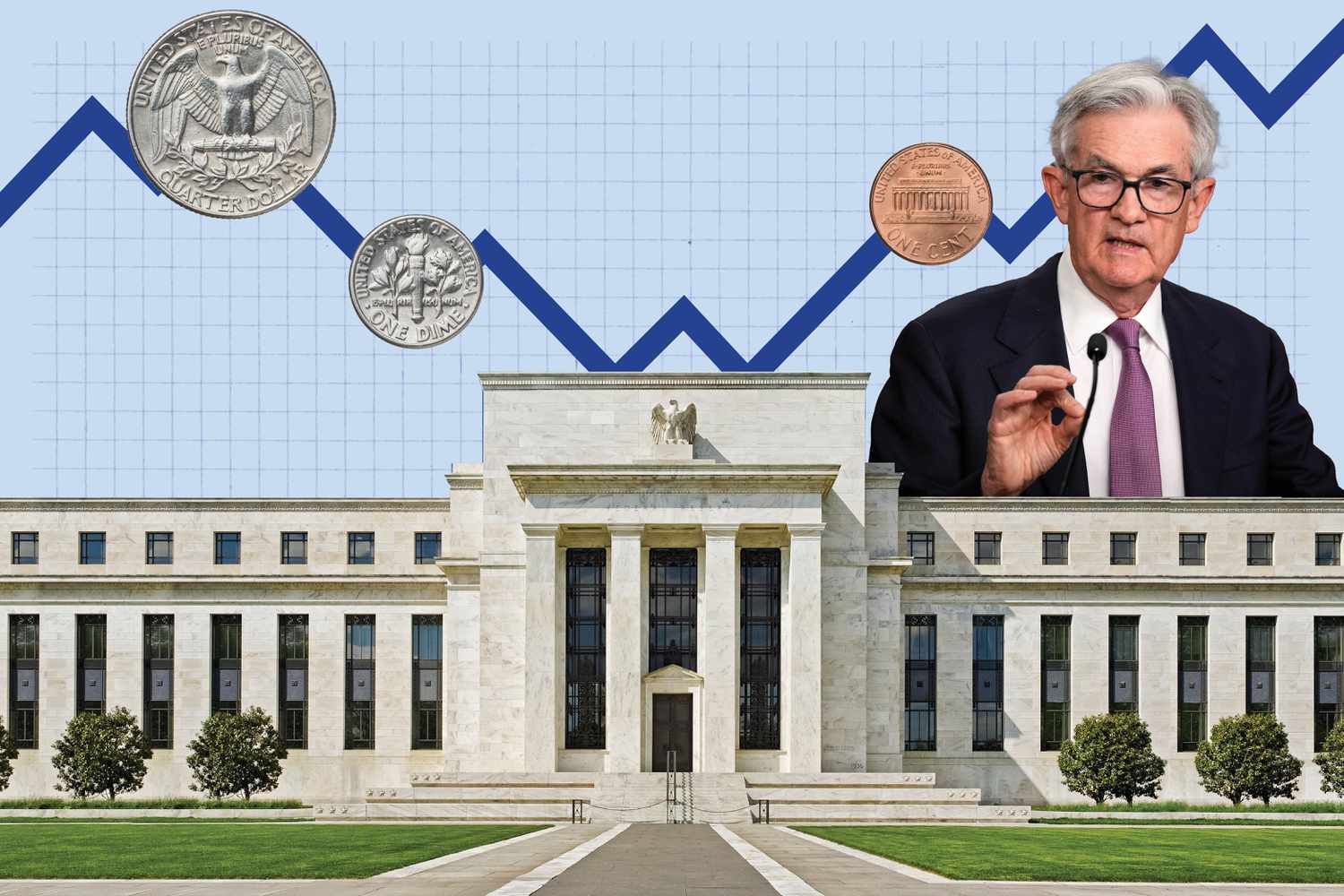
The Federal Reserve (aka “the Fed”) is the central bank of the United States. Its job is to keep inflation under control, support employment, and maintain a stable financial system. One of its most powerful tools? Interest rates.

The Fed sets something called the federal funds rate—which is the interest rate banks charge each other to borrow money overnight. This rate trickles down and affects everything from your credit card interest to mortgage rates to stock prices.


📈 When the Fed Raises Rates (Rate Hike)

When the Fed raises rates, borrowing becomes more expensive.

  • Credit cards cost more.
  • Car loans and mortgages get pricier.
  • Business loans are harder to get.

Why do they do this? Usually to cool down inflation. If prices are rising too fast (like gas, groceries, rent), higher rates slow things down. Less borrowing = less spending = lower inflation.

💡 What It Means for You:

  • Stock Market: Stocks often go down short-term. Higher rates mean companies borrow less, spend less, and might grow more slowly.
  • Planning to Buy a House or Car? Loans get more expensive. Your monthly payment goes up.
  • Have Credit Card Debt? You’ll likely pay more in interest.
  • Savings Account? Good news—banks might offer higher returns on your savings.

📉 When the Fed Lowers Rates (Rate Cut)

When the Fed cuts rates, it’s trying to stimulate the economy.

  • Borrowing becomes cheaper.
  • People and businesses are encouraged to spend more.
  • The goal? To boost growth—especially during slowdowns or recessions.

💡 What It Means for You:

  • Stock Market: Stocks usually go up. Cheap money often leads to higher profits and more investment.
  • Planning to Buy a House or Car? Lower interest rates mean smaller monthly payments.
  • Have Credit Card Debt? You might pay less in interest—but not by much. Credit card rates don’t fall as fast.
  • Savings Account? Your bank might lower your interest rate.

🏦 Real-Life Example:

Imagine You’re Buying a House

  • With high interest rates (7% mortgage): A $400,000 loan = ~$2,660/month
  • With low interest rates (4% mortgage): That same loan = ~$1,910/month

That’s $750 more every month, just because of interest rates!


📊 What About Investors?

If you’re investing in the stock market—or thinking about it—Fed decisions are like ripples in a pond.

  • Tech and growth stocks get hit harder when rates rise, because future profits are worth less today.
  • Banks and value stocks often benefit when rates rise, due to better loan margins.
  • Real estate stocks (REITs) may suffer when borrowing is more expensive.

Long-term investors don’t need to panic every time the Fed moves. But it helps to understand how policy shapes the financial climate.


🧠 The Takeaway: Think Like a Financial Weather Forecaster

  • Rate Hikes = Cooling Down (slow the economy)
  • Rate Cuts = Heating Up (stimulate growth)

These are not just Wall Street terms—they affect your mortgage, your credit card, your investments, and even your job prospects.


✅ Actionable Tips for You

  1. Buying a home soon? Shop for the best rate—but know it could rise after a Fed meeting.
  2. Investing? Don’t chase short-term moves. Think long-term, but stay informed.
  3. Carrying debt? Consider paying off high-interest credit cards before rates rise again.
  4. Savings? Compare interest rates on high-yield accounts when rates are rising.

Final Thoughts: Why It Matters

Fed decisions may sound like boring economic news, but they’re actually power moves that shape your financial life. The more you understand what’s going on behind the headlines, the more confidently you can make smart money moves.

Next time you hear, “The Fed just raised rates,” don’t just scroll past it—know exactly what it means for you.


📚 Want to Learn More?

Check out our beginner-friendly articles and video explainers at FutureFinanceLab.com. We’re breaking down finance, one simple concept at a time.