
Dark Pools: The Hidden Side of Financial Markets and How Tokenized Assets Can Bring Transparency

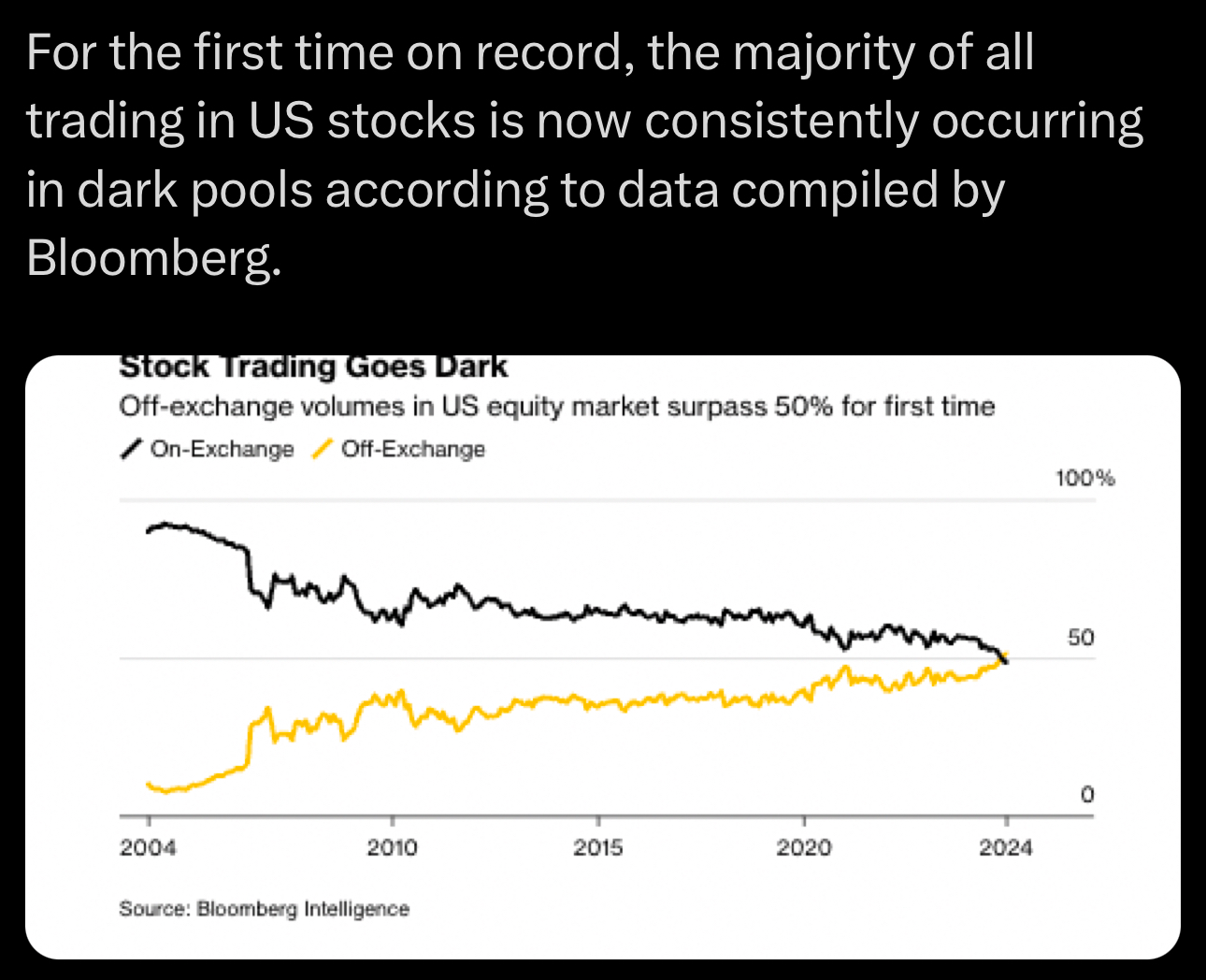
In the world of finance, transparency is often hailed as the cornerstone of fair and efficient markets. Yet, a significant portion of trading happens away from the public eye in dark pools. These private trading venues, designed to facilitate large transactions without affecting market prices, have become increasingly dominant. For the first time in history, over 50% of U.S. stock trading now occurs off-exchange, according to Bloomberg. This trend raises critical questions about market fairness, transparency, and the future of trading.

At Future Finance Lab, we believe in exploring the intersection of finance and technology to uncover solutions that foster trust and efficiency. In this article, we will dive into the risks posed by dark pools and examine how tokenized assets and blockchain technology can address these challenges.

What Are Dark Pools?

Dark pools, also known as private trading forums, are a type of alternative trading system (ATS) where institutional investors execute large trades away from public exchanges like the NYSE or NASDAQ. These platforms offer advantages such as:

Anonymity: Preventing market moves caused by public knowledge of large trades.
Reduced Market Impact: Allowing trades to be executed without immediately affecting the stocks price.

While these features serve a purpose, they come at a cost. The lack of public scrutiny creates a fragmented and opaque market, leaving retail investors at a disadvantage and reducing overall market transparency.

The Dangers of Dark Pools

1. Market Opacity:

Dark pools obscure large portions of trading activity, which can distort price discovery the process by which market prices reflect supply and demand.

2. Unfair Advantage:

Institutional players gain access to privileged information and favorable trading conditions that retail investors lack.

3. Risk of Manipulation:

The absence of public oversight increases the likelihood of market manipulation or collusion among participants.

4. Liquidity Challenges:

When too much volume is diverted to dark pools, public markets can suffer from reduced liquidity, leading to higher volatility and wider spreads.

5. Eroding Trust:

For markets to function effectively, participants need confidence in their fairness. The secrecy of dark pools undermines this trust.

Can Tokenized Assets Fix the Problem?

Tokenized assets represent real-world assets (such as stocks, bonds, or real estate) on a blockchain. By leveraging blockchain technology, tokenization introduces unprecedented transparency and efficiency into financial markets. Here is how:

1. Real-Time Transparency:

Every transaction involving a tokenized asset is recorded on a blockchain, creating an immutable and publicly accessible ledger. This ensures all market participants have equal access to trading data, addressing the opacity of dark pools.

2. Decentralized Trading Platforms:

Blockchain-powered decentralized exchanges (DEXs) allow large trades to occur with reduced market impact while maintaining transparency. Unlike dark pools, these platforms provide a record of trade volumes and prices.

3. Fair Market Access:

Tokenized assets democratize finance by lowering entry barriers. Retail investors can access fractional ownership of assets and participate in markets traditionally dominated by institutions.

4. Programmable Rules:

Smart contracts embedded in tokenized assets can enforce fair trading practices, such as mandatory disclosures or price limits, reducing the potential for manipulation.

5. Enhanced Liquidity:

Fractionalization of tokenized assets increases market liquidity by enabling smaller trades, reducing the reliance on private venues for large transactions.

Challenges to Overcome

While tokenized assets present a compelling solution, there are hurdles to widespread adoption:

Regulatory Uncertainty:

Governments and regulators must define clear frameworks for blockchain-based trading to ensure compliance and protect investors.

Infrastructure and Scalability:

Blockchain networks need to handle high transaction volumes efficiently to compete with existing financial systems.

Institutional Buy-In:

For tokenized markets to thrive, institutional players must adopt and trust the technology.

The Future of Financial Markets

The rise of dark pools highlights the need for innovation in financial markets. Tokenized assets offer a pathway to greater transparency, efficiency, and inclusivity. By merging the power of blockchain technology with financial systems, we can create markets where everyone from retail investors to institutions has equal access to information and opportunities.

At Future Finance Lab, we are committed to exploring these cutting-edge solutions. Our goal is to empower investors with the tools and knowledge to thrive in a rapidly evolving financial landscape. Together, we can pave the way for a fairer, more transparent future.

Stay tuned as we continue to explore innovations in finance and technology. Have thoughts on dark pools or tokenized assets? Join the conversation on FutureFinanceLab.com!


Why Elites Like Bill Gates and Warren Buffett Dismiss Bitcoin — And How It Shifts Wealth to the People

Introduction

Bitcoin has been a disruptive force in the financial world since its creation in 2009. Yet, many of the world’s wealthiest elites — such as Bill Gates and Warren Buffett — have been vocal critics of Bitcoin. Their skepticism isn’t just personal opinion; it’s deeply tied to their interests in the traditional financial system. Buffett, for instance, has extensive holdings in banks and financial institutions, which stand to lose power as Bitcoin grows. Meanwhile, Gates, despite his advocacy for financial inclusion, has dismissed Bitcoin as speculative and environmentally damaging.

But why are these influential figures so opposed to Bitcoin? The answer lies in how Bitcoin threatens the existing financial order — shifting wealth, power, and financial services away from centralized institutions and into the hands of ordinary people.

Bitcoin Challenges Traditional Power Structures

1. The Threat to Banks and Centralized Finance

Bitcoin operates on a decentralized network, meaning no central authority (such as a government or bank) controls it. This is a direct challenge to the traditional banking system, which relies on customers depositing their money in banks, allowing these institutions to generate profits through loans, fees, and investments.

Warren Buffett’s empire, Berkshire Hathaway, owns significant stakes in financial giants like Bank of America, Wells Fargo, and American Express. If Bitcoin adoption grows, fewer people will rely on banks for savings, transactions, and wealth storage, potentially devaluing Buffett’s holdings.

2. Financial Freedom vs. Control

Elites and governments favor controlled financial systems where transactions can be monitored, taxed, and restricted. Bitcoin, on the other hand, is permissionless — anyone can use it without needing approval from a bank or government. This makes it an attractive alternative for people living under oppressive regimes, those without access to banking, and anyone who values financial sovereignty.

3. Inflation and Wealth Transfer

One of the most critical aspects of Bitcoin is its fixed supply of 21 million coins. Unlike fiat currencies, which can be endlessly printed by central banks (leading to inflation and the erosion of purchasing power), Bitcoin offers a hedge against inflation.

Wealthy elites often benefit from inflation because they own appreciating assets like stocks and real estate, while the average person sees their savings lose value over time. Bitcoin changes this dynamic by giving individuals a way to store value outside of the traditional financial system.

How Bitcoin Helps Shift Wealth to the People

Bitcoin is not just a speculative asset — it is a tool for financial empowerment. Here’s how:

1. Banking the Unbanked

Over a billion people worldwide lack access to traditional banking services. Bitcoin provides them with a way to save, send, and receive money without needing a bank account. All that’s required is a smartphone and internet access. This is particularly powerful in countries with unstable currencies and corrupt banking systems.

2. Low-Cost, Borderless Transactions

Traditional financial institutions charge hefty fees for international remittances and transactions. Bitcoin allows people to send money across borders almost instantly and at a fraction of the cost. This is a game-changer for migrant workers who send billions of dollars home every year, as well as businesses operating in global markets.

3. Protection Against Government Overreach

Governments and central banks have a history of freezing bank accounts, confiscating funds, and imposing capital controls during times of economic crisis. Bitcoin gives people a way to store their wealth in a secure, censorship-resistant form, free from government interference.

4. Wealth Creation Through Decentralized Finance (DeFi)

Bitcoin is at the heart of a growing financial ecosystem that includes decentralized finance (DeFi). This new movement allows people to earn interest, take out loans, and trade assets without relying on traditional banks. By removing middlemen, DeFi puts more wealth-generating opportunities directly into the hands of individuals.

Why the Elites Try to Ignore or Dismiss Bitcoin

Despite its benefits, Bitcoin is constantly under attack by mainstream financial elites. Here’s why:

• They fear losing control — Bitcoin operates outside the control of governments and central banks, making it harder for elites to manipulate financial systems for their own benefit.

• They benefit from the status quo — Wealthy investors and business leaders have built their fortunes within the current system. A decentralized alternative threatens their privileged positions.

• They misunderstand the technology — Many critics, including Warren Buffett, have admitted they don’t fully understand Bitcoin. Buffett famously called it “rat poison squared,” despite Bitcoin’s growing adoption and success.

Conclusion

Bitcoin represents a financial revolution — one that shifts power from centralized institutions to the people. While billionaires like Bill Gates and Warren Buffett dismiss it, millions of ordinary people worldwide are using Bitcoin to gain financial freedom, escape inflation, and access banking services for the first time.

As Bitcoin adoption grows, it will continue to challenge the traditional financial system, empowering individuals in ways that were previously unimaginable. The future of money is decentralized, and those who embrace it stand to benefit the most.

Market Mood: Cautious Optimism with Bitcoin Surging Past $105K

As we step into February 2025, the financial markets are showing a mix of resilience and uncertainty. Investors remain cautiously optimistic, balancing corporate earnings, Federal Reserve expectations, and global economic conditions. Meanwhile, Bitcoin has captured headlines, surpassing the $105,000 mark, continuing its strong performance.

Stock Market Overview

The S&P 500 edged up 0.1%, reflecting mixed investor sentiment. The Dow Jones Industrial Average added 57 points, driven by strength in healthcare and financial stocks. However, tech stocks showed signs of fatigue as investors awaited earnings reports from major players like Apple, Microsoft, and Tesla.

Key Market Drivers

1. Earnings Reports in Focus

• Investors are analyzing Q4 earnings from top companies, with particular attention to tech giants and financials.

• Strong earnings could push markets higher, while weaker-than-expected results may lead to sector-wide pullbacks.

2. Interest Rate Expectations

• The Federal Reserve’s March meeting will be crucial. Investors are hoping for rate cuts later in 2025, but strong economic data could delay this decision.

• Any signal of higher-for-longer interest rates might cause market volatility.

3. Economic Data on Watch

• Jobs Report (Feb 2, 2025): The upcoming non-farm payrolls data will provide insight into labor market strength.

• Inflation Data (Feb 13, 2025): The next Consumer Price Index (CPI) report will shape expectations around interest rate decisions.

Bitcoin & Crypto Markets: Breaking New Records

Bitcoin is currently trading at $105,127, marking an 11% gain this month. The rally has been fueled by growing institutional adoption, positive market sentiment, and increased inflows into Bitcoin ETFs.

Crypto Market Highlights

• Bitcoin’s Next Target: Analysts are watching whether BTC can break above $110,000 or face short-term consolidation.

• Institutional Interest: Hedge funds and large institutions continue to show increased interest in Bitcoin ETFs, pushing demand higher.

• Regulatory Landscape: The SEC’s stance on crypto regulation and stablecoins will play a key role in shaping future price movements.

What’s Next?

Bullish Factors

✔️ Strong earnings from major companies could drive markets higher.

✔️ Bitcoin’s momentum may continue as institutional adoption grows.

✔️ Fed rate cut expectations in mid-2025 could further support equities.

Bearish Risks

❌ Inflation concerns could delay interest rate cuts.

❌ Geopolitical uncertainties, including U.S.-China tensions, may impact global trade.

❌ Bitcoin volatility, as corrections often follow major rallies.

Final Thoughts

As we move forward, investors should stay alert to earnings reports, economic data, and policy changes that could impact both stocks and crypto markets. While the overall market mood remains cautiously optimistic, unexpected shifts in economic indicators or global events could drive volatility.

Stay tuned for more updates as the market mood evolves!

Starting a Portfolio in 5 Steps: Stocks, Crypto, and Beyond

Building an investment portfolio might seem intimidating, but with the right approach, anyone can start growing their wealth. Whether you’re interested in stocks, cryptocurrencies, or other assets, this guide breaks it down into 5 clear steps to set you on the path to financial success.


Step 1: Define Your Investment Goals

Before investing, you need to know why you’re investing. Are you saving for retirementbuying a home, or just looking to grow your wealth over time?

Ask Yourself:

  • What’s my investment timeline? (Short-term, medium-term, or long-term)
  • How much risk am I comfortable with? (Low, medium, or high)
  • What’s my initial investment budget?

Quick Tip: For long-term goals, you can generally afford to take more risk, while short-term goals may require safer assets.


Step 2: Choose Your Asset Mix

A balanced portfolio includes a mix of stocks, crypto, bonds, ETFs, and other assets to reduce risk and optimize returns.

Common Asset Classes:

  • Stocks: Ownership in a company; offers growth potential but can be volatile.
  • Crypto: High-risk, high-reward digital assets like Bitcoin and Ethereum.
  • ETFs (Exchange-Traded Funds): Diversified funds traded like stocks.
  • Real Estate or REITs: Investments in physical properties or property portfolios.

Quick Tip: Beginners might start with 70% stocks, 20% crypto, and 10% bonds/ETFs, adjusting based on risk tolerance.


Step 3: Pick the Right Platforms

Choosing the right platforms makes investing easier and safer.

Recommended Platforms:

  • Stocks & ETFs: Fidelity, Vanguard, or Robinhood
  • Crypto: Coinbase, Binance, or Crypto.com
  • Diversified Portfolios: Wealthfront or Betterment

Quick Tip: Look for platforms with low feeseasy interfaces, and strong security features.


Step 4: Start Small and Invest Regularly

You don’t need a fortune to start investing—consistency is key.

Best Practices:

  • Start with as little as $50-$100 per month.
  • Use Dollar-Cost Averaging (DCA)—invest a fixed amount regularly, regardless of market conditions.
  • Reinvest dividends to grow your portfolio faster.

Quick Tip: Automate your investments to ensure you never miss a contribution.


Step 5: Monitor and Adjust Your Portfolio

Investing isn’t a set-it-and-forget-it game. Review your portfolio at least once a quarter to make sure it aligns with your goals.

Key Actions:

  • Rebalance your portfolio if one asset class becomes too dominant.
  • Stay updated on market trends.
  • Don’t panic-sell during market downturns—think long-term.

Quick Tip: Diversify across industries, regions, and asset types to spread risk.


Bonus Tip: Educate Yourself

Investing isn’t a one-time skill—it’s an ongoing learning process.

  • Follow trusted financial blogs (like FutureFinanceLab.com! 😉)
  • Read books like “The Intelligent Investor” by Benjamin Graham
  • Stay informed about market news

Final Thoughts

Starting an investment portfolio doesn’t have to be complicated. By setting clear goals, diversifying your assets, and staying consistent, you’ll be well on your way to building lasting wealth.

For more tips and resources, visit FutureFinanceLab.com and start your financial journey today! 🚀

How to Grow Your Wealth by Investing $50 Weekly: A Diversified Approach

Investing $50 every week might seem small, but with a well-structured, diversified portfolio that includes Bitcoin, S&P 500 ETFs, and other key assets, it can become a powerful wealth-building strategy over time. In this guide, we’ll explore how consistent weekly investments can grow over 1, 5, and 10 years—and how you can get started with insights from FutureFinanceLab.com.


📊 Why a Diversified Portfolio Matters

A diversified portfolio spreads your $50 across different asset classes, reducing risk while increasing potential returns. Here’s an example breakdown:

  • 40% in S&P 500 ETFs: Steady, long-term growth through exposure to leading U.S. companies.
  • 30% in Bitcoin: High-risk, high-reward potential from cryptocurrency.
  • 20% in Global/Tech ETFs: Broader exposure to international and tech-focused stocks.
  • 10% in Bonds or Stable Assets: Stability during market downturns.

This blend offers growth, protection against volatility, and long-term sustainability.


🚀 Investment Growth Projections Over Time

1-Year Outlook

  • Total Invested: $2,600 ($50 × 52 weeks)
  • Expected Growth:
    • S&P 500 ETFs (7% return): $1,040 → ~$1,110
    • Bitcoin (10-20% variable return): $780 → ~$860–$930
    • Global/Tech ETFs (6-8% return): $520 → ~$550–$560
    • Bonds/Stable Assets (3% return): $260 → ~$267

💼 Total Estimated Portfolio Value: ~$2,780–$2,867

🔑 Key Takeaway: In the first year, growth may seem modest, but consistency is building a strong foundation.


5-Year Outlook

  • Total Invested: $13,000 ($50 × 52 weeks × 5 years)
  • Expected Growth:
    • S&P 500 ETFs: $5,200 → ~$7,300
    • Bitcoin: $3,900 → ~$6,000–$8,000
    • Global/Tech ETFs: $2,600 → ~$3,500
    • Bonds/Stable Assets: $1,300 → ~$1,500

💼 Total Estimated Portfolio Value: ~$18,300–$20,300

🔑 Key Takeaway: Compound growth starts showing significant results by year five, with Bitcoin contributing to higher upside potential.


10-Year Outlook

  • Total Invested: $26,000 ($50 × 52 weeks × 10 years)
  • Expected Growth:
    • S&P 500 ETFs: $10,400 → ~$21,000
    • Bitcoin: $7,800 → ~$15,000–$25,000
    • Global/Tech ETFs: $5,200 → ~$10,000
    • Bonds/Stable Assets: $2,600 → ~$3,500

💼 Total Estimated Portfolio Value: ~$49,500–$59,500

🔑 Key Takeaway: The power of consistency and compounding creates impressive long-term results. Bitcoin’s volatility may cause larger swings, but overall diversification balances risk and reward.


📚 Why FutureFinanceLab.com is Your Go-To Resource

At FutureFinanceLab.com, we focus on making financial education accessible and practical. Whether you’re a beginner or an experienced investor, you’ll find:

✅ Step-by-step investment guides
✅ Real-time market analysis
✅ Updates on Bitcoin, ETFs, and diversified portfolios
✅ Personalized AI-driven financial insights

Stay informed, make smarter investment choices, and grow your financial future with confidence.


🛠️ Steps to Start Investing $50 Weekly

  1. Open an Investment Account: Choose a broker or investment app with access to ETFs, Bitcoin, and diversified funds.
  2. Automate Weekly Investments: Set up recurring deposits every week.
  3. Diversify Smartly: Allocate your $50 across different assets as shown above.
  4. Track Performance: Regularly review and rebalance your portfolio.
  5. Educate Yourself: Stay updated with resources from FutureFinanceLab.com.

🌟 Final Thoughts

Investing $50 weekly isn’t just about the amount—it’s about consistency, discipline, and diversification. By spreading your investment across Bitcoin, ETFs, and other assets, you reduce risk and maximize growth potential over time.

Start today, stick to your plan, and let FutureFinanceLab.com guide you on your journey to financial freedom. 🚀

Greed and Fear: The Twin Forces Driving Financial Markets

Financial markets are a reflection of human emotion, where greed and fear play leading roles. These two forces influence investors’ decisions, often driving them to irrational behaviors. To navigate the complexities of investing, understanding how greed and fear operate is essential—especially when examining historical events like the 2008 financial crisis.

Warren Buffett’s Timeless Advice

Warren Buffett, renowned for his wisdom and long-term investing approach, provided a valuable perspective on these emotions in his 2008 letter to shareholders following the market crash. His advice remains as relevant today as it was then:

“Be fearful when others are greedy, and greedy when others are fearful.”

This philosophy underscores the importance of contrarian thinking in investing. When fear dominates and prices plummet, opportunities for value investing emerge. Conversely, when markets are euphoric, inflated prices often signal increased risk.

Behavioral Finance: The Psychology of Markets

Behavioral finance explores how psychological factors influence financial decisions. By analyzing these biases, investors can better understand market trends and their own tendencies.

  1. Herd Mentality
    Investors often follow the crowd, leading to booms and busts. During the 2008 crisis, fear drove mass sell-offs, causing markets to spiral downward. Similarly, unchecked optimism during the housing bubble fueled overvaluation.
  2. Loss Aversion
    This bias, where losses hurt more than gains feel rewarding, often leads investors to avoid risks or hold onto losing investments, hoping for a rebound.
  3. Overconfidence
    In bull markets, many investors believe they can outsmart the market, feeding speculative bubbles. This overconfidence often results in poor timing and costly mistakes.

Lessons from the 2008 Financial Crisis

The 2008 financial crisis serves as a textbook example of greed and fear at work. Excess greed in the form of subprime mortgages and complex financial instruments pushed markets to unsustainable levels. When the bubble burst, fear caused a massive sell-off, leading to a global recession.

In his letter, Buffett emphasized sticking to investment fundamentals, maintaining a long-term outlook, and avoiding speculative behavior. His advice highlights the importance of emotional discipline during turbulent times.

Practical Tips for Managing Greed and Fear

  • Focus on Value: Invest in quality assets at reasonable prices, avoiding the temptation of chasing speculative trends.
  • Stay Rational: Develop a disciplined investment strategy and stick to it, even during market highs or lows.
  • Learn from History: Understanding past market cycles can help anticipate future trends and avoid common pitfalls.
  • Diversify: Spread investments across asset classes to minimize risks associated with extreme market swings.

Join Our Community of Learners

Markets will always be influenced by greed and fear, but successful investors learn to recognize and manage these emotions. At Future Finance Lab, we’re dedicated to helping you master the tools and knowledge needed to thrive in today’s financial landscape.

By becoming a member, you’ll gain access to personalized learning experiences, expert insights, and a community of like-minded individuals passionate about financial growth. From market analysis to cryptocurrency and personal finance strategies, our platform empowers you to take control of your financial journey.

Join us today to be part of a growing community that prioritizes learning, rational decision-making, and long-term success. Together, we can turn fear into opportunity and greed into thoughtful action.

👉 Become a Member Now and start building a smarter financial future!

How to Diversify Your Portfolio Across Digital Assets and Traditional Markets

Diversification isn’t limited to cryptocurrencies. A balanced investment strategy also includes traditional markets like stocks, ETFs, and bonds. Here’s a simple guide to diversifying across both digital and traditional assets:


Step 1: Understand the Basics of Diversification

Diversifying spreads your investments across various asset classes to manage risk effectively. It ensures that a poor performance in one area doesn’t heavily impact your entire portfolio.


Step 2: Diversify Across Asset Classes

A well-rounded portfolio might include:

1. Cryptocurrencies:

  • Blue-Chip Cryptos: Bitcoin (BTC) and Ethereum (ETH) are market leaders.
  • Altcoins: Consider newer projects like Solana (SOL) or Chainlink (LINK).
  • Stablecoins: Use USDC or DAI for liquidity and protection during market dips.
  • DeFi Tokens & NFTs: Exposure to decentralized finance and virtual assets adds growth potential.

2. Stock Market:

  • Individual Stocks: Focus on blue-chip companies, growth stocks, or dividend-paying shares.
  • ETFs: Exchange-traded funds like S&P 500 ETFs (e.g., SPY or VOO) provide broad market exposure.
  • Thematic ETFs: Consider funds focusing on technology, clean energy, or blockchain.

3. Bonds:

  • Bonds provide stability and predictable returns, offsetting the volatility of cryptos.

4. Commodities:

  • Investments in gold, silver, or even digital gold tokens offer a hedge against inflation.

Step 3: Tailor to Your Risk Tolerance

  • High-Risk Assets: Cryptos and growth stocks offer high potential returns but are volatile.
  • Moderate-Risk Assets: ETFs and DeFi tokens provide balanced growth.
  • Low-Risk Assets: Stablecoins, bonds, and dividend stocks ensure safety and steady income.

Step 4: Stay Consistent

Adopt strategies like Dollar-Cost Averaging (DCA) to reduce the impact of market fluctuations. Invest consistently over time, buying more assets when prices dip.


Step 5: Monitor and Rebalance

Over time, some investments may grow faster than others, skewing your portfolio. Periodically review and rebalance your allocation.


Step 6: Leverage Tools and Insights

At FutureFinanceLab.com, members gain access to:

  • AI-Powered Recommendations: Personalized advice based on your goals.
  • Exclusive Reports: In-depth analyses of crypto, ETFs, and stock trends.
  • Simulators & Tools: Experiment with portfolio strategies risk-free.
  • Community Discussions: Share insights with like-minded investors.

Why Diversify?

  1. Mitigate Risks: Spread your exposure across different markets and industries.
  2. Optimize Returns: Seize opportunities in both traditional and emerging sectors.
  3. Achieve Stability: Balance volatility with reliable assets like bonds or stablecoins.