Dark Pools: The Hidden Side of Financial Markets and How Tokenized Assets Can Bring Transparency

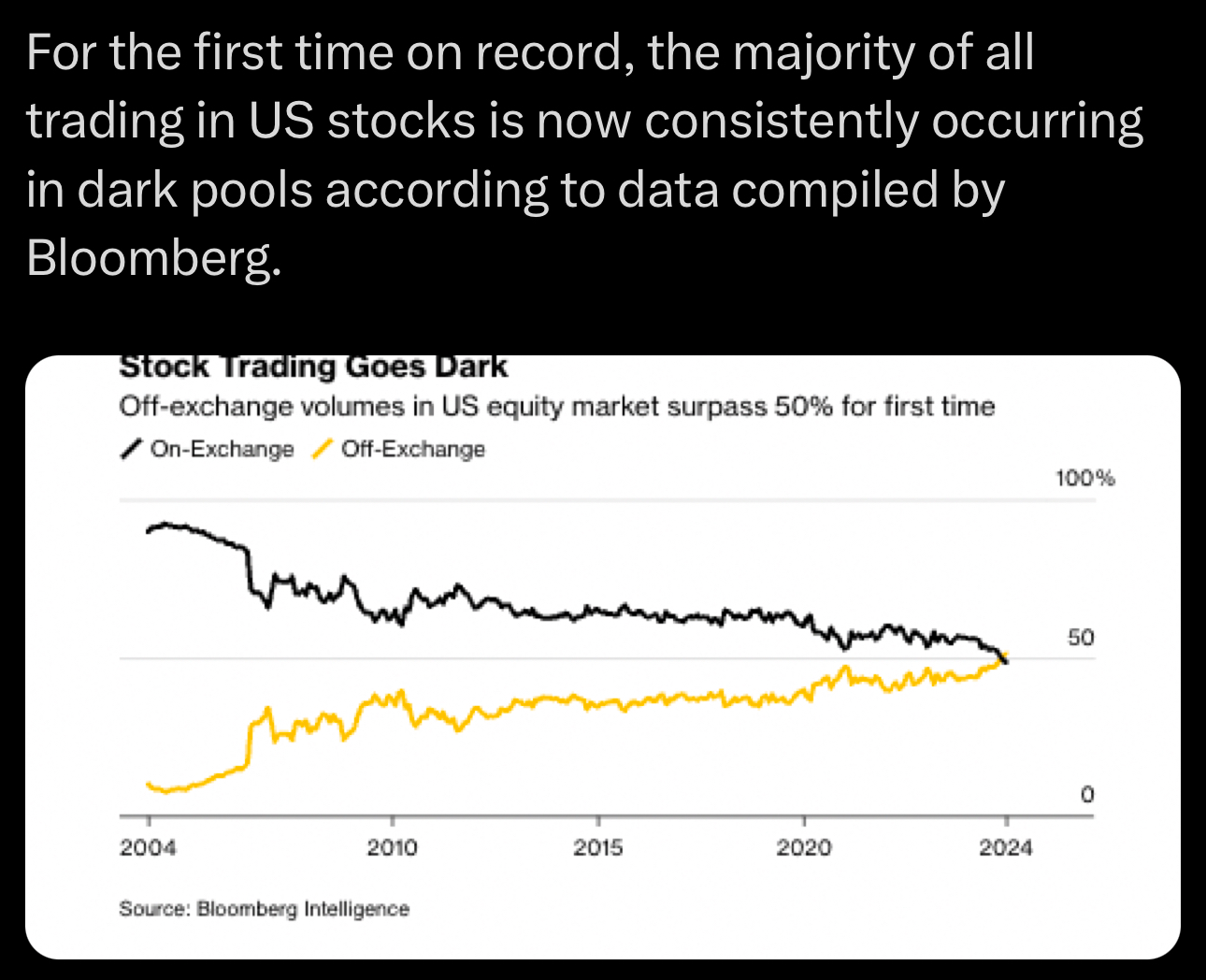
In the world of finance, transparency is often hailed as the cornerstone of fair and efficient markets. Yet, a significant portion of trading happens away from the public eye in dark pools. These private trading venues, designed to facilitate large transactions without affecting market prices, have become increasingly dominant. For the first time in history, over 50% of U.S. stock trading now occurs off-exchange, according to Bloomberg. This trend raises critical questions about market fairness, transparency, and the future of trading.

At Future Finance Lab, we believe in exploring the intersection of finance and technology to uncover solutions that foster trust and efficiency. In this article, we will dive into the risks posed by dark pools and examine how tokenized assets and blockchain technology can address these challenges.

What Are Dark Pools?

Dark pools, also known as private trading forums, are a type of alternative trading system (ATS) where institutional investors execute large trades away from public exchanges like the NYSE or NASDAQ. These platforms offer advantages such as:

Anonymity: Preventing market moves caused by public knowledge of large trades.
Reduced Market Impact: Allowing trades to be executed without immediately affecting the stocks price.

While these features serve a purpose, they come at a cost. The lack of public scrutiny creates a fragmented and opaque market, leaving retail investors at a disadvantage and reducing overall market transparency.

The Dangers of Dark Pools

1. Market Opacity:

Dark pools obscure large portions of trading activity, which can distort price discovery the process by which market prices reflect supply and demand.

2. Unfair Advantage:

Institutional players gain access to privileged information and favorable trading conditions that retail investors lack.

3. Risk of Manipulation:

The absence of public oversight increases the likelihood of market manipulation or collusion among participants.

4. Liquidity Challenges:

When too much volume is diverted to dark pools, public markets can suffer from reduced liquidity, leading to higher volatility and wider spreads.

5. Eroding Trust:

For markets to function effectively, participants need confidence in their fairness. The secrecy of dark pools undermines this trust.

Can Tokenized Assets Fix the Problem?

Tokenized assets represent real-world assets (such as stocks, bonds, or real estate) on a blockchain. By leveraging blockchain technology, tokenization introduces unprecedented transparency and efficiency into financial markets. Here is how:

1. Real-Time Transparency:

Every transaction involving a tokenized asset is recorded on a blockchain, creating an immutable and publicly accessible ledger. This ensures all market participants have equal access to trading data, addressing the opacity of dark pools.

2. Decentralized Trading Platforms:

Blockchain-powered decentralized exchanges (DEXs) allow large trades to occur with reduced market impact while maintaining transparency. Unlike dark pools, these platforms provide a record of trade volumes and prices.

3. Fair Market Access:

Tokenized assets democratize finance by lowering entry barriers. Retail investors can access fractional ownership of assets and participate in markets traditionally dominated by institutions.

4. Programmable Rules:

Smart contracts embedded in tokenized assets can enforce fair trading practices, such as mandatory disclosures or price limits, reducing the potential for manipulation.

5. Enhanced Liquidity:

Fractionalization of tokenized assets increases market liquidity by enabling smaller trades, reducing the reliance on private venues for large transactions.

Challenges to Overcome

While tokenized assets present a compelling solution, there are hurdles to widespread adoption:

Regulatory Uncertainty:

Governments and regulators must define clear frameworks for blockchain-based trading to ensure compliance and protect investors.

Infrastructure and Scalability:

Blockchain networks need to handle high transaction volumes efficiently to compete with existing financial systems.

Institutional Buy-In:

For tokenized markets to thrive, institutional players must adopt and trust the technology.

The Future of Financial Markets

The rise of dark pools highlights the need for innovation in financial markets. Tokenized assets offer a pathway to greater transparency, efficiency, and inclusivity. By merging the power of blockchain technology with financial systems, we can create markets where everyone from retail investors to institutions has equal access to information and opportunities.

At Future Finance Lab, we are committed to exploring these cutting-edge solutions. Our goal is to empower investors with the tools and knowledge to thrive in a rapidly evolving financial landscape. Together, we can pave the way for a fairer, more transparent future.

Stay tuned as we continue to explore innovations in finance and technology. Have thoughts on dark pools or tokenized assets? Join the conversation on FutureFinanceLab.com!

America’s Wealth Gap: Why It Matters and What We Can Do

The Growing Divide

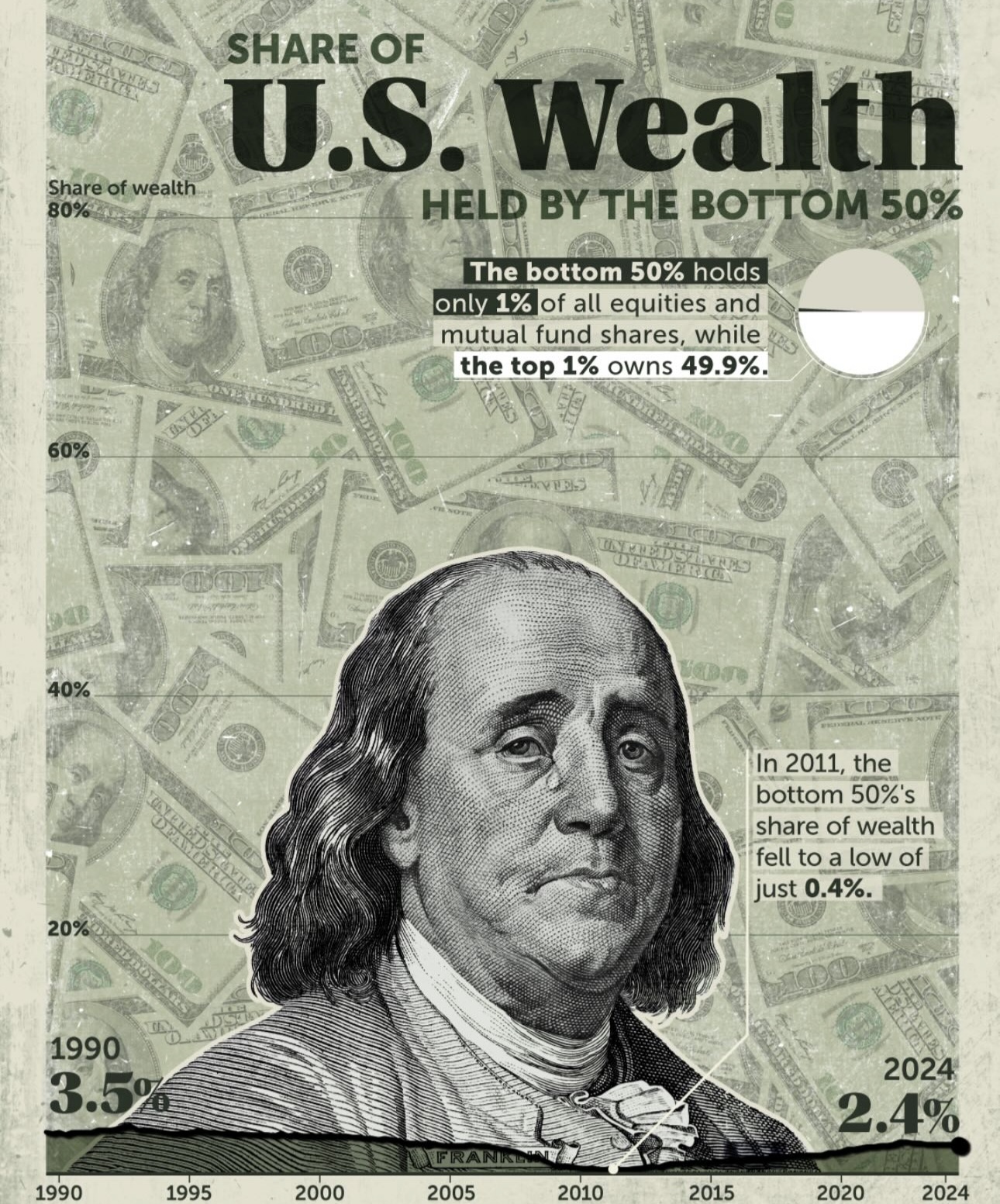
The U.S. economy is growing, but not everyone is benefiting equally. Today, the bottom 50% of Americans own just 2.4% of the country’s wealth, while the top 1% controls nearly 50%. This gap has been widening for decades, making it harder for everyday people to build financial security.

Why Is This Happening?

Several key factors are driving wealth inequality:

Stock Market Gains Favor the Wealthy: The rich own most stocks, while the bottom 50% hold just 1% of all equities and mutual funds. Since stocks grow in value over time, the wealthy keep getting richer.

Wages Aren’t Keeping Up: While living costs like housing and healthcare keep rising, wages for most workers have stayed the same or grown very slowly.

Lack of Investment Opportunities: Many lower-income individuals don’t have enough savings or knowledge to invest, missing out on long-term wealth-building.

What Can We Do?

To close the wealth gap, we need to:

1. Improve Financial Education :Teaching people how to invest and save wisely.

2. Make Investing More Accessible :Encouraging apps and programs that help everyday people invest in stocks and assets.

3. Support Fairer Economic Policies :Tax reforms and wage policies that help lower-income workers build wealth.

The Future of Wealth

If we don’t address this gap, financial inequality will continue to grow, making it harder for future generations to succeed. By promoting smart financial habits, accessible investing, and fair policies, we can work toward a more balanced and inclusive economy.

At FutureFinanceLab, we believe financial knowledge is power. Stay informed, start investing, and take control of your financial future!

The Future of Digital Assets: What You Need to Know

What Are Digital Assets?

Digital assets are more than just cryptocurrencies. They include everything from Bitcoin and Ethereum to tokenized real estate, NFTs, and AI-powered financial instruments. As the world shifts toward a digital-first economy, understanding these assets is essential for staying ahead.

Why Digital Assets Matter

The financial landscape is evolving, and digital assets are at the forefront. They offer transparency, security, and efficiency that traditional financial systems struggle to match. With blockchain technology enabling decentralized finance (DeFi), investors now have more opportunities to diversify and grow wealth outside of traditional banking.

Investment Opportunities in Digital Assets

  • Bitcoin & Cryptocurrencies – The foundation of digital assets, Bitcoin remains a strong long-term store of value.
  • Tokenized Real Estate – Invest in fractional ownership of real estate through blockchain-based tokens.
  • NFTs & Digital Collectibles – Beyond art, NFTs represent ownership of virtual assets, music rights, and even intellectual property.
  • AI & Web3 – The rise of AI-driven financial platforms and Web3 technology is reshaping the way we interact with digital assets.

The Risks & How to Navigate Them

While digital assets present massive opportunities, they also come with risks like volatility, regulatory uncertainty, and security threats. Investors must stay informed and adopt strategies to mitigate these risks.

🚀 Want to stay ahead of the digital finance revolution? Get exclusive insights and strategies—become a member of FutureFinanceLab.com today!

Why Elites Like Bill Gates and Warren Buffett Dismiss Bitcoin — And How It Shifts Wealth to the People

Introduction

Bitcoin has been a disruptive force in the financial world since its creation in 2009. Yet, many of the world’s wealthiest elites — such as Bill Gates and Warren Buffett — have been vocal critics of Bitcoin. Their skepticism isn’t just personal opinion; it’s deeply tied to their interests in the traditional financial system. Buffett, for instance, has extensive holdings in banks and financial institutions, which stand to lose power as Bitcoin grows. Meanwhile, Gates, despite his advocacy for financial inclusion, has dismissed Bitcoin as speculative and environmentally damaging.

But why are these influential figures so opposed to Bitcoin? The answer lies in how Bitcoin threatens the existing financial order — shifting wealth, power, and financial services away from centralized institutions and into the hands of ordinary people.

Bitcoin Challenges Traditional Power Structures

1. The Threat to Banks and Centralized Finance

Bitcoin operates on a decentralized network, meaning no central authority (such as a government or bank) controls it. This is a direct challenge to the traditional banking system, which relies on customers depositing their money in banks, allowing these institutions to generate profits through loans, fees, and investments.

Warren Buffett’s empire, Berkshire Hathaway, owns significant stakes in financial giants like Bank of America, Wells Fargo, and American Express. If Bitcoin adoption grows, fewer people will rely on banks for savings, transactions, and wealth storage, potentially devaluing Buffett’s holdings.

2. Financial Freedom vs. Control

Elites and governments favor controlled financial systems where transactions can be monitored, taxed, and restricted. Bitcoin, on the other hand, is permissionless — anyone can use it without needing approval from a bank or government. This makes it an attractive alternative for people living under oppressive regimes, those without access to banking, and anyone who values financial sovereignty.

3. Inflation and Wealth Transfer

One of the most critical aspects of Bitcoin is its fixed supply of 21 million coins. Unlike fiat currencies, which can be endlessly printed by central banks (leading to inflation and the erosion of purchasing power), Bitcoin offers a hedge against inflation.

Wealthy elites often benefit from inflation because they own appreciating assets like stocks and real estate, while the average person sees their savings lose value over time. Bitcoin changes this dynamic by giving individuals a way to store value outside of the traditional financial system.

How Bitcoin Helps Shift Wealth to the People

Bitcoin is not just a speculative asset — it is a tool for financial empowerment. Here’s how:

1. Banking the Unbanked

Over a billion people worldwide lack access to traditional banking services. Bitcoin provides them with a way to save, send, and receive money without needing a bank account. All that’s required is a smartphone and internet access. This is particularly powerful in countries with unstable currencies and corrupt banking systems.

2. Low-Cost, Borderless Transactions

Traditional financial institutions charge hefty fees for international remittances and transactions. Bitcoin allows people to send money across borders almost instantly and at a fraction of the cost. This is a game-changer for migrant workers who send billions of dollars home every year, as well as businesses operating in global markets.

3. Protection Against Government Overreach

Governments and central banks have a history of freezing bank accounts, confiscating funds, and imposing capital controls during times of economic crisis. Bitcoin gives people a way to store their wealth in a secure, censorship-resistant form, free from government interference.

4. Wealth Creation Through Decentralized Finance (DeFi)

Bitcoin is at the heart of a growing financial ecosystem that includes decentralized finance (DeFi). This new movement allows people to earn interest, take out loans, and trade assets without relying on traditional banks. By removing middlemen, DeFi puts more wealth-generating opportunities directly into the hands of individuals.

Why the Elites Try to Ignore or Dismiss Bitcoin

Despite its benefits, Bitcoin is constantly under attack by mainstream financial elites. Here’s why:

• They fear losing control — Bitcoin operates outside the control of governments and central banks, making it harder for elites to manipulate financial systems for their own benefit.

• They benefit from the status quo — Wealthy investors and business leaders have built their fortunes within the current system. A decentralized alternative threatens their privileged positions.

• They misunderstand the technology — Many critics, including Warren Buffett, have admitted they don’t fully understand Bitcoin. Buffett famously called it “rat poison squared,” despite Bitcoin’s growing adoption and success.

Conclusion

Bitcoin represents a financial revolution — one that shifts power from centralized institutions to the people. While billionaires like Bill Gates and Warren Buffett dismiss it, millions of ordinary people worldwide are using Bitcoin to gain financial freedom, escape inflation, and access banking services for the first time.

As Bitcoin adoption grows, it will continue to challenge the traditional financial system, empowering individuals in ways that were previously unimaginable. The future of money is decentralized, and those who embrace it stand to benefit the most.

Market Mood: Cautious Optimism with Bitcoin Surging Past $105K

As we step into February 2025, the financial markets are showing a mix of resilience and uncertainty. Investors remain cautiously optimistic, balancing corporate earnings, Federal Reserve expectations, and global economic conditions. Meanwhile, Bitcoin has captured headlines, surpassing the $105,000 mark, continuing its strong performance.

Stock Market Overview

The S&P 500 edged up 0.1%, reflecting mixed investor sentiment. The Dow Jones Industrial Average added 57 points, driven by strength in healthcare and financial stocks. However, tech stocks showed signs of fatigue as investors awaited earnings reports from major players like Apple, Microsoft, and Tesla.

Key Market Drivers

1. Earnings Reports in Focus

• Investors are analyzing Q4 earnings from top companies, with particular attention to tech giants and financials.

• Strong earnings could push markets higher, while weaker-than-expected results may lead to sector-wide pullbacks.

2. Interest Rate Expectations

• The Federal Reserve’s March meeting will be crucial. Investors are hoping for rate cuts later in 2025, but strong economic data could delay this decision.

• Any signal of higher-for-longer interest rates might cause market volatility.

3. Economic Data on Watch

• Jobs Report (Feb 2, 2025): The upcoming non-farm payrolls data will provide insight into labor market strength.

• Inflation Data (Feb 13, 2025): The next Consumer Price Index (CPI) report will shape expectations around interest rate decisions.

Bitcoin & Crypto Markets: Breaking New Records

Bitcoin is currently trading at $105,127, marking an 11% gain this month. The rally has been fueled by growing institutional adoption, positive market sentiment, and increased inflows into Bitcoin ETFs.

Crypto Market Highlights

• Bitcoin’s Next Target: Analysts are watching whether BTC can break above $110,000 or face short-term consolidation.

• Institutional Interest: Hedge funds and large institutions continue to show increased interest in Bitcoin ETFs, pushing demand higher.

• Regulatory Landscape: The SEC’s stance on crypto regulation and stablecoins will play a key role in shaping future price movements.

What’s Next?

Bullish Factors

✔️ Strong earnings from major companies could drive markets higher.

✔️ Bitcoin’s momentum may continue as institutional adoption grows.

✔️ Fed rate cut expectations in mid-2025 could further support equities.

Bearish Risks

❌ Inflation concerns could delay interest rate cuts.

❌ Geopolitical uncertainties, including U.S.-China tensions, may impact global trade.

❌ Bitcoin volatility, as corrections often follow major rallies.

Final Thoughts

As we move forward, investors should stay alert to earnings reports, economic data, and policy changes that could impact both stocks and crypto markets. While the overall market mood remains cautiously optimistic, unexpected shifts in economic indicators or global events could drive volatility.

Stay tuned for more updates as the market mood evolves!

Unlocking Hidden Value: The Magic of Hidden Assets in Investing

In the stock market, sometimes two and two equals eight. How? Because a company can possess hidden assets that aren’t reflected in its stock price. When Wall Street finally recognizes these hidden gems, the stock can skyrocket.

Disney: A Case Study in Hidden Assets

Take Disney as an example. After opening Disney World and EPCOT, the company’s growth appeared to slow. However, hidden within Disney were untapped treasures. The Disney name itself became a powerhouse, launching initiatives like the Disney Channel, licensing Mickey Mouse, and expanding their merchandise. Remarkably, many of these assets were sitting on the books for little to no value!

But it didn’t stop there. Disney owned extensive land inside Disney World, while competitors built hotels outside. Instead of letting the opportunity slip by, Disney transformed that land into new parks and invited other companies to pay for the privilege of building within their property. These moves unlocked immense value and reignited growth.

Identifying Hidden Assets

Hidden assets come in many forms:

  • Real Estate: Companies often own valuable real estate whose market value isn’t fully reflected on their balance sheets.
  • Patents and Intellectual Property: Patents can provide a significant competitive edge, as seen with companies like Intel.
  • Brand Power: Iconic brands like Coca-Cola carry immense value, even though this might not appear on financial statements.

Buying Stocks Below Cash Value

Sometimes, a stock might even trade below its cash value after subtracting all debt. In such cases, it’s like getting the underlying business for free. These opportunities are rare but highly rewarding when they align with a strong, sustainable business model.

What This Means for Investors

When researching a stock, always ask yourself: Are there hidden assets waiting to be unlocked? A company’s true value often goes beyond its balance sheet, and recognizing these hidden opportunities can lead to exceptional returns. So keep your eyes open for those 2 + 2 equals 8 moments—you might just find your next big investment.

📊 What is CAGR and How Can It Help You Make Smart Investment Decisions?

CAGR (Compound Annual Growth Rate) is a simple tool that helps you understand how much an investment has grown on average every year over a specific period — even if it didn’t grow the same amount each year.

Think of it like this: If your investment were growing at a steady rate every year, CAGR tells you what that rate would be.


🧠 Why is CAGR Important for Smart Investing?

  • 📈 Compare Investments Easily: See which investment performed better over time.
  • ⏳ Long-Term Clarity: Understand long-term growth without worrying about yearly ups and downs.
  • 🎯 Set Realistic Goals: Plan future investments with clear expectations.

🛠️ How to Calculate CAGR (The Easy Way)

Here’s the formula:CAGR=(Ending ValueBeginning Value)1n−1CAGR=(Beginning ValueEnding Value​)n1​−1

Or just use an online CAGR calculator!


💡 Quick Example:

  • You invested $1,000 in a stock.
  • After 5 years, it grew to $2,000.

The CAGR formula tells us:CAGR=(2,0001,000)15−1=14.87%CAGR=(1,0002,000​)51​−1=14.87%

This means your investment grew 14.87% per year on average over 5 years.


🚀 How to Use CAGR for Smart Decisions:

1️⃣ Compare Investments: Which stock or fund had better average yearly growth?
2️⃣ Track Your Goals: Are your investments growing fast enough to meet your targets?
3️⃣ Adjust Your Strategy: If the CAGR is lower than expected, it might be time to rethink your plan.


📌 Key Takeaway:

CAGR isn’t just a number — it’s a tool for smart, informed investment decisions. Whether you’re comparing stocks, planning retirement, or setting financial goals, CAGR helps you see the bigger picture.

Want to learn more about making smart investment choices? Explore more guides on FutureFinanceLab.com. 🌟

Understanding Balance Sheets: A Quick Guide to Smarter Investing

A balance sheet is one of the most powerful tools to understand a company’s financial health. At FutureFinanceLab.com, we simplify finance, and today we’re breaking down the balance sheet into digestible insights that every investor should know.


What’s a Balance Sheet?

Think of a balance sheet as the financial snapshot of a company. It reveals what the company owns (assets), what it owes (liabilities), and its net worth (equity). By subtracting liabilities from assets, you get equity—a critical metric that shows the company’s real value. Simple yet essential.


Why Cash is King

Cash gives a company the flexibility to seize opportunities or weather tough times. Whether it’s buying back shares, paying off debt, or fueling expansion, having plenty of cash is always a positive sign. Here’s the secret: subtract total debt from cash on hand. If the result is strong and positive, you’re looking at a company with a rock-solid balance sheet.


A Real-World Example

Imagine a company with $20 million in cash, no debt, and 4 million shares outstanding. That means $5 cash per share. If the stock price is $10, you’re effectively paying just $5 for the business itself. Now that’s a potential bargain worth considering!


The Debt Factor

Debt is a double-edged sword. While some debt can help a company grow, too much can be a red flag. A quick rule of thumb: if total debt exceeds 50% of the company’s capitalization, it’s risky. However, if it’s under 20%, you’ve got a safer bet. Remember, some industries like banking and financial services naturally operate with higher debt levels—so always check what’s typical for the sector.


Hidden Liabilities: Leases in Disguise

Not all debts are obvious. Long-term leases can be hidden in the fine print as capitalized lease obligations. These commitments can significantly impact a company’s financial health but are often overlooked by investors. Always dive into the footnotes for a complete picture.


The Democratization of Data

In the past, professional investors had a significant edge in accessing financial data. Today, technology has leveled the playing field. With the right tools and a basic understanding of balance sheets, anyone can evaluate a company’s financial standing like a pro.


Final Thoughts

Mastering balance sheets can transform the way you invest. At FutureFinanceLab.com, our mission is to equip you with the knowledge to make informed financial decisions. From spotting cash-rich companies to avoiding debt traps, understanding the basics is your first step toward smarter investing.